




Low Contamination Material Recovery Processes Explained
Why are low contamination material recovery processes getting so much attention?
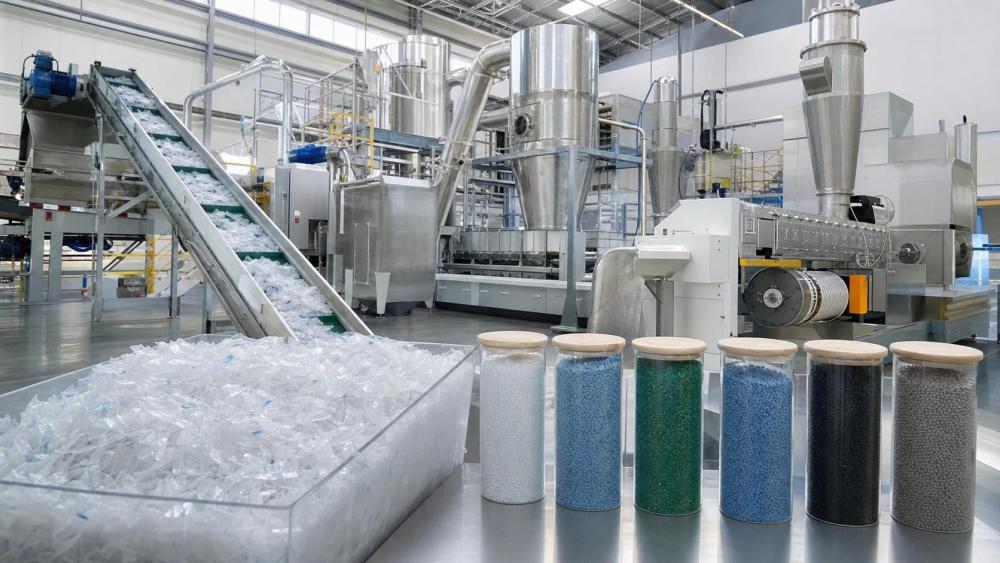
Low contamination material recovery processes matter because recycled material is only useful when it stays predictable in production.
That sounds simple, but contamination affects nearly everything: melt stability, odor, color, mechanical strength, filtration load, and final part consistency.
In polymer recycling, the real challenge is not only collecting waste. It is separating useful material from paper, labels, metals, inks, moisture, dust, and incompatible resins.
When contamination stays low, recovered polymers are easier to process in extrusion, compounding, film production, and molded applications.
This is why low contamination material recovery processes are now discussed alongside broader material performance questions, not only waste management topics.
For a platform like APIM, the topic fits naturally. Recycled polymers, extrusion systems, additives, and downstream performance are closely connected in modern manufacturing decisions.
A recycled PET stream with stable purity behaves differently from one carrying PVC traces or excessive moisture. The same logic applies to PE, PP, PA, and engineering compounds.
So the growing interest is not abstract. It reflects a practical question: can recovered material perform reliably enough for real industrial use?
What exactly counts as a low contamination material recovery process?
A low contamination material recovery process is a recovery system designed to keep unwanted substances out of the recycled output as early and as consistently as possible.
The idea goes beyond one machine. It usually combines sorting, washing, size reduction, separation, drying, melt filtration, degassing, and quality control.
In practice, contamination can be physical, chemical, or material-related. Each type creates different risks during processing and end use.
- Physical contamination: dust, sand, paper fibers, metal fragments, wood, or glass.
- Chemical contamination: oils, cleaners, inks, adhesives, food residues, or solvents.
- Material contamination: mixed polymers, multilayer structures, fillers, or incompatible additives.
A process is considered low contamination when it reduces these unwanted inputs to levels that support stable downstream processing and intended application needs.
That does not always mean ultra-pure output. Required cleanliness depends on whether the material goes into film, injection molding, sheet extrusion, or compounding.
For example, high-clarity film applications usually need tighter control than non-appearance industrial parts. Structural demands can also change the acceptable impurity threshold.
More advanced low contamination material recovery processes often include optical sorting, hot washing, density separation, vacuum degassing, and fine melt filtration.
The technical goal is straightforward: preserve polymer value while removing as many process-disrupting variables as possible.
Where do these processes make the biggest difference?
The biggest difference appears where recovered material must meet narrow processing windows or visible product requirements.
Film and sheet extrusion are a clear example. Small contaminants can create gels, black specks, haze shifts, thickness instability, or surface defects.
In compounding, contamination can reduce dispersion quality and interfere with reinforcement, flame retardants, conductive fillers, or impact modifiers.
Injection molding also feels the impact. Poorly recovered material may lead to inconsistent flow, burn marks, odor, brittle parts, or repeated tool cleaning.
Packaging applications often require especially careful control. Barrier structures, appearance, food-contact pathways, and sealing performance can all be affected by impurities.
Electronics and automotive uses add another layer. There, low contamination material recovery processes support tighter control over dielectric behavior, dimensional stability, and long-term durability.
Even adhesive and bonding systems are indirectly affected. Recovered substrates with unstable surfaces can reduce bonding consistency in laminates or assembled parts.
This is why material intelligence platforms increasingly discuss recovery quality together with extrusion settings, additive systems, and application performance.
A quick way to judge suitability
Before comparing suppliers or recovery routes, it helps to align contamination control with the actual use case.
How do you compare low contamination material recovery processes without getting lost in equipment claims?
A useful comparison starts with feedstock, not marketing language. Clean post-industrial scrap and mixed post-consumer waste require very different process designs.
The next step is to track where contamination is removed. Some systems rely heavily on sorting. Others depend more on washing, filtration, or devolatilization.
Low contamination material recovery processes should also be judged by consistency over time, not one excellent sample.
In real operations, better evaluation usually includes these questions:
- What contamination profile is expected at the input stage?
- Which separation steps target polymer mix-ups, not only dirt removal?
- How fine is the melt filtration, and how often do screens load up?
- Does the process include vacuum degassing for odor and volatile control?
- How much property loss occurs after repeated thermal history?
- What testing verifies lot-to-lot stability?
This is where APIM-style structured analysis becomes useful. Material value depends on the full chain, from feedstock condition to extrusion behavior and final application demands.
A strong process is not simply the one with the most steps. It is the one that removes the right contaminants without damaging the polymer more than necessary.
What mistakes often lead to disappointing recovery results?
One common mistake is assuming all recycled streams fail for the same reason. In reality, moisture, cross-polymer mixing, odor, and solid particles need different controls.
Another weak assumption is treating contamination as a sorting problem only. Washing chemistry, drying efficiency, and melt-stage cleaning often decide the final result.
Some operations also focus on recycled content percentage while ignoring process stability. That can create hidden costs through downtime, scrap, and extra maintenance.
It is also risky to overlook additive interactions. Residual inks, fillers, or adhesive traces can behave unpredictably during compounding or re-extrusion.
For technical polymers, degradation control matters just as much as cleanliness. Excess heat history can lower viscosity and mechanical performance even when visible contamination looks low.
A more realistic approach combines contamination data with processing data. Screen pressure, melt flow, volatile level, odor, and finished-part performance should be read together.
Signs that the process may be underperforming
- Frequent die buildup or screen changes during extrusion.
- Unexpected color variation between production lots.
- Rising odor complaints after conversion or storage.
- Mechanical test variation that cannot be explained by formulation.
- Inconsistent sealing, bonding, or surface treatment results.
How should you evaluate cost, timing, and implementation value?
The cost discussion should start with total conversion impact, not only recovery line price or recycled resin cost per kilogram.
Low contamination material recovery processes can reduce hidden costs by lowering scrap, stabilizing throughput, and improving acceptance in higher-value applications.
That said, cleaner output usually requires tighter sorting, more water treatment, stronger filtration, and stricter testing. There is no free purity gain.
Implementation timing also depends on feedstock maturity. A process may look efficient on trial material but become unstable when incoming waste streams change seasonally.
A practical evaluation often includes pilot batches, extrusion trials, contamination mapping, and downstream validation in the actual application.
For businesses watching circular material development, the value question is broader than compliance. It includes supply resilience, quality reputation, and the ability to use recovered polymers in more demanding products.
That is one reason technical information networks pay close attention to how recovery quality connects with performance, not just sustainability claims.
So what is the smart next step if you are still at the research stage?
Start by defining the downstream requirement before reviewing technologies. A recovery process only makes sense when judged against the material’s final use.
Then build a short comparison framework. Include feedstock type, contamination profile, process steps, property retention, traceability, and expected application range.
If the material will enter extrusion, molding, film, or compounding, connect recovery data to processing behavior. That link is where many early evaluations stay too shallow.
Low contamination material recovery processes are not just about cleaner waste streams. They are about preserving usable material value in a way that holds up in production.
For ongoing research, it helps to track how recovered polymers perform under heat, pressure, filtration, drying, and long-run processing conditions.
That is also where structured industry coverage can save time. A source that connects recycled polymers, equipment behavior, compounds, films, and application data gives a clearer basis for comparison.
The most useful next move is usually simple: narrow the target application, identify the contamination risks that matter most, and compare recovery options against those exact conditions.
Related News
- 00
0000-00
What to verify before choosing a glass reinforced thermoplastics supplier - 00
0000-00
How to verify UV curable adhesives for medical device biocompatibility - 00
0000-00
What is driving demand in the reinforced thermoplastics global market? - 00
0000-00
How thermal management plastics prevent heat buildup in EV battery packs - 00
0000-00
How circular packaging material design can improve recyclability