




New SVHC Scrutiny for China’s EVOH Barrier Packaging Exports Under REACH
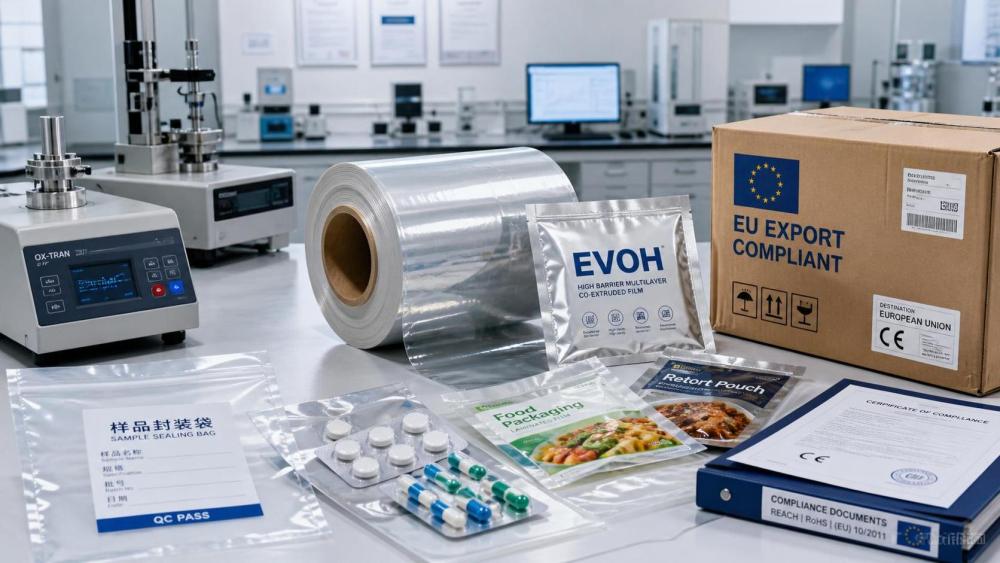
On August 15, 2026, the EU’s ECHA formally added two EVOH production-related additives to the SVHC Candidate List, creating a new compliance checkpoint for EVOH-based high-barrier packaging materials exported from China. The update concerns multilayer co-extruded films and EVOH composite materials used in food and pharmaceutical packaging, and it deserves attention because it may affect export declarations, supply-chain information transfer, importer reviews, and the timing of shipments to the EU market.
What the August 15 update explicitly changes
According to the information provided, ECHA officially placed two additives related to EVOH production on the SVHC Candidate List on August 15, 2026. The affected compliance scope involves exports of high-barrier multilayer co-extruded films and EVOH composite materials used in food and pharmaceutical packaging. The same input states that, from November 2026, SCIP notification and supply-chain information transfer declarations will be required in connection with this update. It also states that overseas importers need to immediately assess the compliance status of existing EVOH packaging materials and begin supplier audits.
Where the pressure may appear across the export chain
For Chinese EVOH film suppliers
Analysis suggests that the first layer of impact is likely to fall on suppliers shipping EVOH films or related barrier materials to the EU. The practical pressure may center on confirming whether the listed additives are present in affected products, preparing product-level compliance statements, and responding to requests for SVHC-related supply-chain information.
For downstream laminators and converters
From an industry perspective, downstream composite and converting plants may face a more document-intensive review process. This is because the update is described as affecting multilayer co-extruded films and EVOH composites used in packaging applications, which means compliance review may extend beyond raw material selection to finished packaging structures, customer declarations, and delivery documentation.
For overseas importers and procurement teams
The input makes clear that overseas importers are expected to review the compliance status of current EVOH packaging materials and launch supplier audits immediately. In practice, this may affect procurement decisions, approved supplier lists, and incoming material qualification. Buyers may also place greater emphasis on the completeness and traceability of supplier declarations before confirming future orders.
For testing and compliance support functions
Although no specific testing or certification procedure is provided in the input, observation suggests that compliance, regulatory, and technical documentation teams may become more involved. The likely focus is not only on substance identification, but also on how information is transmitted along the supply chain and whether required declarations can support continued trade and delivery.
What companies should review now
Check affected product scopes and formulations
Companies involved in EVOH films, multilayer co-extruded structures, or food and pharmaceutical packaging materials should first verify whether the listed additives are relevant to their formulations or supplied materials. At this stage, the key task is verification rather than assumption, because the input does not provide product-by-product applicability rules.
Prepare for SCIP and supply-chain statement requirements
Since the provided information states that SCIP notification and supply-chain information transfer declarations will be required from November 2026, exporters and their customers should review whether internal documentation systems can support that requirement. Where details are not yet confirmed in the input, it is more appropriate to treat this as a compliance preparation issue and monitor how documentation expectations are applied in practice.
Reassess supplier qualification and audit readiness
The reference to immediate supplier audits indicates that supplier management may become a near-term operational issue. Companies may need to check whether upstream material providers can provide consistent declarations, composition-related disclosures, and traceable supporting records that procurement and importer teams can rely on during review.
Review delivery timing and contract execution risk
Analysis suggests that the update may create delays where compliance status is unclear or documents are incomplete. Exporters, converters, and buyers may therefore need to review open orders, planned shipments, and contractual document obligations, especially where packaging materials are intended for regulated end uses such as food or pharmaceutical applications.
Why this looks more like an execution signal than a theoretical update
At this stage, it is more appropriate to understand the development as a concrete compliance signal tied to export execution rather than a distant policy discussion. The reason is that the input already points to a defined event date, named affected material categories, a November 2026 compliance milestone, and immediate action by overseas importers. That said, some practical questions still appear open based on the limited input, including how market participants will interpret product scope, what level of supporting information customers will request, and how consistently supplier audits will be carried out across transactions.
What deserves closer attention next is not only the formal listing itself, but also how trade documentation, customer declarations, and procurement review standards evolve around it. Those operational details may shape whether the update is handled smoothly or becomes a friction point in orders and delivery schedules.
How this update is best understood for current business decisions
Based on the information provided, this development should be read as a compliance and supply-chain management issue for China’s EVOH packaging exports to the EU, particularly where high-barrier multilayer and composite materials are involved. The confirmed facts are limited, but they are sufficient to indicate that documentation readiness, supplier transparency, and importer review processes will matter more from November 2026 onward. A measured response is to treat the update as an active execution issue, while continuing to verify the exact compliance expectations that will govern day-to-day trade.
Basis of this article and what still needs verification
This article is generated solely from the user-provided news title, event date, and event summary. For events of this type, companies would typically continue to verify information against official notices, regulator publications, trade or customs guidance, industry association updates, standard-setting documents, and reporting from authoritative media. No specific official source link was provided in the input, so the underlying official references still need to be checked on an ongoing basis. Further attention should remain on detailed policy interpretation, compliance implementation practice, procurement document changes, trade execution outcomes, and industry feedback as the requirements move closer to application.
Have questions about this sector analysis, or seeking best practices specific to your niche? Drop us a line below and let the senior consultants at APIM assist you.
We respect your privacy. Your information is strictly confidential.
Related News
- 00
0000-00
How does washing affect contamination in post-consumer recycled PP resins? - 00
0000-00
How does feedstock affect depolymerization equipment selection? - 00
0000-00
US Sets 213.44% Preliminary Antidumping Deposit on Chinese PTMEG - 00
0000-00
When should epoxy be used as a thermal interface material for semiconductors? - 00
0000-00
US Midterm Results Unlikely to Quickly Shift Recycled Plastics Market or Legislation