




How to Evaluate a Thermal Potting Compounds Supplier
Why does choosing a thermal potting compounds supplier deserve careful evaluation?
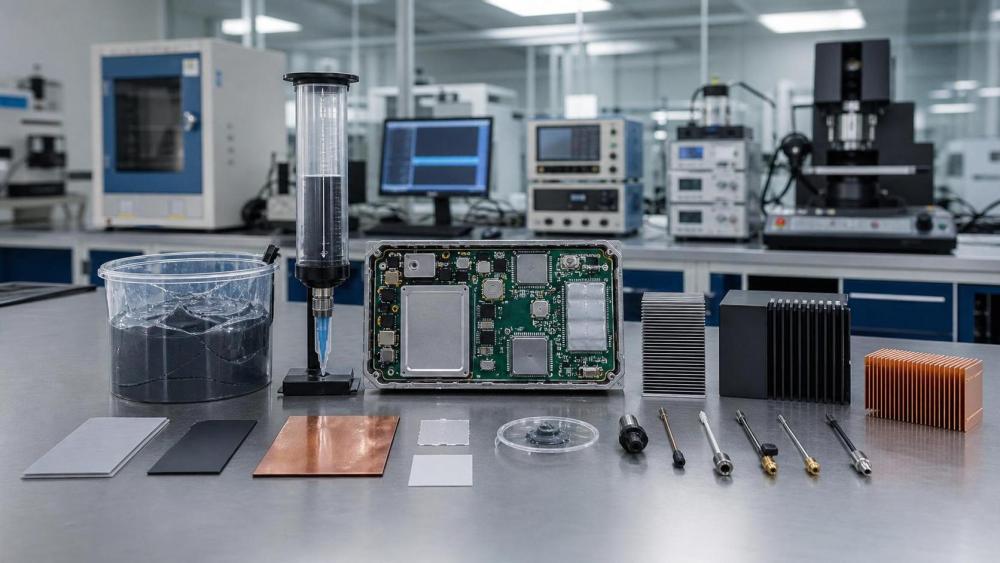
A thermal potting compounds supplier influences more than material cost. The choice affects heat transfer, electrical protection, curing efficiency, rework difficulty, and field reliability.
In practice, thermal potting compounds are often used in power electronics, LED modules, sensors, battery systems, chargers, and industrial control assemblies.
These applications rarely fail because of one number on a datasheet. They fail when formulation, processing, design, and supply consistency do not match.
That is why a thermal potting compounds supplier should be reviewed as a technical partner, not only as a price source.
A capable supplier helps clarify viscosity, thermal conductivity, cure profile, adhesion, flame performance, and long-term stability under actual operating conditions.
This is also where structured industry platforms such as APIM become useful. They help compare industrial adhesives, polymers, functional compounds, and application requirements in a more disciplined way.
When evaluating options, the better question is not simply, “Who offers the lowest quote?” It is, “Which supplier can support stable production and reliable product life?”
What should you check first before comparing suppliers?
Start with the application itself. A thermal potting compounds supplier cannot be judged fairly until the actual use conditions are clear.
Some projects need fast heat dissipation. Others need dielectric strength, shock resistance, low stress on delicate components, or resistance to moisture and chemicals.
It helps to define the following items before the supplier shortlist is created.
- Target thermal conductivity and acceptable test method
- Operating temperature range and thermal cycling conditions
- Substrate types such as aluminum, copper, PCB, plastics, or ceramics
- Required cure speed, dispensing behavior, and line takt time
- Regulatory needs, including UL, RoHS, REACH, or specific customer approvals
- Expected production volume and preferred pack size
Without this baseline, discussions drift toward generic claims. A supplier may appear strong, yet still be a poor fit for the real assembly process.
More often, misalignment appears during pilot runs. The compound may settle, trap bubbles, cure too slowly, or stress components after expansion and contraction.
Which technical questions reveal whether a thermal potting compounds supplier is truly capable?
A reliable thermal potting compounds supplier should answer technical questions with clarity, test evidence, and application context.
The strongest suppliers do not stop at listing thermal conductivity values. They explain filler system behavior, viscosity trade-offs, and how the material performs after cure.
Useful questions include the ones below.
This kind of review makes supplier comparison more objective. It also reduces the risk of approving a material that only looks good on paper.
APIM-style material intelligence is valuable here because potting compounds sit at the intersection of thermal management, adhesive chemistry, and process control.
Is price the right way to compare a thermal potting compounds supplier?
Price matters, but unit price alone is a weak decision tool. A lower-cost compound can create higher total cost after scrap, downtime, and validation failure are counted.
A practical comparison usually includes total delivered value, not only material cost per kilogram.
For example, one thermal potting compounds supplier may offer a cheaper product with longer cure time. Another may cost more, yet reduce line bottlenecks and lower rejection rates.
The same applies to packaging and handling. Two-component systems can look attractive until metering, waste ratio, storage limits, or operator training are factored in.
A balanced review should look at:
- Material price versus actual consumption per unit
- Cycle time impact during dispensing and cure
- Failure cost during validation and field service
- Inventory risk from short shelf life or limited pack options
- Engineering time needed for troubleshooting and reformulation
A good thermal potting compounds supplier will be willing to discuss these trade-offs. That usually signals maturity and confidence in the product.
How do you judge supply stability and service, not just formulation quality?
Many sourcing problems begin after technical approval. The material works, but lead times slip, documentation arrives late, or one batch behaves differently from the previous one.
That is why a thermal potting compounds supplier should also be checked for operational discipline.
Useful signals include manufacturing location, backup capacity, raw material sourcing, change control practice, and responsiveness to nonconformance issues.
It is worth confirming whether the supplier can provide consistent certificates, retained samples, lot traceability, and a clear notification process for formulation changes.
For global programs, regional support matters too. Thermal compounds used in automotive, electronics, and industrial devices often move across multiple plants and qualification systems.
A supplier with broad application knowledge across polymers, adhesives, fillers, and processing is usually better equipped to support these transitions.
That broader perspective is one reason market participants rely on platforms like APIM. Cross-sector material knowledge often reveals risks a single datasheet cannot show.
What mistakes are common when selecting a thermal potting compounds supplier?
One common mistake is treating thermal conductivity as the only decision factor. High conductivity may come with higher density, poor flow, abrasion, or reduced flexibility.
Another mistake is skipping process simulation. A thermal potting compounds supplier may recommend a material that performs well in theory, yet behaves poorly in a narrow cavity.
Some teams also underestimate compatibility. Potting compounds interact with housings, wires, connectors, coatings, and sensitive components in ways that are easy to miss early.
There is also a documentation trap. Marketing brochures may mention thermal management, but qualification needs verified data, aging results, and application-specific support.
A short internal checklist can prevent most of these issues.
- Confirm test methods before comparing values from different suppliers.
- Run pilot trials using actual dispensing and cure conditions.
- Check adhesion and stress behavior after thermal cycling.
- Review shelf life, storage limits, and packaging practicality.
- Ask how technical changes are communicated after approval.
These are simple checks, but they sharpen supplier evaluation quickly and reduce avoidable qualification delays.
What is the best next step when narrowing the supplier list?
The best next step is to convert broad requirements into a scored review matrix. This creates a fair comparison across technical, operational, and commercial factors.
A practical matrix may include thermal performance, processability, compliance documents, sample support speed, batch consistency, lead time, and change control reliability.
Then request targeted samples, not generic ones. Ask each thermal potting compounds supplier to respond to the same application brief and qualification questions.
This approach makes differences visible. One supplier may stand out on technical fit, while another proves stronger in global logistics or long-term support.
A sound decision usually comes from combining lab data, production feedback, and supplier responsiveness. None of those elements should be reviewed in isolation.
For teams comparing advanced materials across multiple categories, structured references from APIM can support better questioning and cleaner shortlisting.
In the end, the right thermal potting compounds supplier is the one that fits the application, supports validation, and remains dependable after the first order.
Build the decision around measurable requirements, realistic trials, and supply risk review. That is usually where stronger sourcing outcomes begin.
Related News
- 00
0000-00
How to limit fiber breakage in carbon fiber-reinforced PPS compounds - 00
0000-00
How humidity affects transparent barrier packaging materials - 00
0000-00
How to verify Global Advanced Polymers supplier listings on APIM - 00
0000-00
Can Pressure-Sensitive Adhesives Replace Fasteners in Car Interiors? - 00
0000-00
How Should Aluminum Be Prepared Before Applying PU Structural Adhesive?