




UV Resistant Acrylic Sheets: Outdoor Grade Selection Guide
UV Resistant Acrylic Sheets: Outdoor Grade Selection Guide
Choosing UV resistant acrylic sheets for outdoor projects is not just about clarity or cost. It affects weatherability, color stability, impact performance, and long-term maintenance.
When specifications are vague, exterior failures appear early. Yellowing, surface crazing, warpage, and loss of transparency often start with poor grade selection.
This guide explains how to evaluate UV resistant acrylic sheets for demanding outdoor use. The goal is simpler decisions, lower risk, and longer service life.
Why Outdoor Grade Selection Matters
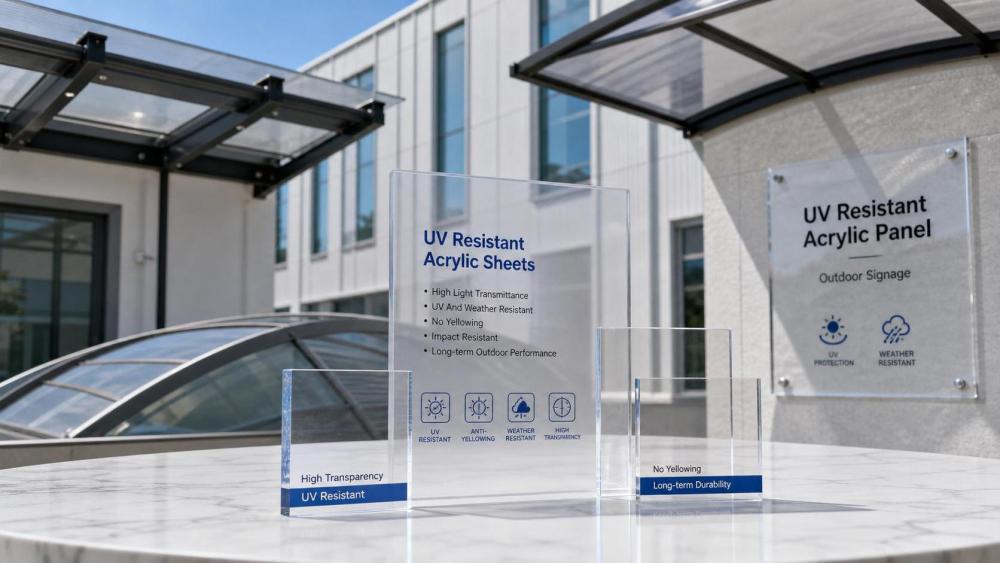
Not all acrylic sheet performs the same outdoors. Indoor PMMA may look similar at purchase, but exposure conditions quickly separate standard sheet from outdoor grade material.
UV resistant acrylic sheets are designed to retain light transmission, surface appearance, and mechanical integrity under sunlight, heat, humidity, and pollution.
That matters in glazing, signage, skylights, barriers, canopies, protective covers, and display structures. In each case, visual quality and durability carry direct cost consequences.
In practical projects, replacement cost is usually higher than material cost difference. This shifts the decision from lowest price to lowest lifecycle risk.
What Makes UV Resistant Acrylic Sheets Different
The main difference is formulation and production quality. UV resistant acrylic sheets use resin systems and stabilization approaches suited for long outdoor exposure.
Some sheets rely on inherently weatherable PMMA chemistry. Others add protective layers, coatings, or performance packages to improve resistance to UV-driven degradation.
Extruded and cast acrylic also behave differently. Cast sheet often offers better optical consistency and chemical resistance. Extruded sheet can support tighter thickness control and lower cost.
The better choice depends on application stress. A decorative sign panel needs different balance than a rooflight or machine cover.
Core Properties to Review
- UV stability and yellowing resistance
- Light transmission and haze retention
- Impact strength under outdoor temperature swings
- Surface hardness and scratch behavior
- Thermal expansion and dimensional stability
- Resistance to moisture, cleaners, and pollutants
- Warranty support and documented weathering data
Key Selection Criteria for Exterior Applications
A good specification starts with exposure conditions. Sunlight intensity, ambient heat, wind load, rainfall, airborne chemicals, and cleaning cycles all influence material performance.
More importantly, the sheet must match the function of the part. UV resistant acrylic sheets for architectural glazing are not judged the same way as sheets for illuminated signage.
1. Optical Retention
For transparent panels, long-term clarity is usually the first requirement. Ask for initial light transmission, haze, and post-weathering retention values.
This is especially important for skylights, daylighting structures, and protective viewing windows. A small drop in clarity can change user perception quickly.
2. Thickness and Structural Role
Thickness affects stiffness, deflection, and installation tolerance. It also changes thermal behavior and fastening stress around drilled or mounted areas.
Do not treat thickness as a simple cost lever. In exterior builds, under-specification usually creates service claims later.
3. Color Stability
Clear, white, tinted, and colored sheets age differently. If brand appearance matters, request color shift data after accelerated weathering.
This is where outdoor grade differences become more visible. Some UV resistant acrylic sheets hold tone well, while others fade unevenly.
4. Fabrication Compatibility
Bending, cutting, drilling, bonding, and thermoforming can introduce stress. If the sheet will be fabricated heavily, processing compatibility should be checked early.
Stress marks may not appear during production. They often show up later in sunlight and solvent exposure.
How to Compare Supplier Data Without Getting Misled
Datasheets can look complete while still leaving selection gaps. The safest approach is to compare performance data against your exact outdoor use case.
Start with weathering method. Ask whether values come from natural outdoor exposure, accelerated UV testing, or internal estimates.
Then check test conditions. Temperature, irradiance, humidity cycle, and duration can change results significantly.
Useful Questions for Supplier Review
- Is the sheet specifically sold as outdoor grade PMMA?
- What retention values are available after UV exposure?
- Is the product cast or extruded?
- Are there limitations for drilling, edge finishing, or solvent cleaning?
- What warranty period applies to yellowing, breakage, or light transmission?
- Is batch consistency documented for color and thickness?
In real procurement work, warranty language often reveals more than brochure claims. Read exclusions carefully before final approval.
Common Outdoor Applications and Material Priorities
Different applications place different stress on UV resistant acrylic sheets. A practical comparison helps narrow the grade quickly.
This also means the best UV resistant acrylic sheets are application-specific. There is rarely one universal grade for every exterior requirement.
Typical Risks in Specification and Installation
Material selection problems are often amplified during installation. A sound product can still fail if expansion, mounting stress, or edge quality are ignored.
- Choosing indoor acrylic instead of UV resistant acrylic sheets
- Using rigid fastening without thermal expansion allowance
- Ignoring solvent sensitivity during cleaning or bonding
- Selecting thickness from price only
- Approving samples without weathering data
- Overlooking local climate severity and orientation
From recent market changes, more buyers are asking for documented durability rather than general outdoor claims. That is a healthy shift.
A Practical Evaluation Process
A structured review process keeps outdoor sheet selection manageable. It also makes supplier discussions more efficient.
Step 1: Define the Exposure Window
Map sunlight level, temperature range, pollution, cleaning frequency, and expected life. A five-year display panel and a fifteen-year canopy should not share the same assumptions.
Step 2: Set Performance Priorities
Rank what matters most. Clarity, impact strength, color stability, forming behavior, and cost do not always move together.
Step 3: Screen UV Resistant Acrylic Sheets
Compare at least two or three grades using the same criteria. Remove options that lack weathering evidence or fabrication guidance.
Step 4: Validate with Samples
Review optical quality, edge finish, color consistency, and handling response. For larger projects, mock-up testing is worth the time.
Step 5: Align Procurement and Installation Notes
Lock in grade, thickness, tolerance, protective masking, and storage rules. Add installation instructions for expansion gaps, fasteners, and approved cleaners.
Final Decision Factors That Usually Matter Most
When several products look close, the final choice usually comes down to four factors. First is verified outdoor durability. Second is fabrication fit.
Third is supplier consistency across batches and regions. Fourth is total installed cost across the service life, not just sheet price.
The strongest buying decisions are rarely based on one datasheet number. They come from matching real exposure, real processing, and real maintenance conditions.
If the project depends on long-term appearance and outdoor reliability, specify UV resistant acrylic sheets with documented weathering performance and clear processing limits.
That approach makes approvals faster, supplier discussions sharper, and field performance more predictable over time.
Have questions about this sector analysis, or seeking best practices specific to your niche? Drop us a line below and let the senior consultants at APIM assist you.
We respect your privacy. Your information is strictly confidential.
Related News
- 00
0000-00
Do polyolefin hot melt adhesives bond well to polyethylene? - 00
0000-00
Korean Study Finds PLA Barely Degrades in Landfill After 320 Days - 00
0000-00
How to assess batch consistency from a thermal potting compounds supplier - 00
0000-00
How much weight can carbon fiber reinforced plastics save in cars? - 00
0000-00
Switching from PS to ABS Sheet Extrusion: Equipment Checks