




Electric Vehicle Materials for Thermal Management in 2026
Why thermal management materials matter more in 2026
In 2026, electric vehicle materials for thermal management are no longer a narrow engineering topic.
They sit at the center of battery safety, charging speed, vehicle range, packaging density, and system cost.
As battery packs grow more energy-dense, the margin for thermal inconsistency becomes smaller.
A material that saves weight but traps heat can create downstream reliability problems.
A material that conducts heat well but complicates processing can hurt yield and sourcing flexibility.
That is why electric vehicle materials for thermal management now influence technical and commercial decisions at the same time.
The topic also fits a wider industrial shift.
Advanced polymers, specialty films, adhesives, and modified compounds are replacing heavier or less functional conventional materials.
APIM follows this transition closely because material performance and processing discipline increasingly define manufacturing advantage.
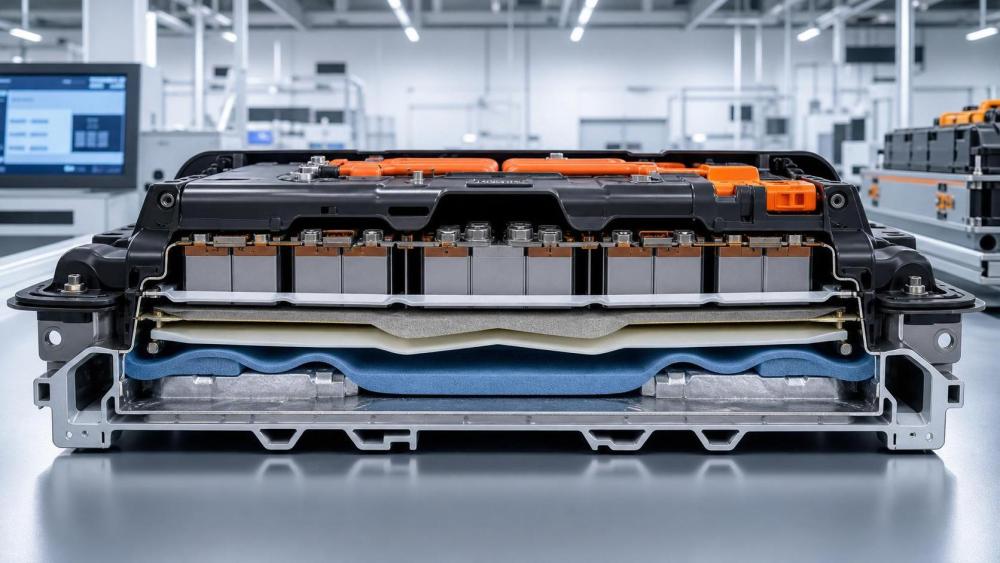
In EV platforms, the thermal question is simple to state and difficult to solve.
Heat must move away from cells, power electronics, and charging interfaces without adding unnecessary mass or assembly complexity.
What counts as electric vehicle materials for thermal management
The phrase covers more than one material family.
It includes thermally conductive polymers, gap fillers, interface pads, potting materials, insulation films, structural adhesives, sealants, and engineered housings.
Some materials are designed to transfer heat.
Others are designed to block heat, contain thermal events, or maintain dimensional stability under repeated cycling.
This distinction matters because thermal management is not only about conductivity.
It is also about electrical isolation, flame resistance, chemical compatibility, and long-term aging.
In practice, electric vehicle materials for thermal management often work as a layered system.
A battery module may combine conductive compounds, polymer carriers, adhesive bonds, insulating films, and protective barriers in one assembly.
That is why a single data point, such as thermal conductivity, never tells the full story.
The material families shaping next-generation designs
Thermally conductive polymers and compounds
These materials are gaining attention because they combine heat transfer with lower weight and design freedom.
Filled PA, PPS, PBT, PC, and other engineering resins are being used for covers, frames, connectors, and electronic housings.
Their appeal comes from part integration.
A molded component can reduce assembly steps while delivering insulation and thermal function in one part.
Specialty films and electrical insulation layers
Films are less visible than housings, but they are central in high-voltage safety.
PET, PC, PMMA, and multilayer film structures are used where heat resistance, dielectric performance, thickness control, and surface stability must work together.
In compact battery systems, small thickness deviations can affect fit, cooling performance, and reliability.
Adhesives, sealants, and potting materials
Bonding materials now carry structural and thermal responsibilities at the same time.
Polyurethane, silicone, epoxy, and acrylic systems are selected for gap filling, vibration resistance, cell fixation, sealing, and controlled heat transfer.
The right choice depends on cure speed, rework limits, softness, adhesion profile, and chemical exposure.
Where these materials create business value
The strongest value does not come from material substitution alone.
It comes from better system balance.
Electric vehicle materials for thermal management can improve pack efficiency, reduce component count, simplify assembly, and support more stable charging behavior.
They also influence warranty risk.
Uneven thermal paths can accelerate aging, distort housings, weaken adhesive bonds, or create failures around sensitive electronics.
From a business standpoint, this means material selection affects lifecycle cost more than unit price suggests.
There is also a supply chain angle.
When a design relies on highly specialized fillers or narrow processing windows, scale-up becomes harder.
APIM’s material coverage is useful here because thermal materials must be judged through performance, processability, and sourcing resilience together.
Typical EV applications and key material priorities
The performance target changes by component.
A battery tray does not face the same tradeoffs as an inverter housing or a charging connector.
This is why electric vehicle materials for thermal management should be mapped by use case rather than discussed as one generic category.
What to evaluate before locking a material choice
A robust decision usually starts with the full operating environment.
Heat load, voltage level, chemical exposure, vibration, and service life expectations need to be aligned early.
Several checks are especially useful:
- Confirm whether the priority is heat transfer, heat shielding, or thermal event containment.
- Review electrical insulation together with thermal conductivity, not after material shortlisting.
- Check molding, extrusion, dispensing, or curing windows against production reality.
- Ask for long-term aging, flame performance, and chemical resistance data under relevant test conditions.
- Compare batch consistency, filler dispersion quality, and regional supply options.
- Assess whether the selected material supports repairability, recycling goals, or lower environmental impact.
This broader review is increasingly important because electric vehicle materials for thermal management often fail through interaction effects, not single-property weakness.
Why processing and supply chain details now matter more
Material data sheets can look impressive while factory results remain unstable.
That gap often comes from compounding quality and process control.
Thermally conductive compounds depend heavily on filler selection, dispersion, melt control, and cooling history.
Films depend on thickness tolerance, surface treatment, and consistent conversion quality.
Adhesives depend on storage conditions, cure profile, and surface preparation discipline.
This is where APIM’s cross-category view becomes practical.
Understanding polymers, compounds, films, adhesives, and processing equipment in one framework supports stronger technical comparisons and fewer sourcing blind spots.
A practical next step for 2026 sourcing and development
The best next move is usually not a broad materials search.
It is a narrower evaluation model built around the thermal path of the target component.
Start by ranking the non-negotiables.
For some programs, that will be cell safety and thermal propagation control.
For others, it will be fast-charge stability, lightweight integration, or manufacturing throughput.
Then compare electric vehicle materials for thermal management across three linked filters: performance under real conditions, processing fit, and supply continuity.
That approach creates a more defensible shortlist than choosing by conductivity figures alone.
In 2026, the companies making better EV thermal decisions are usually the ones treating materials as system enablers, not just parts of a bill of materials.
Have questions about this sector analysis, or seeking best practices specific to your niche? Drop us a line below and let the senior consultants at APIM assist you.
We respect your privacy. Your information is strictly confidential.
Related News
- 00
0000-00
How does washing affect contamination in post-consumer recycled PP resins? - 00
0000-00
How does feedstock affect depolymerization equipment selection? - 00
0000-00
US Sets 213.44% Preliminary Antidumping Deposit on Chinese PTMEG - 00
0000-00
When should epoxy be used as a thermal interface material for semiconductors? - 00
0000-00
US Midterm Results Unlikely to Quickly Shift Recycled Plastics Market or Legislation