




Liquid Epoxy Resin Selection: How Industrial Buyers Reduce Formula and Supply Risk
For international buyers, Liquid Epoxy Resin is not just a product name to place in a quotation request. It is a sourcing decision that connects application fit, technical evidence, supplier communication, operating discipline, and long-term repeatability. In adhesives, coatings, casting compounds, potting materials, composite processing, and industrial resin distribution, a weak match between the product page and the real requirement can create quality problems, commissioning delays, formula instability, or avoidable cost after the order has already moved.
This article is prepared as a selection evaluation guide for sourcing managers, engineers, production planners, distributors, and project buyers. It keeps the core product keyword visible in the title, TDK block, H1, metadata, and the only contextual anchor link. That structure helps the publishing team keep the article topic, landing page, and portal category aligned.
Why Buyers Should Start With Use Conditions
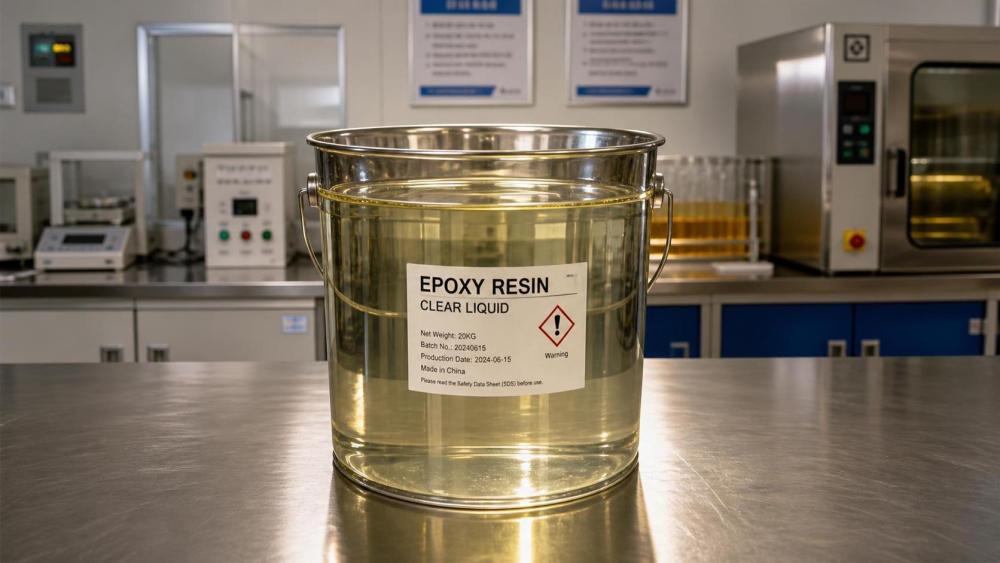
The first step is to define the operating environment. Buyers should describe the production process, expected output, working temperature, storage period, installation or handling route, operator skill level, quality-control routine, and destination market. These details help the supplier move beyond a generic quotation and recommend a product configuration that fits the real job.
Common applications for this topic include industrial adhesives, protective coatings, electrical potting, casting compounds, composite materials, and resin formulation trials. Each application can change the required specification, document package, packaging method, training need, spare-part plan, or technical support level. If these requirements are not written clearly, suppliers may quote different assumptions under the same product name, making price comparison misleading.
A good buying file should also identify the buyer's non-negotiable requirements. For equipment, this may include capacity, layout, process flow, safety, commissioning, and maintenance access. For chemical raw materials, it may include viscosity, purity, curing compatibility, storage condition, batch traceability, and safety documentation. The clearer the requirement, the cleaner the supplier comparison.
Core Product Logic and Common Misunderstandings
Liquid Epoxy Resin should be reviewed as a system rather than an isolated item. A buyer may see the same keyword on several websites, but the real delivery can vary in design detail, material control, processing logic, packaging, service support, and document completeness. The product name opens the conversation; the specification decides whether the order will work.
One common misunderstanding is that a catalogue page provides enough information for order approval. It rarely does. A catalogue page helps identify the product family, but the buyer still needs to confirm technical boundaries, acceptance criteria, shipping details, and the responsibilities of both sides. This is especially important when the product will affect production output, formulation performance, quality-control records, or customer-facing delivery commitments.
Another misunderstanding is that the lowest price is automatically the best commercial decision. A low quote can become expensive if the buyer must solve missing documents, wrong packing, process mismatch, installation issues, unstable batches, or weak supplier response after delivery. The better evaluation method is to compare total risk, not only unit price.
Supplier Evaluation Table
Quality Risks to Resolve Before Ordering
The main risks for this purchase include unclear viscosity range, poor curing-system match, moisture exposure, missing COA or SDS, batch inconsistency, and storage condition errors. These risks are not always visible from product photos or short descriptions. They usually appear during production, installation, storage, inspection, formulation trials, or customer use, which means they are more expensive to correct after shipment.
Buyers can reduce these risks by asking for written specifications, sample or trial data where appropriate, packing photos, inspection records, and clear communication about limits. If the order depends on a particular operating condition, the buyer should explain that condition before quotation. A supplier who understands the use case can often identify problems before they become claims.
It is also useful to create a cross-team review. Sourcing teams may focus on price and delivery, engineers may focus on technical fit, production teams may focus on workflow, and quality teams may focus on acceptance records. Combining these views before purchase creates a stronger decision than letting one department approve the order alone.
Portal Category Fit and Publishing Rationale
The selected publishing portal for this article is sectorshift360.com. The recommended real category is Adhesives & Polyurethane | Thermal Potting Epoxies. This category is selected as one final category path, not a bundled list of several second-level options. A clean category choice makes the article easier for the portal editor to place and keeps topical relevance clearer for readers.
The portal match is based on the product's industry logic. New-energy equipment should be placed in a portal area that can discuss solar manufacturing, PV supply chains, and production investment. Industrial resin materials should be placed in a portal area that can discuss adhesives, polyurethane systems, potting compounds, formulation control, and polymer processing. Category accuracy matters because the article should read naturally in the publication environment.
The landing page should also remain product-specific. Sending readers to a broad homepage makes the reader search again and weakens the connection between article topic and product information. A specific landing page gives the reader a clearer next step and helps the publishing file stay aligned with the selected core keyword.
Procurement Checklist
- Confirm the exact core product keyword: Liquid Epoxy Resin.
- Confirm the landing page URL: https://www.qixiangchem.com/products/Plastic_Resin_Raw_Materials/Liquid_Epoxy_Resin_25068_38_6.html.
- Use one real portal category only: Adhesives & Polyurethane | Thermal Potting Epoxies.
- Check that the article title, H1, TDK keywords, metadata, and anchor text all use the same product intent.
- Request technical specifications, document support, packing details, and delivery expectations before order approval.
- Compare suppliers on evidence, communication, service support, and repeatability, not price alone.
- Keep exactly one contextual external link in the article body using the required anchor class and target attribute.
How Buyers Can Build a Cleaner Shortlist
A cleaner supplier shortlist starts with comparable assumptions. Buyers should send the same application description, quantity target, destination, document request, and acceptance criteria to each supplier. If suppliers quote against different assumptions, the comparison table may look organized while the decision remains unreliable.
The next step is to separate mandatory requirements from preferred features. Mandatory requirements are the conditions without which the product cannot be used safely or accepted by the buyer. Preferred features may improve convenience, efficiency, or service value. This distinction helps buyers negotiate without sacrificing the requirements that protect the project.
Finally, the buyer should consider repeat orders. A supplier that can explain batch control, equipment support, formula consistency, spare parts, document retention, and change notices is often more valuable than a supplier that only responds quickly during the first quotation. Long-term sourcing depends on consistency as much as initial availability.
FAQ
Why should the core product keyword appear in the metadata?
The core product keyword should appear in the title, H1, TDK, metadata, and anchor text so editors, readers, and search engines can quickly understand the article topic and landing-page match.
Why use only one external link?
This publishing format uses one contextual external link to keep the article focused. The link is placed on the core product keyword and points to the selected product landing page.
Why is a single second-level category required?
A single final category avoids publishing confusion. If the portal table lists several possible second-level columns, only the most relevant one should be selected for the article.
What should buyers check before approving a larger order?
Buyers should check application fit, specification detail, supplier evidence, packing and storage conditions, delivery timing, documentation, and repeat-order support before approving a larger order.
Related News
- 00
0000-00
What to verify before choosing a reinforced polymer compounds supplier - 00
0000-00
How filler selection affects low warpage compound formulation - 00
0000-00
What to verify before choosing a carbon fiber reinforced compounds supplier - 00
0000-00
How flame retardant battery housing materials affect thermal runaway safety - 00
0000-00
When carbon fiber reinforced compounds justify their cost in lightweight parts