




When do high heat polymers for industrial machinery prevent seal failure?
When Do High Heat Polymers for Industrial Machinery Prevent Seal Failure?
High heat polymers for industrial machinery prevent seal failure when the sealing material continues to hold its shape, maintain contact pressure, resist wear, and remain compatible with the working medium throughout the equipment’s operating cycle. This usually applies where heat, pressure variation, motion, or aggressive fluids exceed the practical limits of conventional elastomers and general-purpose plastics.
Temperature alone does not determine whether a polymer seal will succeed. A material that tolerates a high continuous temperature may still fail during pressure spikes, rapid cooling, shaft movement, chemical cleaning, or repeated start-stop cycles. Reliable selection therefore begins with the complete service condition: temperature history, pressure profile, sliding speed, counterface condition, fluid composition, seal geometry, installation method, and expected maintenance interval.
How Heat Causes a Seal to Lose Its Function
A seal fails when it can no longer maintain the physical barrier between two spaces. Heat contributes to this failure through several different mechanisms, and they do not all require visible melting or cracking.
Thermal softening reduces the material’s resistance to deformation. Under compression, a softened polymer may gradually flow away from the sealing line. This is commonly described as compression set or creep. The seal may look intact after disassembly, yet its recovery force is too low to compensate for small gaps, vibration, or dimensional changes.
Repeated thermal expansion and contraction creates a different problem. A polymer seal, a metal housing, and a rotating shaft rarely expand at the same rate. As temperature changes, contact pressure can rise sharply or fall below the level needed for sealing. Rapid heating can also produce local distortion before the surrounding metal has reached the same temperature.
High temperature accelerates chemical attack and oxidation as well. Hydraulic fluids, lubricants, solvents, steam, cleaning agents, and process chemicals may become more aggressive at elevated temperature. The result may be swelling, embrittlement, surface cracking, extraction of additives, or a loss of tensile strength. A seal that performs well in a room-temperature compatibility test may not perform the same way after long exposure to the heated medium.
Friction adds a self-reinforcing failure mechanism in dynamic applications. Sliding contact generates heat at the lip or sealing edge. If the polymer has poor wear resistance or insufficient lubrication, the frictional temperature can exceed the measured bulk temperature of the equipment. Wear enlarges the contact path, the larger gap increases leakage, and leakage can further reduce lubrication or introduce contamination.
When a High-Temperature Polymer Is the Right Response
Replacing an elastomer with a high-performance polymer is justified when the failure mechanism is linked to thermal limits, dimensional instability, wear, or chemical exposure that the existing material cannot withstand. Typical applications include pump shafts, valve stems, compressor components, hydraulic manifolds, hot oil systems, extrusion equipment, bearing isolators, and process machinery exposed to heated chemicals.
Materials such as PEEK, PPS, polyimide-based compounds, PAI, PTFE compounds, and selected high-temperature fluoropolymers are used for different combinations of heat resistance, low friction, chemical stability, stiffness, and wear performance. Their behavior varies significantly by grade. Glass fiber, carbon fiber, graphite, bronze, ceramic fillers, and other reinforcement systems can improve stiffness or wear resistance, while also changing counterface wear, thermal expansion, electrical properties, and machining behavior.
A polymer is most likely to prevent seal failure when the selected grade retains adequate modulus at operating temperature and has enough elastic recovery for the seal design. Static seals may tolerate a material with limited resilience if the housing provides stable compression and the temperature remains controlled. Dynamic seals require a more demanding balance among stiffness, friction, wear, surface conformity, and heat dissipation.
High heat polymers are especially valuable where the equipment experiences intermittent peaks rather than a single stable temperature. A short exposure to a process excursion may not damage the seal if the material has sufficient thermal margin and the pressure remains controlled. Conversely, a material rated for a high temperature in static air may fail under continuous sliding contact, pressure cycling, and chemical immersion at a lower nominal temperature.
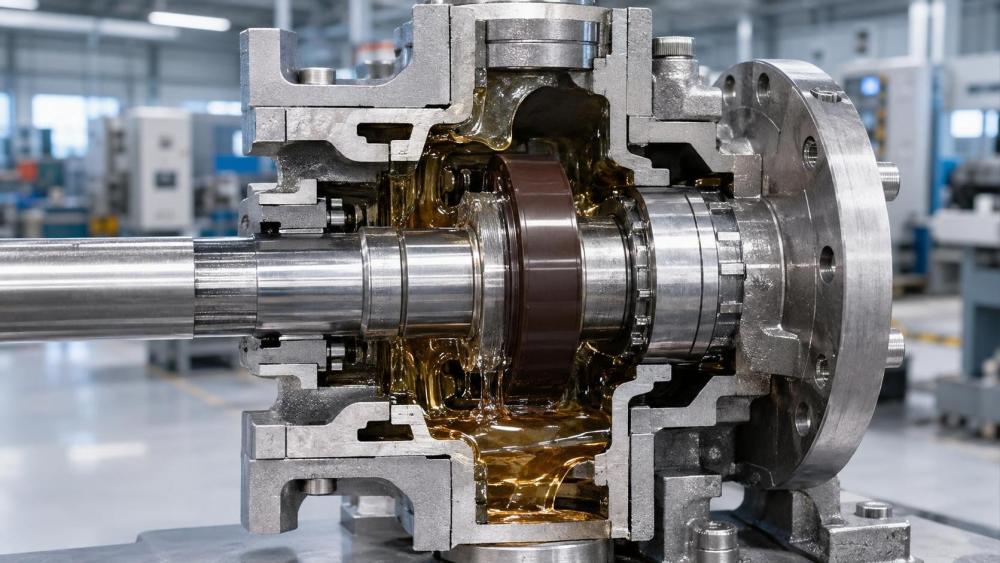
Material Selection Must Follow the Failure Mechanism
The same leakage symptom can come from different causes. A leaking valve stem does not automatically indicate insufficient temperature resistance. It may reflect extrusion into a clearance gap, incorrect gland dimensions, surface scoring, abrasive particles, thermal expansion mismatch, or a chemically swollen seal. Each cause points toward a different material or design response.
This distinction matters because a harder compound is not automatically a better seal. Increasing filler content may improve wear resistance and reduce deformation, but it can also reduce conformability and raise friction. A low-friction material may reduce heat generation while lacking the stiffness required to resist extrusion. The correct choice is the one that addresses the dominant failure mode without creating a new one.
Temperature Ratings Need Operating Context
Material data sheets commonly list continuous-use or short-term temperature values. These values are useful for screening, but they do not represent a complete seal qualification. The relevant temperature is the temperature at the sealing interface, including frictional heating and local hot spots, rather than only the temperature measured in the machine housing.
Pressure changes the thermal decision. At elevated pressure, a polymer may deform into the clearance between a seal and its mating surface. High temperature lowers resistance to this deformation, particularly when the seal is held under load for long periods. A backup ring, reduced extrusion gap, altered seal profile, or a stiffer filled grade may be required before changing the base polymer.
Thermal cycling also deserves separate evaluation. A seal exposed to a hot process fluid during operation and then to a cool cleaning fluid may experience more stress than a seal held continuously at the maximum operating temperature. Expansion, contraction, fluid absorption, and recovery should be considered together. A short laboratory exposure at one temperature cannot reproduce this sequence.
Dynamic Sealing Requires Control of Friction and Wear
Static seals mainly need compression retention and chemical stability. Dynamic seals add sliding or rotating contact, so frictional behavior becomes a design variable. Shaft speed, contact pressure, lubrication, surface roughness, alignment, and the presence of particles all affect the temperature generated at the interface.
PTFE-based compounds are often selected where low friction and chemical resistance are important, but unfilled PTFE has limited resistance to deformation under load. Filled grades improve creep and wear performance, although each filler changes the interaction with the mating surface. PEEK and other rigid high-temperature polymers can provide better dimensional stability and wear resistance, but they require appropriate clearance, surface preparation, and seal geometry because they do not conform like a soft elastomer.
A polymer seal should be evaluated with the actual counterface. A smooth shaft is not automatically ideal if the finish retains lubricant poorly; an excessively rough surface can abrade the seal. Misalignment produces uneven contact and localized heating. Shaft runout, housing concentricity, edge breaks, and lead-in chamfers can determine whether a high-cost polymer seal survives installation and operation.
Processing and Installation Can Decide the Result
High-temperature compounds are sensitive to processing quality. Moisture, incorrect drying, excessive residence time, poor filler dispersion, and uncontrolled molding conditions can create voids, weld-line weakness, or inconsistent dimensions. These defects may not be visible but can become leakage paths after thermal cycling or pressure exposure.
Machined seals introduce their own variables. Tool wear, cutting heat, burrs, and dimensional drift can change the sealing edge or clearance. A polymer component that is machined immediately after a temperature change may not hold the same dimensions after it equilibrates with the equipment. Dimensional inspection should therefore account for material relaxation and the actual assembly temperature.
Installation damage is frequently mistaken for material degradation. A sharp thread, dry assembly, contaminated groove, excessive stretching, or a twisted seal can produce early leakage even when the selected polymer is chemically and thermally suitable. Protective sleeves and controlled insertion paths are valuable for rigid polymer seals, which may not recover from a small nick as readily as a soft elastomer.
Compression must remain within the geometry’s intended range. Excessive compression raises friction and installation force, while insufficient compression allows leakage during pressure fluctuation. For high-temperature service, the design should account for polymer expansion, groove expansion, thermal recovery, and changes in clearance at both the cold installation condition and the hot operating condition.
Qualification Should Reproduce the Complete Service Cycle
A meaningful validation program combines the variables that act together in the machine. Static immersion testing can reveal swelling or mass change, but it does not show whether a moving seal will wear. A pressure test may identify extrusion, but it may miss chemical embrittlement after long exposure. Thermal aging can show strength loss while overlooking installation damage or shaft misalignment.
The most useful test sequence mirrors the expected duty cycle: installation, heat-up, pressure application, continuous operation, shutdown, cooling, restart, and exposure to cleaning or process fluids where relevant. Leakage rate, friction torque, wear debris, seal dimensions, surface condition, and changes in compression force provide more useful evidence than visual inspection alone.
Test samples should represent the production compound and processing route. A laboratory plaque made from carefully controlled material may not reflect a molded seal with weld lines, fiber orientation, machining marks, or pigment and filler variation. Lot traceability and dimensional records help separate formulation behavior from manufacturing variation.
Where High Heat Polymers Still Cannot Compensate
A high-temperature polymer will not correct a fundamentally unsuitable sealing system. If the housing distorts under load, the shaft is misaligned, the pressure gap is excessive, or the fluid contains abrasive contamination, changing material alone may provide only temporary improvement. The seal profile, backup support, thermal management, lubrication path, and surface condition must be considered as one system.
Material substitution also requires attention to assembly compatibility. A polymer seal may need different groove dimensions, interference, surface finish, or installation tooling than the elastomer it replaces. Reusing the old geometry without checking deformation and contact pressure is a common source of disappointing results.
The practical decision point is reached when the material’s retained properties match the complete duty cycle with sufficient margin: the seal remains dimensionally stable, preserves contact pressure, resists the working medium, manages frictional heat, and tolerates the installation and maintenance conditions. Under those circumstances, high heat polymers for industrial machinery do more than survive a temperature rating; they prevent the chain of deformation, wear, chemical damage, and leakage that leads to seal failure.
Have questions about this sector analysis, or seeking best practices specific to your niche? Drop us a line below and let the senior consultants at APIM assist you.
We respect your privacy. Your information is strictly confidential.
Related News
- 00
0000-00
How does washing affect contamination in post-consumer recycled PP resins? - 00
0000-00
How does feedstock affect depolymerization equipment selection? - 00
0000-00
US Sets 213.44% Preliminary Antidumping Deposit on Chinese PTMEG - 00
0000-00
When should epoxy be used as a thermal interface material for semiconductors? - 00
0000-00
US Midterm Results Unlikely to Quickly Shift Recycled Plastics Market or Legislation