




How does temperature affect thermoplastic electrical insulation?
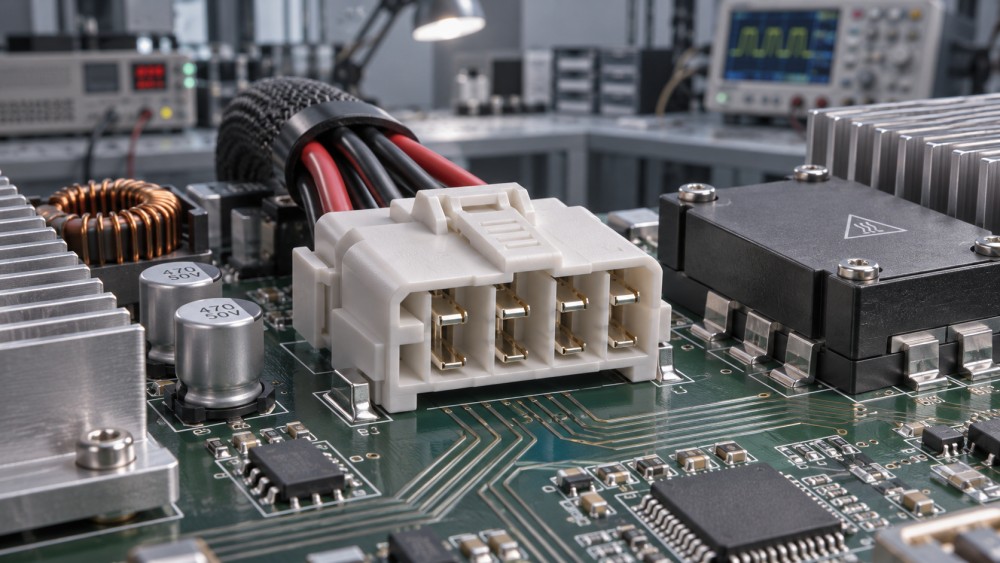
Temperature can change a thermoplastic’s dielectric strength, insulation resistance, mechanical stability, and long-term reliability. For technical evaluators, selecting high temperature thermoplastics for electrical insulation means looking beyond a resin’s maximum service temperature to assess thermal aging, operating voltage, environmental exposure, and application-specific test data. A material that performs well in a room-temperature laboratory test may behave quite differently beside a power module or inside a tightly packed connector.
The central question is not simply “How hot can this polymer get?” It is whether the finished insulation system can maintain adequate electrical separation, mechanical integrity, and safety over the temperature profile it will experience throughout its service life.
What changes when electrical insulation gets hot?
As temperature rises, polymer chains generally gain mobility. Depending on the material and its formulation, that increased mobility can affect charge transport, stiffness, dimensional stability, and resistance to mechanical stress. The effects are not always sudden: some properties change gradually, while others shift more noticeably near a material transition or after extended thermal exposure.
Three temperature-dependent properties deserve particular attention.
- Insulation resistance: Electrical resistance through or across an insulating material often decreases as temperature increases. Higher leakage current can become important in compact assemblies, high-impedance circuits, and equipment exposed to both heat and moisture.
- Dielectric strength: The voltage stress a material withstands before electrical breakdown can change with temperature, specimen thickness, electrode geometry, and test duration. A room-temperature value alone cannot establish performance under service conditions.
- Mechanical integrity: Heat can reduce stiffness and accelerate creep. If an insulating wall deforms under a terminal load or loses its position, the resulting reduction in electrical clearance may matter as much as a change in the polymer’s intrinsic dielectric properties.
Dielectric constant and dissipation factor may also vary with temperature and frequency. In some high-frequency or high-voltage applications, dielectric losses can contribute to internal heating. This makes electrical and thermal behavior interdependent rather than separate items on a data sheet.
Thermal transitions are useful clues, not service limits
Data sheets commonly list glass transition temperature, melting temperature, heat deflection temperature, and continuous-use ratings. Each describes a different aspect of behavior; none should be treated as a universal operating limit.
Glass transition temperature (Tg) marks a region where an amorphous polymer phase changes from a relatively rigid state to a more mobile one. Above this region, stiffness and dimensional control can decline substantially. Semi-crystalline thermoplastics also contain an amorphous phase, but their crystalline structure can help retain useful mechanical properties above Tg. The extent of retention depends on the polymer, crystallinity, reinforcement, and loading conditions.
Melting temperature (Tm) applies to the crystalline phase of a semi-crystalline polymer. It is not an appropriate continuous operating temperature: long before melting, creep, oxidation, dimensional change, or electrical property drift may make a part unsuitable.
Heat deflection temperature (HDT) indicates deformation under a specified short-term load and test arrangement. It is helpful for comparing materials under those conditions, but it does not predict years of service. Similarly, a supplier’s continuous-use figure must be interpreted alongside the property measured, exposure conditions, and acceptable level of deterioration.
Short heat exposure and thermal aging are different problems
A connector may encounter a brief assembly-temperature excursion and then operate for years at a lower temperature. Both exposures matter, but they call for different evidence.
Short-term heat can cause warpage, loss of contact pressure, softening, or damage during assembly. A component that survives the peak visually may still have shifted enough to compromise fit or electrical spacing. Testing should therefore include dimensional checks and functional measurements after the relevant thermal cycle, not just an assessment of whether the plastic melted.
Long-term exposure introduces aging mechanisms such as oxidation, chain scission, embrittlement, and changes in additives or interfaces. These changes can affect mechanical strength and, depending on the environment and formulation, electrical performance. Cyclic heating and cooling can add fatigue or create stresses where plastics meet metals with different thermal expansion behavior.
For evaluation, request aged-property retention rather than only initial properties. Relevant evidence may include insulation resistance, dielectric behavior, tensile or flexural properties, impact resistance, and dimensional change after exposure. Accelerated aging is useful for comparing candidates, but extrapolation to service life requires an appropriate model and should not assume that the degradation mechanism remains unchanged at every test temperature.
Comparing high temperature thermoplastics for electrical insulation
Polymer family names provide a starting point, not a final selection. The same base resin may be supplied in unfilled, reinforced, flame-retardant, or otherwise modified grades with materially different properties.
Reinforcement can improve stiffness and reduce deformation at temperature, but it can also change anisotropy, surface finish, and electrical behavior. Conductive fillers require particular care: a compound designed to dissipate static or conduct heat is not automatically suitable as an electrical insulator. Obtain test results for the exact commercial grade, including its color and additive package where relevant.
Which electrical insulation standards should evaluators use?
Standards help create comparable evidence, but each test answers a specific question. Confirm the current edition, specimen preparation, conditioning, and acceptance criteria with the test laboratory or certification body.
- IEC 60243-1 and ASTM D149: Methods for evaluating electric strength of solid insulating materials. Results are affected by specimen geometry, electrode configuration, test medium, and voltage application.
- IEC 62631 series and ASTM D257: Methods covering relevant dielectric, resistivity, or resistance measurements. Check which method and conditions match the property being reported.
- IEC 60112: A method for determining comparative tracking index or proof tracking index on solid insulating materials under specified conditions. Tracking performance should not be confused with bulk dielectric strength.
- IEC 60216 series: Principles and procedures for determining thermal endurance properties of electrical insulating materials. The selected endpoint and property are essential to interpreting the result.
- UL 746B: A standard associated with long-term property evaluations of polymeric materials. Where a UL Relative Thermal Index is reported, check the specific electrical, mechanical, or impact property and the applicable thickness.
For component compliance, material recognition alone may not be sufficient. End-product requirements can include construction, clearances, creepage distances, flammability, electrical testing, and aging of the complete assembly. For an insulation system, applicable system-level evaluation may also be necessary because materials can interact during service.
Build the comparison around the real operating environment
A useful evaluation starts with a temperature profile rather than a single maximum value. Identify normal operating temperature, local hot spots, peak duration, cycling frequency, and expected service life. Include self-heating from current-carrying conductors or neighboring components, as well as the effect of enclosure ventilation.
Then define the electrical stresses: operating voltage, transient or impulse exposure, frequency, field concentration, and the consequences of leakage or breakdown. In high-voltage assemblies, voids and sharp geometries can produce localized field intensification and partial discharge. A good bulk dielectric-strength result does not eliminate those design risks.
Environmental conditions can change the comparison. Moisture, contamination, salts, process chemicals, and condensation may reduce surface insulation resistance or increase tracking risk. A humid connector near a heat source should therefore be evaluated after appropriate conditioning and thermal exposure, not only in a dry, clean state.
Finally, assess the finished geometry. Thin walls, weld lines, residual molding stresses, fiber orientation, and variations in crystallinity can make a molded part behave differently from a standardized test specimen. Extruded insulation has its own concerns, including thickness consistency, contamination, voids, and cooling history. Manufacturing controls are part of the insulation decision.
A practical evidence checklist for technical reviews
When comparing supplier proposals, ask for information that connects material properties to the intended duty:
- The exact grade and formulation category, including reinforcement, flame-retardant package, and any conductive additives.
- Electrical properties measured at relevant temperatures and, where applicable, after humidity conditioning and thermal aging.
- Thermal-endurance evidence with the test property, exposure conditions, specimen thickness, and failure endpoint clearly identified.
- Mechanical property retention and creep behavior under representative loads, temperatures, and exposure times.
- Processing recommendations and evidence that critical part features can be produced consistently.
- Applicable material documentation and a clear distinction between material-level results and finished-component compliance.
If two candidates appear similar on paper, prototype testing can expose the more meaningful difference: one may retain contact pressure after cycling, while the other develops dimensional drift or leakage paths. The strongest choice is not necessarily the resin with the highest headline temperature. It is the grade whose electrical and mechanical performance remains adequate in the actual design, environment, and manufacturing process.
Have questions about this sector analysis, or seeking best practices specific to your niche? Drop us a line below and let the senior consultants at APIM assist you.
We respect your privacy. Your information is strictly confidential.
Related News
- 00
0000-00
How to select low outgassing plastic materials for optical displays - 00
0000-00
EU Ban on Plastic Waste Exports to Non-OECD Countries Takes Effect - 00
0000-00
How to select POM for dimensionally stable precision gears - 00
0000-00
UK Parliament Approves Expanded Controls on Persistent Organic Pollutants - 00
0000-00
How does temperature affect thermoplastic electrical insulation?