




Specialty Packaging Films Trends in 2026: Performance Shifts Shaping New Product Development
In 2026, specialty packaging films are no longer judged only by seal strength or barrier data. They are becoming decision-level materials that influence shelf life, compliance, pack design, line efficiency, and sustainability outcomes across several industries.
That shift matters because packaging performance now sits closer to product performance. A film choice can affect oxygen exposure, moisture control, puncture risk, sterilization stability, label behavior, and even transport loss in high-value applications.
For companies developing new products, specialty packaging films are moving from a downstream purchase item to an upstream development variable. Material selection, processing compatibility, and supplier consistency now shape competitiveness earlier in the project cycle.
Why 2026 looks different for specialty packaging films
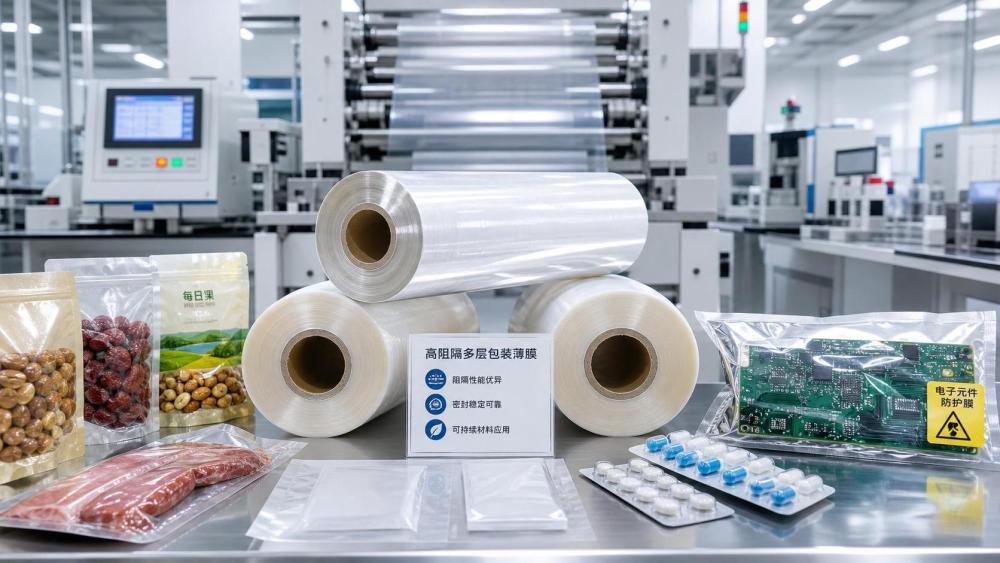
Several forces are converging at once. Regulatory pressure is tightening. Product formats are changing. Sustainability targets are becoming more specific. At the same time, converters are expected to deliver better performance with less material complexity.
In practical terms, this means specialty packaging films must now do more than protect contents. They must support recyclability pathways, survive demanding filling conditions, and maintain stable performance under broader distribution and storage environments.
This is also where APIM’s market focus becomes useful. Packaging decisions increasingly depend on polymer performance, multilayer design, extrusion control, surface treatment, and global supply reliability rather than simple resin substitution.
What counts as a specialty film in current packaging practice
The term covers films engineered for a specific functional requirement beyond commodity wrapping. That may include high oxygen barrier, moisture resistance, chemical resistance, transparency control, peel behavior, thermal stability, conductivity, or tamper performance.
Specialty packaging films may be based on PET, PE, PP, PA, EVOH, TPU, or multilayer combinations. In many cases, the real value comes from structure design, additives, coating technology, and process discipline rather than a single resin grade.
The market is also widening. Food and pharmaceutical uses remain central, but industrial components, electronics, premium consumer goods, and protective transit packaging are creating more demand for targeted film performance.
Performance shifts shaping new product development
The biggest trend is that film performance is being evaluated as a system property. Mechanical strength, sealing behavior, printability, machinability, and end-of-life potential are now reviewed together, not as separate checkboxes.
Barrier is becoming more precise
Older specifications often asked for “high barrier” in broad terms. In 2026, requirements are becoming application-specific. Oxygen transmission, moisture vapor transmission, aroma retention, and light shielding are being matched to actual product sensitivity and distribution time.
This helps avoid both under-specification and overengineering. It also changes supplier discussions, because film structures must be justified by measurable protection needs rather than habit.
Seal performance is under closer scrutiny
Seal integrity remains a critical source of pack failure. What is changing is the level of detail. Hot tack, sealing window, contamination tolerance, and seal-through performance now matter more where line speeds are rising and formats are diversifying.
For specialty packaging films, a strong laboratory result is not enough. Stable behavior across different machines, dwell times, and temperature ranges is becoming a key commercial differentiator.
Downgauging must still protect performance
Material reduction is still a major objective, but it is no longer accepted if it introduces transport damage, wrinkle issues, poor seal yield, or lower abuse resistance. The more serious discussion is now about optimized structure, not just thinner structure.
That often requires better extrusion consistency, tighter thickness tolerance, and stronger understanding of puncture resistance, stiffness, and flex-crack behavior.
Where business value is actually being created
Specialty packaging films create value when they reduce total packaging risk, not only when they improve one property. A more expensive film may still lower overall cost if it cuts spoilage, leakage, line stoppage, returns, or material overuse.
This is especially relevant in sectors where the product value is much higher than the packaging cost. In those cases, film failure can erase the savings from a lower-cost structure very quickly.
Seen this way, specialty packaging films sit at the intersection of materials science, conversion capability, and commercial risk management. That is why packaging teams are relying more on structured technical intelligence, including platforms such as APIM.
Applications are becoming more segmented
The market for specialty packaging films is not moving in one direction. Different sectors are asking for different combinations of performance, and this segmentation is reshaping development priorities.
- Food packaging is focusing on tailored barrier, seal reliability, and reduced material use without shortening shelf life.
- Pharmaceutical packaging is placing greater weight on cleanliness, traceability, stability, and resistance to sterilization or sensitive storage conditions.
- Industrial packaging is prioritizing puncture strength, chemical resistance, anti-corrosion support, and transport durability.
- Electronics and technical goods need moisture control, static management, dimensional stability, and protective surface behavior.
- Premium consumer formats are asking for appearance, clarity, tactile quality, and print performance without sacrificing recovery options.
These differences matter because one film platform rarely serves all needs well. New product development works better when the packaging brief reflects the actual failure modes of the application.
Sustainability is moving from claims to engineering detail
In 2026, the sustainability conversation around specialty packaging films is becoming harder and more practical. Broad statements about “eco-friendly packaging” are being replaced by questions about material compatibility, recycled content behavior, and end-of-life feasibility.
Mono-material structures are getting more attention, but they are not automatically better in every case. If shelf life drops sharply or pack failure rises, the environmental outcome may worsen despite simpler recovery.
This is why film developers are balancing barrier needs, processing stability, downgauging limits, and recycling pathways together. APIM’s coverage of recycled polymers, biomaterials, and extrusion technologies reflects exactly this broader decision context.
How to evaluate suppliers and film platforms more effectively
A useful evaluation process starts with the application, not the catalog. The right question is not which film looks advanced, but which structure performs reliably under the actual pack design, filling process, and distribution environment.
- Define the primary product risk: oxygen, moisture, puncture, migration, appearance, or line instability.
- Ask for structure-level data, not only top-line claims.
- Check consistency across batches, rolls, and production sites.
- Review process fit with sealing equipment, forming conditions, and print or lamination steps.
- Confirm documentation for compliance, testing, and material traceability.
- Model total cost using waste, downtime, damage, and shelf-life effects.
This kind of review usually produces better decisions than comparing price per kilogram alone. Specialty packaging films create value through consistent application performance, and that value needs to be measured where it appears.
What to watch next
The next phase of the market will likely reward film structures that simplify portfolios while keeping performance stable. Better co-extrusion design, smarter additive use, and stronger process control will matter as much as new resin introductions.
It is also worth tracking how specialty packaging films connect with adjacent material decisions. Adhesives, coatings, release layers, and converting conditions increasingly affect whether a film succeeds in real production.
A sensible next step is to review current packaging specifications against real product risks, recovery targets, and supplier capability data. That comparison usually reveals where a film upgrade, structure change, or broader material review deserves immediate attention.
Have questions about this sector analysis, or seeking best practices specific to your niche? Drop us a line below and let the senior consultants at APIM assist you.
We respect your privacy. Your information is strictly confidential.
Related News
- 00
0000-00
Do polyolefin hot melt adhesives bond well to polyethylene? - 00
0000-00
Korean Study Finds PLA Barely Degrades in Landfill After 320 Days - 00
0000-00
How to assess batch consistency from a thermal potting compounds supplier - 00
0000-00
How much weight can carbon fiber reinforced plastics save in cars? - 00
0000-00
Switching from PS to ABS Sheet Extrusion: Equipment Checks