




PMMA vs PET for Optical Clarity: Which Material Is Better for Displays and Lenses?
In optical plastics, the question is rarely whether a material is clear. The real issue is how that clarity holds up through converting, assembly, shipping, and end use.
That is why PMMA and PET are often compared in the same sourcing discussion. Both can deliver transparent parts and films, yet they behave very differently in displays, lenses, covers, and glazing layers.
For companies working across supply chains, this comparison matters beyond datasheet haze values. Optical performance, scratch behavior, forming limits, coating compatibility, and cost stability all influence which material actually works in production.
Why this comparison matters in current optical markets
Transparent plastics are used in more places than traditional display windows. Consumer electronics, automotive interiors, lighting systems, medical devices, retail panels, and industrial equipment all depend on controlled optical performance.
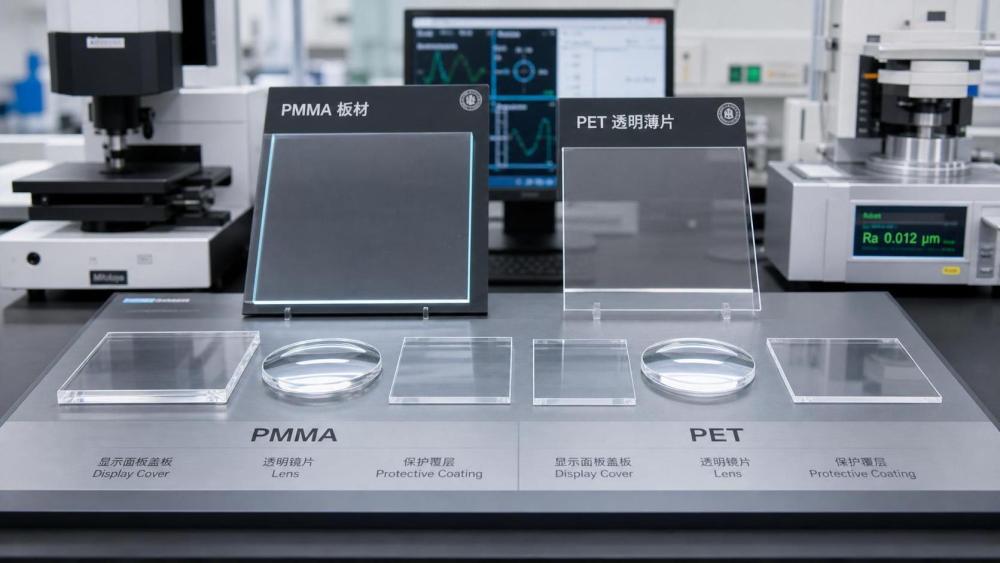
In these markets, buyers are no longer selecting resin by name alone. They are comparing how PMMA and PET perform after extrusion, thermoforming, lamination, printing, coating, die cutting, or secondary bonding.
APIM often frames material choice this way: not as a simple polymer label, but as a decision linked to product function, processing window, durability, and commercial risk. That approach fits optical materials especially well.
PMMA and PET start from different strengths
PMMA, often called acrylic, is widely known for excellent light transmission and high surface gloss. It is commonly chosen where visual sharpness, brightness, and premium appearance are important.
PET, depending on grade and format, is valued for balanced clarity, good toughness, and efficient processing into film or sheet. It is often preferred when impact resistance and converting flexibility matter more than maximum optical purity.
At a basic level, PMMA usually leads in optical clarity. PET often leads in toughness and handling resilience. The better material depends on what kind of transparency the application really needs.
Optical clarity is more than transparency
A clear plastic may still distort light, lose gloss, show flow marks, or pick up surface damage. For displays and lenses, clarity includes light transmission, haze, color neutrality, and freedom from visual distortion.
PMMA is often favored for these stricter requirements. It can deliver very high transmission and a crisp appearance that supports display covers, illuminated signage, light guides, and optical panels.
PET can also look very clear, especially in film applications. Still, in demanding optical parts, PMMA usually provides a more glass-like visual result.
Where PMMA tends to outperform PET
PMMA performs strongly when surface appearance is visible to the end user. This includes decorative display covers, backlit panels, optical diffusers, and lens elements where brightness and clean transparency matter.
It also has an advantage in scratch resistance compared with standard PET. That matters when the part is handled frequently or expected to maintain a polished appearance without immediate coating support.
For outdoor or light-exposed use, PMMA is also known for weatherability and UV stability. PET can require more caution when long-term appearance retention is part of the specification.
Where PET can be the smarter commercial choice
PET becomes attractive when an application needs good clarity with better flexibility, toughness, or film-based converting economics. In overlays, protective films, laminated structures, and formed packaging windows, PET can be more practical.
It is also widely available in industrial film and sheet supply chains. That helps when the project depends on volume consistency, multiple converters, or compatibility with established thermoforming and coating lines.
In other words, PET may not always win the pure optics contest, but it can still win the program. That distinction matters when the final product is judged by total performance, not only by lab transparency.
Processing can change the answer
A resin that looks ideal on paper may become difficult after extrusion or downstream fabrication. Optical materials are particularly sensitive to moisture control, melt stability, contamination, and temperature history.
PET processing often demands careful drying and stable line control. PMMA also needs disciplined handling, especially when visual defects, stress cracking, or surface quality can reject an otherwise usable part.
This is where APIM’s broader materials perspective is useful. Optical clarity is connected to compounding quality, filtration, die design, sheet control, and coating interaction, not only polymer family.
Displays, lenses, and protective parts do not ask the same question
One common sourcing mistake is treating all clear parts as one category. Displays, lenses, and protective covers may all look similar in a quote request, yet their success criteria differ.
Display covers and visual panels
PMMA is often preferred where high gloss, brightness, and premium visual effect are central. It works well for front panels, illuminated surfaces, retail displays, and light-guiding applications.
PET can fit when flexibility, laminating steps, or impact resistance are more important than top-end visual sharpness.
Lenses and optical elements
For many lens-related uses, PMMA is the more familiar choice because of its excellent light transmission and optical precision potential. It is widely used in lighting optics and molded transparent components.
PET may appear in secondary optical roles, especially where films, layers, or protective structures are involved rather than precision lens geometry.
Protective glazing and overlays
Here the decision becomes more balanced. If scratch visibility and appearance retention matter most, PMMA is attractive. If handling damage, forming stress, or multilayer construction dominates, PET may offer better operational value.
Practical checks before choosing PMMA or PET
A useful comparison should move past general claims and into application-specific questions. Several checkpoints can reduce sourcing mistakes early.
- Define whether the part needs premium optical appearance or only functional transparency.
- Check whether the surface will be exposed, coated, printed, laminated, or bonded.
- Review scratch expectations during transport, assembly, and user contact.
- Compare formed-part geometry, thickness tolerance, and internal stress sensitivity.
- Ask for data on UV stability, yellowing resistance, and aging in the real use environment.
- Verify supply format, such as pellets, extruded sheet, coated film, or custom optical grade.
These checks are especially relevant when qualification depends on multiple suppliers. A material name alone does not guarantee equivalent optical output across different grades or process histories.
The better material depends on the kind of risk being managed
If the main risk is poor visual quality, PMMA is often the safer starting point. If the main risk is breakage, converting inefficiency, or multilayer process complexity, PET may offer a better balance.
That is why the answer is not simply PMMA versus PET. The better question is which material protects optical performance while staying compatible with fabrication, logistics, and long-term product expectations.
For many display covers and lens-related applications, PMMA remains the stronger choice on pure optical clarity. For converted films, protective structures, and toughness-driven programs, PET often deserves serious consideration.
A productive next step is to compare both materials against the same shortlist: required transmission, haze limit, scratch exposure, process route, coating plan, outdoor life, and target cost. That usually reveals whether PMMA is the premium necessity or whether PET is the more efficient fit.
Have questions about this sector analysis, or seeking best practices specific to your niche? Drop us a line below and let the senior consultants at APIM assist you.
We respect your privacy. Your information is strictly confidential.
Related News
- 00
0000-00
How does washing affect contamination in post-consumer recycled PP resins? - 00
0000-00
How does feedstock affect depolymerization equipment selection? - 00
0000-00
US Sets 213.44% Preliminary Antidumping Deposit on Chinese PTMEG - 00
0000-00
When should epoxy be used as a thermal interface material for semiconductors? - 00
0000-00
US Midterm Results Unlikely to Quickly Shift Recycled Plastics Market or Legislation
Tag