




Optical Films Price in 2026: What Drives Cost Across PET and PI Grades
Why is optical films price in 2026 getting harder to estimate?
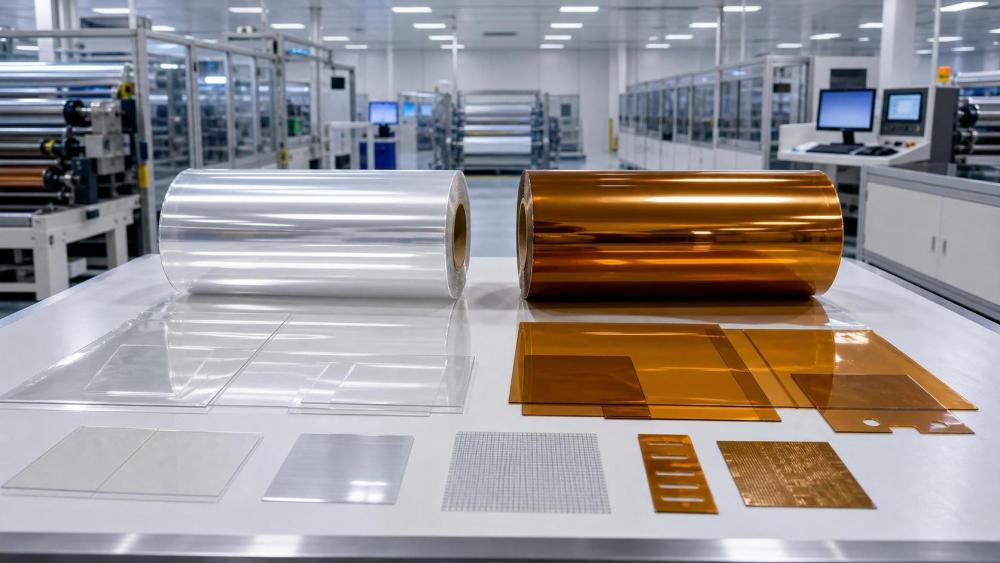
Optical films price in 2026 is no longer tied to resin alone. That is the first point worth clearing up.
In practical sourcing work, the quoted number reflects material chemistry, coating steps, quality tolerance, yield loss, and delivery risk.
For PET and PI grades, the gap can widen quickly when an application moves from basic protection to display, touch, insulation, or high-heat electronics.
A thin PET optical film for standard lamination may track resin cycles closely. A precision PI optical film usually does not.
That difference matters in 2026 because film buyers face tighter performance demands and less tolerance for supply disruption.
Across electronics, automotive interiors, industrial displays, and coated substrates, the real cost question is broader than price per square meter.
It includes optical clarity, haze control, thermal stability, width consistency, surface energy, cleanroom quality, and conversion yield.
That is also why structured market interpretation matters. APIM often frames specialty films through performance, processing, and supply logic, not price in isolation.
When teams compare PET and PI grades that way, optical films price becomes easier to judge against application risk.
PET or PI: which one actually drives a higher optical films price?
In most cases, PI drives the higher optical films price. The reason is not branding or niche positioning. It is process difficulty.
PET films are widely used, globally available, and supported by mature extrusion and coating infrastructure.
PI films serve harsher conditions. They are chosen where heat resistance, dimensional stability, dielectric behavior, or bending durability cannot be compromised.
That means higher raw material cost, tighter manufacturing windows, and often lower line throughput.
More importantly, the same thickness does not imply the same value. A 50-micron PET optical film and a 50-micron PI optical film can sit in entirely different cost structures.
A quick comparison helps separate the common assumptions from the useful ones.
So the better question is not whether PI is more expensive. It usually is. The useful question is whether the application truly needs it.
What cost drivers matter more than resin price?
Many sourcing discussions begin with resin index movement. That is understandable, but optical films price is often shaped elsewhere.
The strongest cost drivers usually sit in production control and downstream usability.
- Coating stack complexity. Hard coat, anti-glare, anti-fingerprint, conductive, or release layers add process time and scrap risk.
- Thickness tolerance. Tight gauge control raises conversion value, but it also raises manufacturing cost.
- Optical specifications. Haze, transmission, birefringence, and surface defects often determine qualification success.
- Cleanliness level. Electronics and display uses may require cleaner environments and stricter particle control.
- Yield loss. A cheaper roll can become expensive if slitting, lamination, or die-cutting creates excess waste.
- Certification and validation. Reliability testing adds time and cost, especially for automotive or sensitive electronic assemblies.
In actual buying cycles, these factors often explain why two offers with similar resin families show very different numbers.
APIM’s materials coverage is useful here because it connects film properties to processing realities, including extrusion precision and downstream performance.
That link matters when optical films price needs to be defended internally with technical reasoning, not only benchmark averages.
When does a lower optical films price become the more expensive choice?
This happens more often than expected. The lowest quoted optical films price can create the highest total cost once line performance is measured.
A common example is width inconsistency. It may seem minor at quotation stage, yet it can reduce usable yield during slitting or lamination.
Another example is unstable surface treatment. The film looks acceptable in inspection, then bonding or coating performance drifts during production.
For PI grades, substitution risk is even sharper. A lower-cost source may pass basic data review but fail under heat cycling or flex conditions.
The practical test is simple: ask what happens after the roll enters the process, not only before shipment.
Use this short decision table when reviewing offers.
If a quote cannot explain these points clearly, the nominal saving may not be a real saving.
How should PET and PI grades be compared for real applications?
A useful comparison starts with operating conditions, not catalog names.
For display and electronics uses, ask four things early: heat exposure, bending stress, optical target, and converting method.
PET is often the right fit where transparency, dimensional control, and cost balance matter more than extreme temperature endurance.
PI becomes more convincing when the film must survive repeated thermal load, aggressive processing windows, or advanced flexible circuit demands.
In industrial products, the decision also depends on what sits around the film. Adhesives, coatings, and lamination temperatures can shift the answer.
That is why APIM’s cross-material view matters. Optical films do not perform alone. They interact with adhesives, substrates, extrusion quality, and assembly conditions.
A lower optical films price on PET may be correct for one stack-up and completely wrong for another.
- Choose PET when the thermal window is moderate and the application rewards stable cost and broad supply options.
- Choose PI when failure under heat or flex would create far larger downstream cost than the film premium.
- Request trial data by application condition, not generic datasheets alone.
What should be on the checklist before accepting a 2026 quote?
This is where many optical films price decisions improve. A disciplined quote review reduces both cost surprises and approval delays.
The key is to ask questions that connect price to use.
- What exact grade, thickness, coating structure, and treatment level is included?
- Is the quote based on prime material, conversion-grade material, or a mixed qualification route?
- How stable are lead times across regions, not just in the current month?
- What is the lot-to-lot tolerance on haze, thickness, width, and surface energy?
- Which test reports are current, and which must be repeated for this end use?
- Does the supplier have a second site, alternate line, or backup resin route?
These checks matter more in 2026 because supply chains remain uneven across advanced films and specialty polymer systems.
The best optical films price is usually the one that holds technical consistency, delivery reliability, and acceptable conversion economics at the same time.
So how should optical films price be judged in 2026?
A sensible judgment starts by separating quote price from ownership cost.
For PET grades, watch coating complexity, tolerance discipline, and downstream waste. Those areas often explain the real spread.
For PI grades, focus on qualification reliability, thermal demands, and supplier depth. That is where premium pricing is usually earned or exposed.
If the application is evolving, build comparison sheets around use conditions, not only material family names.
If the supply base is narrow, track lead time and backup capacity as part of optical films price evaluation.
And if internal teams need a clearer benchmark, structured material platforms such as APIM can help translate film specifications into practical cost logic.
The next step is straightforward: define the operating window, compare PET and PI only against that window, then test quoted savings against yield, reliability, and delivery risk.
That approach makes optical films price in 2026 far easier to defend, negotiate, and improve.
Have questions about this sector analysis, or seeking best practices specific to your niche? Drop us a line below and let the senior consultants at APIM assist you.
We respect your privacy. Your information is strictly confidential.
Related News
- 00
0000-00
NAPCOR Report: US PET Bottle Recycling Rate Fell to 29% in 2025 - 00
0000-00
How does washing affect contamination in post-consumer recycled PP resins? - 00
0000-00
How does feedstock affect depolymerization equipment selection? - 00
0000-00
US Sets 213.44% Preliminary Antidumping Deposit on Chinese PTMEG - 00
0000-00
When should epoxy be used as a thermal interface material for semiconductors?