




Low Haze Optical Film Materials: Key Properties and Selection Criteria
Low haze optical film materials sit at the center of many high-visibility products. In displays, touch interfaces, automotive trim, and protective layers, even small optical defects can change how a product looks and performs.
That is why selection usually goes beyond a single haze number. Light transmission, gloss, coating quality, thickness control, thermal stability, and processing behavior all shape the final result.
Across advanced polymers and specialty films, this topic matters because optical films are rarely standalone materials. They interact with substrates, adhesives, coatings, converting steps, and long-term environmental exposure.
What low haze optical film materials actually mean in practice
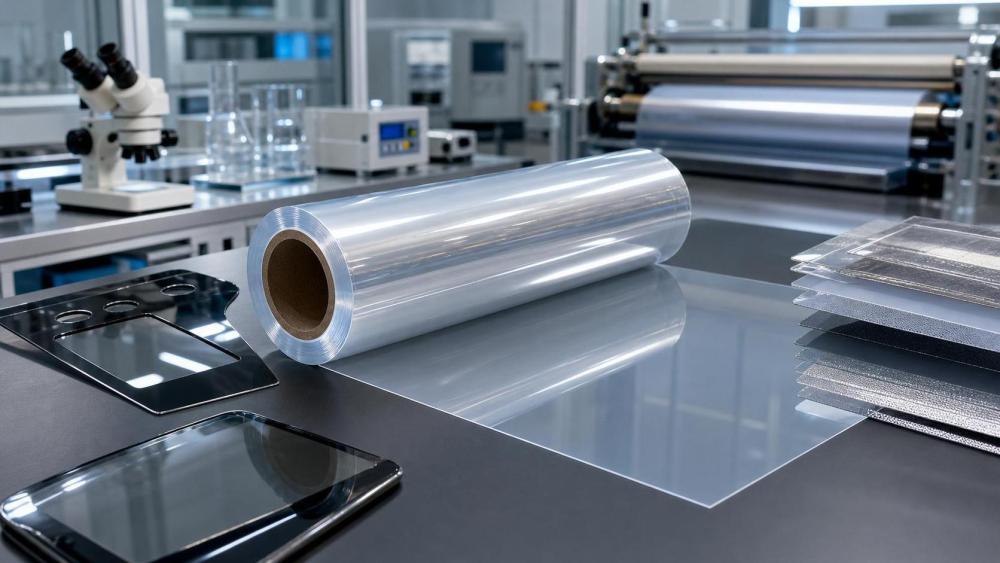
Low haze optical film materials are engineered films designed to minimize light scattering while preserving clarity, appearance, and consistent optical performance.
In simple terms, haze describes how much transmitted light is diffused. Lower haze generally means a sharper view through the film, stronger contrast, and cleaner surface appearance.
However, low haze does not automatically mean the best film for every use. A film can test well in the lab and still create problems during lamination, printing, forming, or outdoor aging.
This is especially relevant in APIM-covered markets, where optical films may be paired with PMMA, PC, PET, specialty coatings, pressure-sensitive adhesives, and multilayer structures.
Why the market pays close attention to optical haze
Optical surfaces are now expected to do more than remain transparent. They may also need scratch resistance, chemical resistance, anti-glare control, dimensional stability, and compatibility with automated converting lines.
In electronics, low haze optical film materials can affect screen readability, color perception, and the visibility of underlying circuits or decorative layers.
In automotive interiors, they influence piano-black panels, display covers, sensor windows, and illuminated decorative parts, where reflection control and clean aesthetics are tightly linked.
Protective surface applications create another layer of complexity. A clear film may need low haze at shipment, then maintain the same look after die-cutting, shipping, peel-off, and final assembly.
More worth noting is the supply chain effect. Converters and product developers need film properties that stay stable across batches, not only strong headline values in a technical sheet.
Key properties behind a reliable film choice
When evaluating low haze optical film materials, several properties should be reviewed together rather than in isolation.
Optical performance
Haze remains essential, but visible light transmission is equally important. A very low haze film with weaker transmission can still reduce brightness or alter the appearance of backlit structures.
Surface gloss also matters. Some applications require high gloss for depth and premium appearance, while others need controlled reflection to avoid glare.
Surface and defect control
Gels, black specks, flow marks, coating streaks, and micro-scratches can undermine otherwise good optical data. In high-clarity applications, visible defects often drive rejection faster than minor haze variation.
Thickness consistency
Tight gauge control supports optical uniformity, dimensional predictability, and smoother lamination. Uneven thickness can create distortion, bubbles, uneven peel force, or unstable fit in downstream assembly.
Thermal and mechanical stability
Films used near heat sources or molded components must resist shrinkage, warpage, and loss of clarity. Flexural behavior also matters when films are bent, wrapped, or converted at high line speed.
Coating and adhesion compatibility
Low haze optical film materials often work within layered systems. Surface energy, primer design, and adhesive interaction affect bonding quality, delamination risk, and optical cleanliness at interfaces.
Material families and where tradeoffs appear
Not all low haze optical film materials behave the same. Material family often determines the balance between clarity, stiffness, heat resistance, cost, and processing window.
PET films are widely used because they offer good dimensional stability, strong converting performance, and broad coating compatibility. They fit many display, release, and protective constructions.
PC films can offer excellent toughness and thermoformability. They are often considered where impact resistance, shaped parts, or interior automotive styling are relevant.
PMMA-based films are valued for high transparency and surface appearance. They may be attractive where gloss and optical purity carry more weight than impact strength.
Multilayer constructions introduce another option. They can combine optical performance with barrier, hard-coat, anti-fingerprint, or adhesive-ready functionality, but interface control becomes more critical.
This is where APIM’s broader materials perspective becomes useful. Film selection is often linked to extrusion quality, coating design, adhesive chemistry, and downstream forming conditions.
Where low haze optical film materials create business value
The value of low haze optical film materials appears most clearly when optical appearance directly affects product acceptance, assembly yield, or long-term reliability.
- Display stacks, cover windows, and touch panels that need sharp visibility and stable transmission.
- Automotive interior surfaces that combine decorative depth with sensor or lighting integration.
- Protective films that must stay clear during transport, processing, and final removal.
- Industrial control interfaces where readability matters under indoor or mixed-light conditions.
- Specialty packaging or transparent protective structures where visual quality supports product perception.
In these cases, the wrong film can increase scrap, trigger visual complaints, or force requalification of coatings and adhesives. The right film reduces uncertainty across the full converting route.
How to compare options without relying on one data point
A practical comparison method starts with the real use condition, not the brochure headline. The key question is how the film performs inside the target structure.
Usually, the most useful review path includes:
- Check haze and transmission after lamination, not only before conversion.
- Review surface defect criteria under actual lighting and viewing distance.
- Confirm thickness tolerance against die-cutting, bonding, or forming requirements.
- Test heat, humidity, UV, and chemical exposure based on the real service environment.
- Assess batch consistency and supplier process control, especially for scaled programs.
It also helps to document which defects are functional failures and which are appearance failures. That distinction keeps evaluation more disciplined during supplier comparison.
Common selection mistakes and the next useful step
One common mistake is treating low haze optical film materials as commodity clear films. In reality, optical quality depends on resin purity, extrusion control, filtration, coating uniformity, handling, and storage.
Another mistake is separating material review from process review. A film may look excellent in sheet form but lose value when paired with the wrong adhesive, release liner, or lamination temperature.
For that reason, the next step should be a structured shortlist. Define the optical target, the converting route, the exposure conditions, and the acceptable defect window before requesting final samples.
From there, low haze optical film materials can be compared on a more realistic basis: not only by haze percentage, but by fit with process stability, end-use durability, and visual consistency.
A clearer selection framework usually leads to better technical discussions, faster qualification, and fewer surprises after scale-up.
Have questions about this sector analysis, or seeking best practices specific to your niche? Drop us a line below and let the senior consultants at APIM assist you.
We respect your privacy. Your information is strictly confidential.
Related News
- 00
0000-00
Do polyolefin hot melt adhesives bond well to polyethylene? - 00
0000-00
Korean Study Finds PLA Barely Degrades in Landfill After 320 Days - 00
0000-00
How to assess batch consistency from a thermal potting compounds supplier - 00
0000-00
How much weight can carbon fiber reinforced plastics save in cars? - 00
0000-00
Switching from PS to ABS Sheet Extrusion: Equipment Checks