




Functional Films for Labels: How to Balance Print Quality and Adhesion
Functional Films for Labels: How to Balance Print Quality and Adhesion
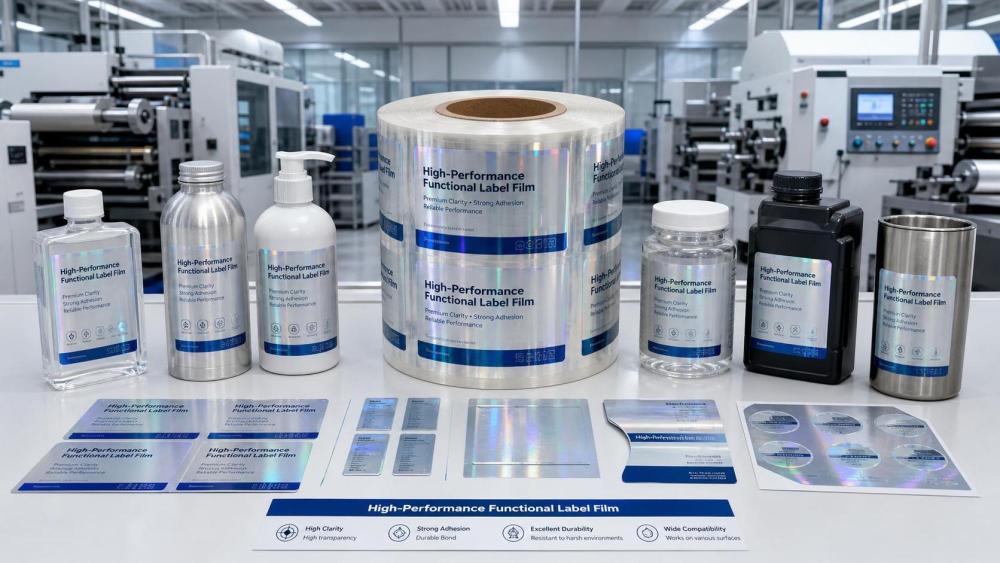
Choosing functional films for labels is not just about surface appearance.
In daily production, print sharpness and bonding reliability often pull in different directions.
A film that prints beautifully may resist ink anchorage after converting.
A film with aggressive adhesion may create surface defects, curl, or poor color control.
That is why selecting functional films for labels requires a broader processing view.
The film, coating, adhesive, ink, and application surface must work as one system.
In real operations, small mismatches usually show up as scrap, downtime, and customer complaints.
This article explains how to evaluate functional films for labels with practical decision criteria.
Why Functional Films for Labels Fail in Production
Most failures do not begin at the applicator.
They begin earlier, when film selection is based only on appearance or price.
Functional films for labels must support both image quality and downstream adhesion behavior.
If one side of that equation is ignored, the line becomes unstable.
- Low surface energy can reduce ink wetting and create weak print density.
- Poor topcoat compatibility can cause smearing, blocking, or ribbon issues.
- Excessive shrinkage can distort registration after dispensing or heat exposure.
- Inadequate adhesive match can lead to lifting on curved or textured containers.
- Variable caliper can affect die-cutting, tension control, and print consistency.
From recent market changes, label structures are also becoming more demanding.
More brands want thinner constructions, higher recycled content, and stronger visual performance.
This makes the selection of functional films for labels more sensitive than before.
Core Material Properties That Affect Print Quality
Print quality starts with the film surface, not the press setting.
When comparing functional films for labels, several material properties deserve close attention.
Surface Energy and Treatment Stability
Corona or other treatments improve wettability, but treatment level can decay over time.
If aged rolls lose surface energy, ink anchorage becomes inconsistent across the batch.
That problem is common with polypropylene and some polyethylene label films.
Topcoat Chemistry
A printable topcoat can improve ink holdout, abrasion resistance, and thermal transfer performance.
But the chemistry must fit the printing method.
Water-based flexo, UV flexo, digital toner, and inkjet systems behave differently.
Film Clarity, Opacity, and Surface Uniformity
Smooth and uniform films support better line definition and more stable color laydown.
Haze, gels, and uneven gloss can make premium label graphics look weak.
For clear-on-clear labels, optical quality becomes even more important.
Thickness Control
Thickness variation affects print pressure, tension, die-cut depth, and dispensing behavior.
Even small fluctuations can show up as registration drift or edge waste.
Reliable functional films for labels need stable gauge across the full roll width.
What Drives Adhesion Performance on Different Substrates
Adhesion is never just about tack.
It depends on the film face stock, adhesive layer, application surface, and service environment.
This is where many functional films for labels are misjudged.
A good lab result on steel does not guarantee success on HDPE, glass, or powder-coated metal.
Substrate Surface Energy
Low-energy plastics are harder to bond than glass or untreated paperboard.
Containers made from PP, PE, or recycled polyolefin blends often need more tailored label constructions.
Curvature and Surface Texture
A rigid film may print well but resist full contact on narrow bottles or embossed packs.
That creates edge lift, flagging, or tunneling during storage and transport.
Temperature, Moisture, and Chemical Exposure
Cold-fill packaging, outdoor labeling, and chemical drums each create different stress conditions.
Functional films for labels should be reviewed against actual use, not standard room conditions only.
This includes washdown, condensation, UV exposure, and cleaning agents.
How to Match Functional Films for Labels to Printing Processes
The right film depends heavily on the print platform.
One structure rarely performs equally well across every method.
In practice, functional films for labels should be matched with process-specific checkpoints.
This also means trial criteria should go beyond visual approval.
Include rub resistance, tape pull, cure stability, and aging checks.
A Practical Selection Workflow for Better Label Performance
A structured workflow reduces expensive surprises.
When sourcing functional films for labels, a simple evaluation sequence works well.
- Define the end-use surface, shape, and environmental exposure.
- Confirm the printing method, curing conditions, and expected image durability.
- Review film type, caliper tolerance, topcoat, and treatment history.
- Match adhesive performance to substrate energy and application temperature.
- Run pilot trials at real line speed, not reduced demonstration speed.
- Check labels after aging, transport simulation, and final application.
In actual business settings, this step-by-step approach helps separate material issues from process issues.
It also supports cleaner discussions with converters, film suppliers, and adhesive partners.
Common Application Scenarios and Better Film Choices
Different sectors need different trade-offs.
The best functional films for labels depend on the application logic.
Consumer Packaging
Clear PET or BOPP films are often chosen for visual appeal and moisture resistance.
Here, clarity, scuff resistance, and squeeze-bottle conformity matter most.
Industrial and Chemical Labels
Durability is usually more important than premium appearance.
Films need strong adhesion, solvent resistance, and readable print after long storage.
Electronics and Asset Tracking
Thermal stability and barcode legibility become critical in this segment.
Functional films for labels may need specialty coatings for fine data printing.
What to Ask Suppliers Before Final Approval
Supplier documents often look complete, but key details can still be missing.
Before locking in functional films for labels, ask focused technical questions.
- What is the target surface energy at shipment and after storage?
- Which inks, ribbons, or digital systems were validated?
- How stable is caliper across roll width and batch lots?
- What chemical and temperature resistance data is available?
- Is the structure designed for recycling compatibility or downgauging goals?
Better questions usually lead to better material decisions.
That becomes especially important when label constructions are expected to run across multiple regions or product lines.
Final Takeaway
Balancing print quality and adhesion is really a system-matching task.
The most effective functional films for labels are not simply the glossiest or the cheapest.
They are the ones that stay printable, convertible, and durable under real operating conditions.
A more reliable result comes from evaluating surface treatment, topcoat design, adhesive fit, and end-use exposure together.
For teams improving label performance, the next practical move is clear.
Review current defects, compare them against film structure, and test functional films for labels under actual production stress.
Have questions about this sector analysis, or seeking best practices specific to your niche? Drop us a line below and let the senior consultants at APIM assist you.
We respect your privacy. Your information is strictly confidential.
Related News
- 00
0000-00
How does washing affect contamination in post-consumer recycled PP resins? - 00
0000-00
How does feedstock affect depolymerization equipment selection? - 00
0000-00
US Sets 213.44% Preliminary Antidumping Deposit on Chinese PTMEG - 00
0000-00
When should epoxy be used as a thermal interface material for semiconductors? - 00
0000-00
US Midterm Results Unlikely to Quickly Shift Recycled Plastics Market or Legislation