




How flame retardant battery housing materials affect thermal runaway safety
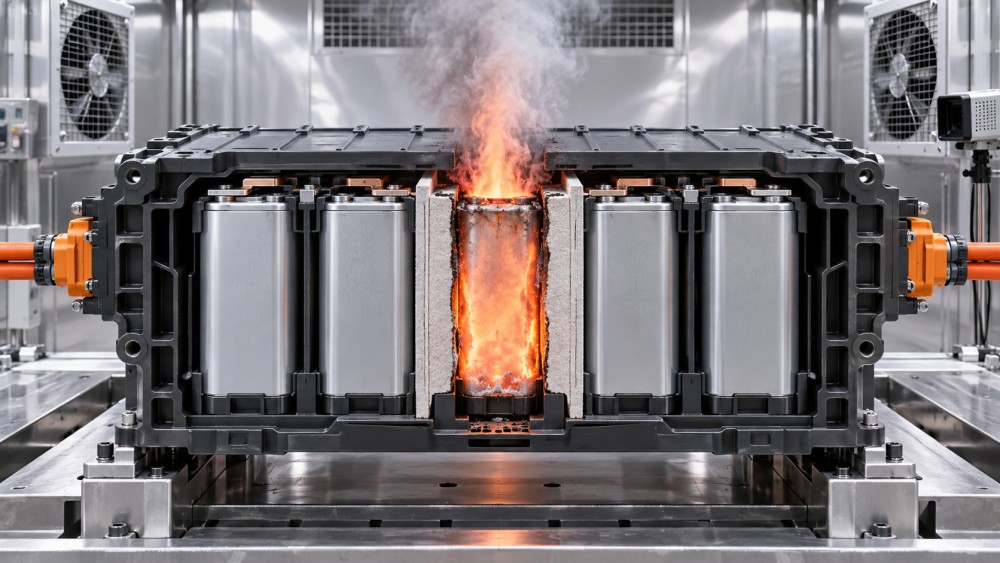
Flame-retardant battery housing materials do not prevent a cell from entering thermal runaway. Their safety value lies elsewhere: they can slow flame spread, reduce heat transfer to adjacent cells or components, preserve enclosure integrity long enough for protective systems to act, and limit the release of burning polymer droplets or secondary fires. Whether they achieve those functions depends on the entire housing design, not on a flammability rating alone.
That distinction is central to material evaluation. A polymer that achieves UL 94 V-0 in a thin test bar may still be unsuitable for a battery cover, module frame, terminal surround, or pack enclosure if it softens under sustained heat, cracks after electrolyte exposure, loses impact resistance at low temperature, or creates conductive paths through carbonized residues. In thermal-runaway safety, the housing is a barrier system with mechanical, thermal, electrical, chemical, and fire-performance duties that can conflict with one another.
What the housing can—and cannot—do during thermal runaway
Thermal runaway is a self-accelerating failure condition in which exothermic reactions inside a battery cell generate heat faster than the cell can reject it. Depending on cell chemistry, state of charge, geometry, and abuse condition, the event may involve rapid gas release, flame, particulate matter, molten materials, and high local temperatures. The safety challenge is not limited to the failing cell. Heat and hot ejecta can trigger neighboring cells, ignite nearby polymeric components, damage electrical isolation, or compromise the enclosure.
A flame-retardant housing contributes through several mechanisms:
- Resistance to ignition: the material should not readily ignite when exposed to flame, hot gases, or radiant heat from a venting cell.
- Suppression of flame propagation: once exposed, it should limit combustion across surfaces, edges, ribs, joints, and cable-entry areas.
- Delay of heat transmission: the housing can provide time before external surfaces, neighboring modules, or adjacent vehicle structures reach critical temperatures.
- Retention of shape and containment function: a cover that melts away, opens at joints, or collapses under pressure can turn a local failure into a broader fire exposure.
- Protection of electrical separation: insulating barriers, terminal zones, and high-voltage clearances must remain functional as long as reasonably required under the design safety concept.
None of these functions makes the housing a substitute for cell-level safety, battery-management controls, current interruption devices, cooling design, vent paths, spacing, thermal barriers, or structural crash protection. A housing is part of the propagation-control strategy. Its performance must be evaluated in the context of the direction, duration, and intensity of the thermal insult it is expected to face.
Flame retardancy is not the same as thermal-runaway resistance
Flame-retardant compounds are commonly screened using standardized material tests such as UL 94. The test remains useful for comparing formulation behavior under a defined small-flame exposure, particularly for identifying afterflame time, dripping behavior, and the tendency to ignite cotton beneath the specimen. However, it does not reproduce cell venting, jet flames, internal pressure, hot particle impingement, prolonged radiant heat, or multi-directional thermal loading inside a battery pack.
UL 94 should therefore be treated as a material qualification input, not as proof that a housing can contain or manage thermal runaway. The practical gap becomes significant when a material is used in thick, highly ribbed, glass-filled, welded, coated, painted, or overmolded components. Nominal thickness matters. A V-0 classification at one thickness does not automatically apply to a thinner section at a snap-fit, weld line, vent feature, or molded edge.
Thermal runaway also tests material behavior outside the usual flammability test window. A component may avoid sustained flaming but still soften enough to lose clamping force, expose busbars, open a seal, or permit hot gases to bypass an intended vent route. Conversely, a material may char at the exposed surface, and that char layer can reduce further burning and heat transfer; whether this is beneficial depends on whether the char remains coherent or becomes friable, electrically problematic, or a source of debris.
For battery housings, the more relevant question is: what failure mode does the polymer exhibit under the specific abuse scenario? The answer requires evidence beyond a single flammability classification.
Material family determines the available safety trade-offs
Many battery housing components are made from flame-retardant engineering thermoplastics because they support high-volume molding, complex geometry, electrical insulation, and part integration. Flame-retardant polyamide, PBT, polycarbonate blends, PPS, and other engineered compounds may be considered depending on the location and duty of the part. Thermoset systems and composite structures may also be used where stiffness, dimensional stability, or elevated-temperature performance is more important than rapid-cycle molding.
The resin backbone establishes the thermal and mechanical baseline; the flame-retardant package modifies how the material responds to ignition and decomposition. Mineral fillers, glass fiber, reinforcing fabrics, intumescent systems, phosphorus-based additives, nitrogen-containing systems, and other approaches can improve specific aspects of fire performance. They can also introduce trade-offs.
Glass-fiber reinforcement, for example, can improve stiffness and reduce thermal deformation. Yet it can make a molded part more anisotropic, affect weld-line strength, increase mold wear, and complicate sealing surfaces. High mineral loading may improve dimensional stability and lower combustible polymer content, but can reduce impact resistance or make thin-wall flow more difficult. Some flame-retardant formulations can alter color stability, hydrolysis resistance, tracking behavior, or long-term dielectric properties. A material cannot be judged solely by its base resin name or its flame-retardant classification.
Halogen-free flame-retardant systems are often evaluated for reasons including smoke, corrosion, regulatory policy, or material stewardship. Their use should not be assumed to produce better thermal-runaway containment automatically. Formulation-specific testing remains necessary because flame chemistry, filler loading, moisture sensitivity, processing history, and part thickness influence actual behavior.
Heat shielding requires attention to geometry, not only resin data
Thermal performance in a battery housing is strongly affected by heat-transfer paths. A thick wall may provide more thermal mass and a longer conduction path than a thin wall, but its benefit is limited if a joint opens, a fastener zone deforms, or an unprotected aperture creates a direct route for flame and hot gas. Ribs can add stiffness but may create thin sections. Metal inserts can improve mechanical attachment while also conducting heat into areas that were intended to remain isolated.
Material datasheets may list heat deflection temperature, melting point, glass-transition temperature, thermal conductivity, and coefficient of thermal expansion. These values are useful screening indicators, yet none individually predicts how a real enclosure will behave under thermal runaway. Heat deflection temperature is measured under a specified load and heating rate; it is not a fire-containment temperature. A high melting point alone does not assure structural retention if the polymer undergoes rapid oxidative degradation or if a reinforced compound loses matrix integrity around fibers.
Component-level validation should focus on the actual local exposure. A module end plate facing a cell vent has a different requirement from an exterior cosmetic cover, a high-voltage connector shroud, or a lower pack tray. The expected heat flux, gas direction, pressure pulse, distance from the source, and duration of exposure should guide test design. Where a polymer sits adjacent to a metallic thermal barrier, the interface and fastening system may matter more than the polymer’s nominal bulk conductivity.
Electrical insulation can deteriorate before visible burn-through
Battery housings frequently perform electrical safety functions in addition to mechanical protection. Insulating walls may separate live conductors from the enclosure, maintain creepage and clearance paths, support connector interfaces, or prevent accidental contact with energized parts. Thermal runaway can threaten those functions before the enclosure visibly fails.
Elevated temperature can cause warpage that narrows air gaps, while decomposition products can deposit on surfaces. Moisture, soot, electrolyte residues, and conductive contamination can reduce surface insulation resistance. Carbonaceous char may be insulating in one formulation and more conductive in another, particularly if the compound contains conductive fillers or if its decomposition behavior creates continuous carbonized paths. This is why comparative tracking index, dielectric strength, volume resistivity, and high-temperature electrical-aging data should be interpreted alongside fire performance.
Attention is also needed where flame-retardant compounds contact busbar coatings, potting materials, gaskets, adhesive tapes, cooling plates, or sensing elements. A material may be electrically suitable in isolation but incompatible with an adjoining component after heat and chemical exposure. In a tightly packaged assembly, migration of additives, plasticizer interaction, stress cracking, and galvanic or moisture-related effects at metal interfaces can become relevant long before a thermal-runaway event occurs.
Electrolyte, coolant, and aging exposures change the material baseline
Battery housings are exposed to more than heat. Electrolyte leakage, condensate, cleaning agents, coolants, road salts, humidity, and repeated temperature cycling can alter polymer performance over time. Polyamides require particular attention to moisture conditioning because absorbed water changes mechanical and dimensional behavior. Polycarbonate-based materials may need careful assessment for chemical stress cracking in contact with specific fluids. High-temperature polymers may offer strong chemical resistance but impose different processing, cost, joining, or impact-performance constraints.
A fire test on an as-molded plaque does not establish the condition of a component after years of vibration, thermal cycling, and chemical exposure. Preconditioning should reflect credible service conditions, especially for parts that must retain sealing force or impact resistance. The relevant question is not simply whether the aged material still passes a laboratory flame test, but whether its critical functions remain intact during the anticipated failure sequence.
Standards establish a framework, but they do not eliminate engineering judgment
Battery safety is addressed at several levels: cells, modules, packs, energy-storage systems, vehicles, and installed equipment. Requirements and test methods vary with application and jurisdiction. For stationary battery systems, UL 9540A is widely used as a test method to assess thermal-runaway fire propagation characteristics at cell, module, unit, and installation-related levels. It is not a material flammability test and should not be treated as one.
Other standards may be relevant depending on the product architecture and market, including UL 1973 for batteries used in stationary, vehicle auxiliary power, and light electric rail applications; UL 2580 for electric-vehicle batteries; IEC 62619 for industrial lithium secondary cells and batteries; and UNECE Regulation No. 100 for rechargeable energy storage systems in vehicle type-approval contexts. Their applicability, edition, test conditions, and acceptance criteria need to be confirmed against the product and target market. A housing material’s UL 94 recognition can support component selection, but it does not by itself demonstrate compliance with battery or vehicle-level requirements.
Standards also cannot resolve every design decision. They may define an abuse condition or safety outcome, while leaving room for different combinations of cell spacing, thermal barriers, vent management, pack structure, and material solutions. The material evaluation process must therefore translate system-level hazards into component-level requirements.
Validation should follow the failure path, not a datasheet checklist
A robust evaluation begins by identifying what the housing is expected to withstand and for how long. Internal module partitioning, top-cover protection, exterior pack shielding, connector insulation, and vent-channel structures should not be assigned identical material requirements merely because they are all “battery housing” parts.
The evidence package should connect material data to component behavior. Useful lines of inquiry include:
- Does the formulation retain sufficient geometry at the expected exposure temperature and duration?
- Can flame, molten material, or vented gas bypass the intended protection path through joints, fasteners, welds, or service openings?
- Does the part produce flaming drips, detached burning fragments, or smoke and residues that create secondary hazards?
- After thermal and chemical preconditioning, do impact strength, sealing performance, and electrical isolation remain adequate?
- Is the specified flammability rating valid for the actual grade, color, reinforcement level, thickness, and processing route?
- Do recycled content, regrind policy, moisture control, and molding conditions affect lot-to-lot safety performance?
Processing control deserves more attention than it often receives. Flame-retardant compounds can be sensitive to residence time, drying conditions, shear history, contamination, and excessive regrind. Poor dispersion or polymer degradation can alter impact strength, surface quality, electrical properties, and flammability behavior. For molded housings, gate placement, fiber orientation, weld-line location, wall-thickness transitions, and post-molding assembly steps can all alter the weak points that matter under abuse.
The most defensible choice of flame retardant battery housing materials is therefore not the grade with the strongest isolated fire rating. It is the material-and-design combination that maintains the required barrier, insulation, mechanical, and containment functions through the specific thermal-runaway scenario the battery system must manage. That conclusion is reached by linking realistic failure modes to representative component and system testing—not by treating a material certificate as a complete safety case.
Have questions about this sector analysis, or seeking best practices specific to your niche? Drop us a line below and let the senior consultants at APIM assist you.
We respect your privacy. Your information is strictly confidential.
Related News
- 00
0000-00
NAPCOR Report: US PET Bottle Recycling Rate Fell to 29% in 2025 - 00
0000-00
How does washing affect contamination in post-consumer recycled PP resins? - 00
0000-00
How does feedstock affect depolymerization equipment selection? - 00
0000-00
US Sets 213.44% Preliminary Antidumping Deposit on Chinese PTMEG - 00
0000-00
When should epoxy be used as a thermal interface material for semiconductors?