




When do specialty polymers justify the added cost in barrier packaging?
Specialty polymers justify their added cost in barrier packaging when the cheaper structure creates a measurable commercial exposure: product loss before the intended shelf life, an unacceptable change in taste, aroma, potency, texture, appearance, or performance, failure during sterilization or filling, or a package that cannot meet a buyer's documented distribution and compliance requirements.
For procurement teams, the relevant comparison is rarely the price per kilogram of resin. It is the cost of delivering one sellable unit through its required shelf life, filling process, distribution route, and end-of-life pathway. A premium barrier layer can be a poor purchase when a conventional film already provides sufficient protection. It can also be the lower-cost choice when it reduces spoilage, enables downgauging, avoids a secondary packaging step, or protects a higher-value product from a relatively small packaging-material increment.
The decision becomes clearer when teams stop treating “high barrier” as a product category and instead define the failure they are paying to prevent.
Start with the value at risk, not the material premium
A specialty polymer is easier to justify when the contents have a high sensitivity to oxygen, moisture, aroma transfer, solvent loss, or external contamination. This includes many food products, pharmaceuticals, diagnostic products, chemicals, personal-care formulations, and industrial materials whose useful life changes after exposure to air or water vapor.
The most persuasive case is usually not “this film has better barrier performance.” It is more specific: the existing pack permits enough transmission over the intended life to create a product-quality risk, a customer complaint risk, or a write-off risk. Barrier performance has value only in relation to the product, pack geometry, seal integrity, headspace, storage temperature, and distribution conditions.
Consider two products packaged in apparently similar pouches. One is a low-value dry product consumed quickly in a stable local supply chain. The other contains moisture-sensitive ingredients, travels through humid conditions, and may remain in inventory for an extended period. The same barrier upgrade may be difficult to defend in the first case and commercially necessary in the second. The packaging cost increase has to be assessed against the value of inventory that would otherwise be downgraded, returned, destroyed, or sold with a shorter usable life.
Procurement should therefore ask product development and quality teams for a defined protection window: what conditions must the packaged product survive, for how long, and what constitutes unacceptable deterioration? Without that definition, buyers can end up paying for a barrier level that is technically impressive but commercially unnecessary.
When conventional structures are likely to be enough
Premium materials should not be the default response to a shelf-life target. Standard polyethylene, polypropylene, polyester, polyamide, metallized films, coatings, or established multilayer structures may be adequate where the product has modest sensitivity, the intended life is short, and the distribution route is controlled.
A specialty barrier polymer is less likely to earn its premium when:
- The product’s remaining shelf life is driven mainly by microbial control, physical damage, or seal failure rather than gas or moisture transmission through the web.
- The package is over-specified relative to actual storage and distribution conditions.
- The current structure already meets quality requirements with reasonable process capability and acceptable waste levels.
- The premium layer cannot be used thin enough to offset its resin price.
- The barrier improvement disappears under the package’s expected humidity, flexing, retort exposure, or recycling-content variation.
- A lower-cost design change, such as improved sealing, reduced headspace, secondary protection, or a different pack format, addresses the underlying failure more directly.
This is an important discipline because barrier data can encourage false confidence. A material may show strong oxygen or moisture barrier in a laboratory comparison, while the finished package underperforms because of pinholes, poor layer adhesion, seal-channel defects, orientation effects, or damage during conversion and logistics. In those cases, changing resin grade may add cost without addressing the weak point in the package system.
The added cost becomes defensible in four situations
1. The package must protect a high-value or high-consequence product
Specialty polymers are most readily justified when the product value per pack is high or the consequence of failure is disproportionate to the packaging cost. Pharmaceuticals, medical-related products, specialty chemicals, electronics-related materials, and premium food applications often fit this profile. The package may represent a small portion of the total unit value, while a barrier failure can invalidate the entire unit or disrupt a supply commitment.
For these applications, buyers should still avoid vague assumptions. The purchasing case should connect the material to a defined product-risk reduction: protection from moisture uptake, oxidation, aroma loss, solvent evaporation, or another documented mode of deterioration. If that connection cannot be made, a premium construction may be difficult to sustain during cost reviews.
2. The premium layer enables material reduction elsewhere
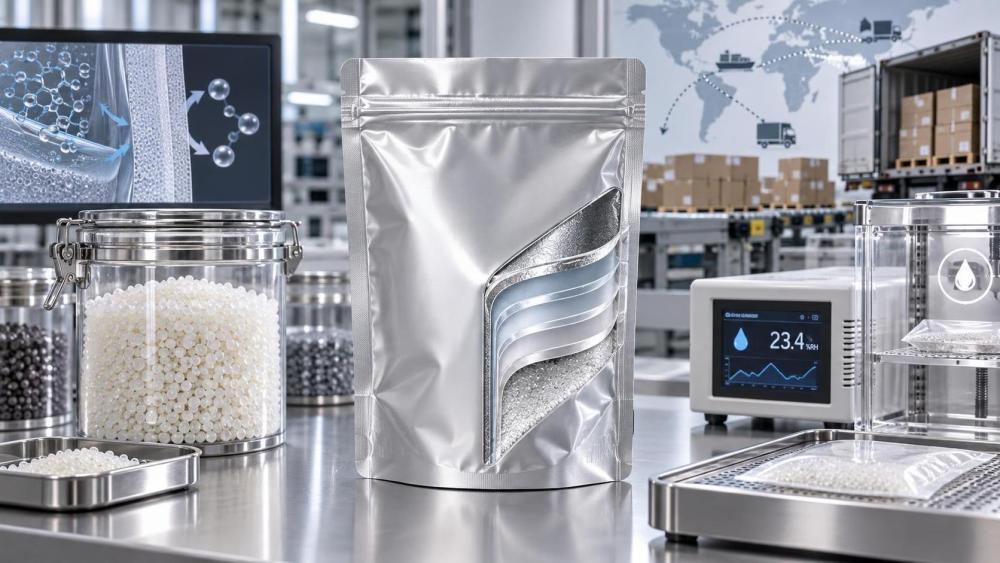
A higher-priced polymer does not always create a higher-cost package. Some specialty materials can deliver the required barrier in a thin functional layer within a co-extruded structure. If that design reduces total thickness, replaces a heavier substrate, removes a coating step, or eliminates the need for additional overwrap, the cost comparison should be made at the finished-pack level.
This is where procurement needs conversion data rather than only resin quotations. A supplier may quote a premium material at several times the cost of a commodity resin, but the relevant question is how many grams are used per pack and whether the full structure changes. A thin barrier layer can have a limited impact on unit material cost. Conversely, a specialty polymer used at a high percentage of the structure may be difficult to justify unless the product-loss exposure is substantial.
Any downgauging claim should be tested against stiffness, puncture resistance, seal performance, optics, machinability, and distribution abuse. A lighter package that develops flex cracks or loses seal integrity may undermine the barrier benefit it was intended to create.
3. Distribution conditions are variable or demanding
Barrier needs rise when a product will face long lead times, temperature variation, humidity exposure, or uncertain storage conditions. A pack designed for a short, controlled route may not protect the same contents through international transport, extended warehouse dwell time, or a less predictable retail environment.
Here, the material choice should be based on the real distribution profile, including plausible worst-case conditions rather than ideal storage assumptions. This does not require extreme overdesign. It requires recognizing that barrier behavior is conditional. Some polymer systems are sensitive to humidity, some coatings can be vulnerable to cracking, and some structures behave differently after thermal processing or repeated flexing.
Buyers should ask converters and material suppliers how the proposed structure performs after the operations it will actually undergo: lamination, printing, pouch making, filling, heat sealing, sterilization where applicable, transport, and handling. A barrier figure supplied for an isolated film sample is not a substitute for performance expectations for the converted pack.
4. The new material reduces waste across the supply chain
Waste reduction is often the strongest commercial argument for a barrier upgrade, but it should be evaluated carefully. The relevant waste is not limited to scrap generated at the packaging line. It may include product disposal, obsolete inventory caused by inadequate remaining shelf life, retailer returns, replacement shipments, and the operational disruption associated with stock quality incidents.
A specialty barrier film can be justified when it meaningfully expands the usable distribution window or improves protection consistency enough to reduce those losses. The benefit is particularly credible where product disposal carries a far greater cost than the incremental packaging material. It is less credible when waste is mainly caused by inaccurate demand planning, weak inventory rotation, damaged cartons, or filling variability. Polymer selection should not be used to compensate for unrelated operational problems.
Use total cost, but keep the model grounded
Total cost of ownership is often invoked in material selection, yet it can become too abstract to guide a purchase decision. A practical model should include only the cost drivers that can plausibly change with the packaging structure.
This exercise often exposes an uncomfortable but useful result: the premium is justified only for certain stock-keeping units, pack sizes, geographies, or channels. That is a valid outcome. A portfolio does not need one barrier specification for every product simply because one application has demanding requirements.
Barrier performance must survive processing
Procurement decisions can fail when technical qualification is treated as a one-time material approval. In multilayer packaging, performance depends on resin quality, layer distribution, extrusion control, adhesion between layers, film orientation, coating application where used, and conversion consistency. A specialty polymer may be central to the design, but it is only one part of the finished package.
For co-extruded barrier structures, buyers should seek clarity on the proposed layer architecture and acceptable thickness variation. A narrow functional layer can be cost-efficient, but it also raises the importance of process control. If layer distribution drifts, the finished barrier may become inconsistent even when the incoming resin meets specification.
The same caution applies to recycled-content strategies and material simplification. A structure designed for recycling compatibility may involve trade-offs in barrier level, stiffness, heat resistance, or processing latitude. Those trade-offs are manageable when discussed early with product, packaging engineering, quality, and conversion partners. They become expensive when a sustainability target is treated as separate from shelf-life and manufacturing requirements.
Supply risk can outweigh a modest barrier advantage
A specialty polymer that performs well but comes from a narrow supply base can introduce procurement risk. Long qualification cycles, limited substitute grades, regional availability constraints, minimum order quantities, and changes in lead time can all affect the value of the material choice. This matters most for regulated applications or structures that cannot be changed quickly without revalidation.
Before committing to a premium barrier resin, procurement should understand whether there is an approved alternative, how much reformulation or requalification would be needed after a supply disruption, and whether the converter can run more than one compatible source. Dual sourcing is not always feasible, especially when properties differ among grades, but the absence of an alternative should be priced into the decision.
Supplier evaluation should also cover lot consistency, technical support during trials, documentation quality, and the supplier’s ability to communicate formulation or manufacturing changes. For barrier packaging, a nominally equivalent replacement can affect processing or final pack performance in ways that are not obvious from a basic datasheet comparison.
Build the purchase decision around a clear threshold
The most effective procurement brief is a short decision document rather than a broad materials review. It should state the product protection requirement, current package limitation, proposed barrier structure, expected effect on pack cost, processing implications, supply options, and the commercial condition that makes the upgrade worthwhile.
A useful threshold might be expressed in operational terms: the premium is acceptable if it achieves the required shelf life under defined distribution conditions without increasing conversion rejects, or if it reduces expected product-loss exposure enough to offset the added package cost. The threshold should be agreed before the trial, so a technically successful film is not later rejected because the financial case was never established.
Specialty polymers earn their place in barrier packaging when they solve a specific, costly protection problem more efficiently than the alternatives. Where conventional materials already protect the product adequately, added barrier can become avoidable cost and added supply complexity. Where the package is the factor limiting shelf life, route flexibility, or product integrity, the right premium layer can protect far more value than it adds to the bill of materials.
Have questions about this sector analysis, or seeking best practices specific to your niche? Drop us a line below and let the senior consultants at APIM assist you.
We respect your privacy. Your information is strictly confidential.
Related News
- 00
0000-00
How does washing affect contamination in post-consumer recycled PP resins? - 00
0000-00
How does feedstock affect depolymerization equipment selection? - 00
0000-00
US Sets 213.44% Preliminary Antidumping Deposit on Chinese PTMEG - 00
0000-00
When should epoxy be used as a thermal interface material for semiconductors? - 00
0000-00
US Midterm Results Unlikely to Quickly Shift Recycled Plastics Market or Legislation