




For procurement teams, EVOH thermoforming food packaging films justify their premium when stronger oxygen protection produces measurable commercial gains through longer shelf life, reduced waste, and fewer quality claims.
The material is rarely the lowest-cost choice per kilogram. It becomes the right choice when a package failure, product downgrade, retailer rejection, or shortened selling window costs more.
Buyers should therefore assess EVOH through total packaging economics, not resin pricing alone. The key question is whether its barrier performance protects value throughout filling, distribution, retail display, and consumption.
Start With the Commercial Risk, Not the Film Specification
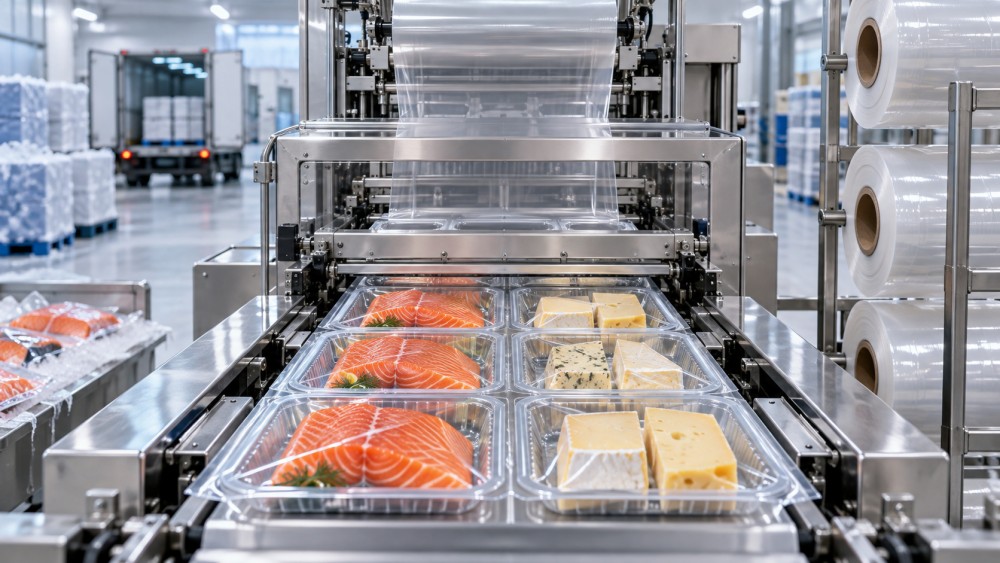
EVOH is most valuable for foods that deteriorate when oxygen enters the pack. Typical examples include processed meats, cheese, seafood, prepared meals, coffee, sauces, and sensitive dairy products.
For these products, oxygen exposure can cause discoloration, rancidity, flavor loss, mold growth, nutrient degradation, and shorter usable shelf life. Those consequences directly affect margins and customer confidence.
A buyer should first quantify the cost of inadequate barrier performance. Include waste at production, returned goods, markdowns, customer complaints, and the commercial impact of unreliable expiry dates.
When a product already has a short refrigerated shelf life, an EVOH layer may provide limited financial benefit. The added barrier needs sufficient time to create a meaningful extension.
Conversely, products moving through long distribution routes often justify better barrier protection. Export programs, centralized distribution, and variable retail turnover increase the value of additional shelf-life security.
The decision is also stronger when brand positioning depends on freshness. Premium food brands cannot easily absorb visible oxidation, off-flavor complaints, or inconsistent appearance caused by packaging limitations.
Procurement teams should avoid assuming that every high-value product requires EVOH. Some products are primarily limited by microbiological control, moisture transfer, sealing performance, or refrigerated handling rather than oxygen.
The most useful starting point is a product-specific deterioration map. Identify what fails first, how quickly it fails, and whether oxygen ingress is a proven contributing factor.
That analysis prevents a common purchasing error: paying for a high oxygen barrier when another package feature, process improvement, or storage control would solve the actual problem.
Understand What EVOH Delivers in a Thermoformed Structure
EVOH, or ethylene vinyl alcohol copolymer, is widely used as a functional barrier layer within multilayer thermoforming food packaging films rather than as a standalone packaging web.
Its main contribution is extremely low oxygen transmission under appropriate conditions. This helps preserve products that are vulnerable to oxidation during storage, transport, and retail display.
In a thermoformed bottom web, EVOH is commonly protected between polyolefin layers. PE or PP layers can provide moisture resistance, toughness, sealing capability, and compatibility with the intended pack design.
The specific multilayer structure matters more than the presence of EVOH alone. Layer placement, thickness, tie layers, total gauge, forming depth, and sealant selection all affect final performance.
Thermoforming stretches the film, particularly in corners, sidewalls, and deep draw cavities. A nominally effective barrier construction can underperform if thinning becomes excessive in critical locations.
Buyers should request barrier data for the finished formed package, not only for a flat film sample. Flat-web oxygen transmission data may not represent performance after stretching.
EVOH is sensitive to humidity because absorbed moisture reduces its oxygen-barrier efficiency. This does not eliminate its usefulness, but it makes the surrounding layer design especially important.
For high-moisture foods, the supplier should explain how the structure protects EVOH from moisture exposure and what oxygen-barrier performance remains under realistic storage conditions.
A technically credible quotation includes material structure, total thickness, expected oxygen transmission rate, test temperature, relative humidity, forming conditions, and package-specific performance assumptions.
Calculate Value Through Shelf Life, Waste, and Inventory Flexibility
The strongest business case for EVOH thermoforming food packaging films is usually created by shelf-life extension. Even several additional days can alter production planning and distribution economics materially.
Longer shelf life can allow larger production batches, fewer urgent changeovers, improved truck utilization, and broader distribution coverage. Those gains may exceed the direct difference in film cost.
For retailers, a more reliable selling window can reduce markdowns and disposal. For producers, it can lower returns caused by products arriving too close to expiry.
Procurement should convert these benefits into financial terms. Compare the annual film premium with current waste, expired inventory, rejected deliveries, emergency freight, and estimated revenue recovered through longer availability.
A simple model should use conservative assumptions. Do not credit EVOH with every potential improvement unless trial data demonstrates that oxygen barrier is the factor extending product acceptability.
Use actual waste records by stock-keeping unit, channel, and destination. Average company-wide waste rates can hide the high-risk products and long-distance routes where EVOH provides its best return.
The analysis should distinguish between technical shelf life and commercially useful shelf life. A product may remain safe, yet fail appearance, texture, flavor, or retailer presentation standards earlier.
Inventory flexibility is another overlooked benefit. A more stable package can reduce the operational risk of demand fluctuations, delayed shipments, port congestion, or retailer receiving delays.
Where supply chains are predictable and turnover is rapid, the value calculation may favor a simpler structure. EVOH should solve a defined economic exposure, not serve as generic insurance.
Use Product and Distribution Conditions to Define the Threshold
Oxygen-sensitive products are the primary candidates, but product formulation also matters. Fat content, pigments, preservatives, headspace gas, water activity, and processing method influence the required barrier level.
Modified atmosphere packaging frequently increases the importance of oxygen control. A package designed to retain a low-oxygen environment requires films that help preserve that atmosphere over time.
Vacuum-packed meat and cheese applications may also benefit significantly. Oxygen ingress can affect color stability, flavor, and mold development, particularly where extended refrigerated distribution is expected.
Dry foods are not automatically excluded from consideration. Coffee, nuts, snack ingredients, powdered foods, and certain bakery products can lose quality through oxidation despite relatively low moisture levels.
Distribution temperature should be reviewed alongside oxygen barrier. Higher temperatures can accelerate oxidation reactions, making an otherwise acceptable film structure inadequate during summer transport or storage excursions.
Pack geometry is equally relevant. Deep trays, sharp corners, large surface areas, and thin formed regions may create more demanding conditions than shallow trays using the same base film.
Retail lighting can intensify quality deterioration for some foods. Light-sensitive products may require a combined approach involving oxygen barrier, opacity, pigments, or secondary packaging rather than EVOH alone.
Procurement specifications should reflect the hardest credible distribution scenario. Designing only for ideal refrigerated handling can produce apparent savings that disappear when real logistics conditions vary.
When the product, distribution route, and target shelf life are all demanding, EVOH becomes easier to justify because its barrier contribution addresses a measurable and recurring operational risk.
Compare EVOH Against Lower-Cost Alternatives Properly
A lower-cost polyolefin-based thermoforming film may be appropriate for fast-turn products, low oxygen sensitivity, short routes, or applications where product protection depends mainly on refrigeration and sealing.
PA-based structures can provide mechanical strength and certain barrier benefits, but their oxygen performance and moisture behavior should be compared against the actual package requirement rather than broad material assumptions.
Metallized films, aluminum-based structures, and coated substrates may offer high barrier in selected formats. However, they can introduce drawbacks involving visibility, flex-cracking, forming behavior, recyclability, or process compatibility.
Barrier coatings can sometimes reduce material use, but their consistency after thermoforming needs verification. Coating damage or uneven stretching can compromise performance in formed tray geometries.
Buyers should compare alternatives on equivalent package performance, not simply on film thickness or quoted price per square meter. Different structures may require different gauges to meet forming and barrier requirements.
The comparison should also include scrap rate, line speed, web handling, seal contamination tolerance, puncture resistance, and complaint exposure. A cheaper film can create higher conversion costs.
Some alternatives may offer easier recycling claims because of simpler structures. Yet a recyclable structure that causes more food waste may not deliver the intended environmental outcome.
A dual-source strategy can be useful when supply security is important. However, suppliers should be qualified against the same shelf-life, forming, sealing, and sensory requirements before approval.
The objective is not to prove EVOH superior in every case. It is to identify the lowest total-cost structure that reliably meets product quality, production, regulatory, and customer requirements.
Check Processing Performance Before Awarding the Contract
Procurement decisions should involve packaging engineers and operations teams early. EVOH structures must run consistently on the company’s thermoformer, sealing equipment, gas-flushing system, and downstream packing process.
Thermoforming behavior should be evaluated at the intended draw ratio. Inspect wall thickness distribution, corner thinning, web sag, tray definition, and dimensional consistency across normal operating conditions.
Seal integrity is essential because a superior oxygen barrier cannot compensate for leaking packs. Test seal strength, burst performance, channel leaks, contamination tolerance, and compatibility with the chosen top web.
Film specifications should include realistic operating windows rather than ideal laboratory settings. This helps prevent disruptions when operators adjust heating, indexing, forming pressure, or sealing temperatures.
Ask suppliers for start-up support and documented troubleshooting procedures. Film performance can be affected by resin variation, storage conditions, preheating, forming temperature, and equipment maintenance.
Evaluate roll quality as well as polymer structure. Gauge consistency, winding tension, roll defects, splice quality, corona treatment, and print registration can all influence waste and line uptime.
Migration compliance and food-contact documentation must match the markets served. Requirements may differ by region, food type, temperature exposure, and intended storage duration.
Commercial qualification should include pilot trials and shelf-life validation using the actual product. Simulated tests are useful, but they cannot fully replace finished-pack evaluation under representative conditions.
Do not award based solely on a successful short production run. Verify repeatability across multiple rolls, production shifts, and ordinary line conditions before converting a high-volume product.
Build a Procurement Specification That Prevents False Savings
A strong request for quotation begins with the product application, not a generic request for EVOH content. Suppliers need defined pack dimensions, draw depth, product type, target shelf life, and distribution conditions.
Specify the required performance outcome whenever possible. This may include maximum oxygen transmission, minimum seal strength, puncture resistance, visual requirements, forming consistency, and acceptable thickness distribution.
State the oxygen transmission test method, temperature, and relative humidity. Barrier values without test conditions are difficult to compare and can lead to misleading supplier evaluations.
Request information on EVOH grade, layer configuration, nominal barrier-layer thickness, tie-layer chemistry, and expected barrier retention after thermoforming. These details support meaningful technical comparison.
Commercial terms should address lead times, minimum order quantities, price-adjustment mechanisms, supply continuity, regional manufacturing locations, technical service, and contingency capacity for urgent demand.
For critical food categories, include change-control requirements. Suppliers should notify buyers before modifying resin sources, layer design, additives, thickness, manufacturing location, or processing conditions.
Quality agreements should define testing frequency, certificate requirements, complaint investigation timelines, traceability expectations, and acceptance procedures for nonconforming rolls or finished packaging performance.
Sustainability discussions should be specific. Ask how EVOH content affects the intended recycling stream, whether the structure meets applicable design guidance, and what trade-offs apply.
The best specification balances enough detail to protect performance with enough flexibility to maintain competition. Overly prescriptive specifications can exclude viable alternatives without improving package outcomes.
When the Premium Is Usually Not Justified
EVOH may not justify added cost when products turn quickly, have low oxidation sensitivity, remain within local distribution networks, and show no meaningful quality loss before sale.
It may also be unnecessary where the product’s limiting factor is moisture loss, microbial spoilage, physical damage, or poor cold-chain discipline rather than oxygen exposure.
A barrier upgrade should not replace basic process control. Inadequate sanitation, inconsistent vacuum levels, sealing defects, and unstable refrigeration can overwhelm the benefits of an advanced film structure.
Buyers should be cautious when suppliers present generic shelf-life claims. The commercial value of EVOH depends on the complete pack, food formulation, filling process, and real distribution environment.
If validation demonstrates no measurable shelf-life gain, lower waste, or operational improvement, the premium should be challenged. Technical sophistication alone is not a sound purchasing rationale.
Likewise, a high barrier may be excessive when product shelf life is deliberately limited by freshness positioning, rapid replenishment, or regulatory requirements unrelated to packaging performance.
The practical threshold is simple: select EVOH when the expected value of protected product quality clearly exceeds the incremental film, qualification, and complexity costs.
That threshold should be reviewed periodically. Changes in food formulation, retail channels, logistics distance, waste rates, resin prices, and recycling requirements can alter the decision.
For procurement teams, EVOH thermoforming food packaging films are not a default premium material. They are a targeted investment for applications where oxygen barrier protects revenue, quality, and supply-chain resilience.
Conclusion: Buy the Barrier That Solves a Measurable Problem
EVOH thermoforming food packaging films earn their added cost when oxygen protection extends commercially useful shelf life, reduces waste, supports distribution requirements, and prevents quality-related losses.
The decision should combine product sensitivity, package design, thermoforming performance, storage conditions, validation results, and total cost. Per-kilogram film pricing is only one part of the calculation.
Procurement teams that define required outcomes, test formed packs, quantify avoided losses, and compare alternatives fairly can determine whether EVOH is a premium expense or a value-creating packaging solution.