




Thailand Opens PVC Dumping Probe Affecting PCR and EVOH Exports
On June 29, 2026, Thailand’s Department of Foreign Trade under the Ministry of Commerce opened an anti-dumping investigation into PVC originating in mainland China and Taiwan, covering four tariff lines including 3904.10.10. Because PVC is a core substrate in EVOH high-barrier multilayer co-extrusion film and is also used in PCR plastic modification systems as a toughening and compatibility component, this development deserves close attention from exporters, material buyers, processors, and supply chain operators serving Thailand and the wider ASEAN market, especially where customs clearance, product qualification, and landed cost depend on stable trade treatment.
What Has Been Confirmed So Far
The confirmed facts are limited but commercially significant. The investigation was formally initiated on June 29, 2026, by Thailand’s Department of Foreign Trade. The scope concerns PVC from mainland China and Taiwan, and the notice covers four customs classifications, including 3904.10.10.
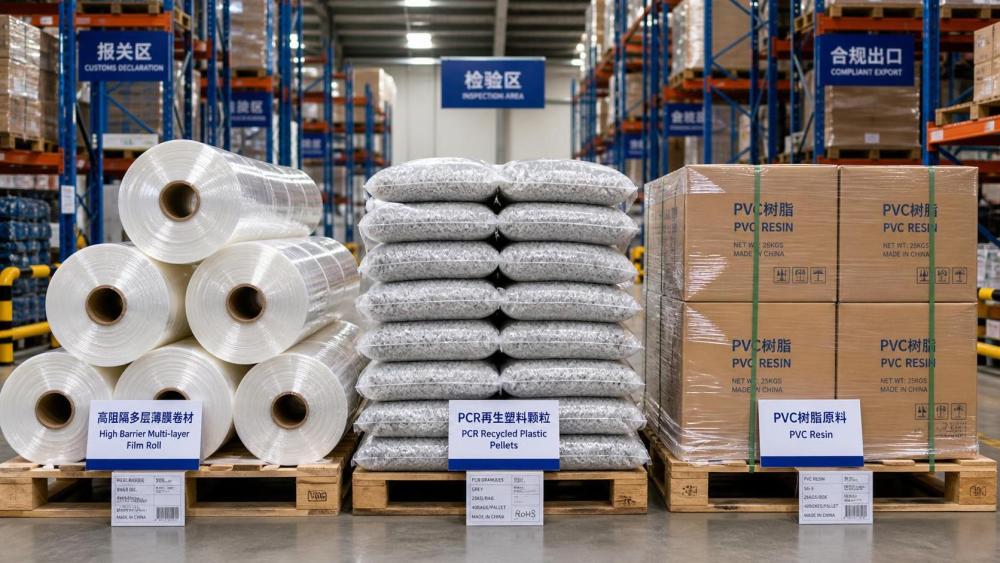
It is also confirmed that PVC is an important base material for EVOH high-barrier packaging in multilayer co-extruded film structures. In addition, PVC is widely used in PCR plastic modified compound systems as a toughening or reinforcing compatibility component. Based on the event summary provided, the immediate relevance of the case is its direct effect on compliance access and customs clearance costs for Chinese suppliers exporting related modified materials, recycled compound pellets, and high-barrier packaging materials to Thailand and the broader ASEAN market.
Where the Trade Friction May Be Felt First
Export sellers of modified and packaging materials
For exporters shipping products linked to PVC-containing systems, the main issue is not only the resin under investigation but also how downstream materials may face tighter scrutiny in market access and customs procedures. From an industry perspective, what deserves closer attention is whether buyers and logistics partners begin asking for clearer product classification support, origin-related documents, and technical descriptions for materials tied to PCR compounds and EVOH packaging structures.
Procurement and sourcing teams in downstream manufacturing
Buyers relying on Chinese-origin inputs for high-barrier packaging or recycled modified compounds may face a more cautious sourcing environment. The likely impact is concentrated in procurement planning, supplier qualification review, and total import cost assessment. Analysis shows that sourcing teams should pay particular attention to customs codes used in contracts and shipping documents, as well as to how product composition and application are described in technical and commercial files.
Converters and processors serving Thailand and ASEAN demand
Processors using PVC-linked material systems in packaging or recycled plastic applications may be affected through lead-time uncertainty, input substitution discussions, or revised commercial terms from suppliers. Observably, the pressure point is operational rather than purely legal: production continuity can be influenced when import treatment becomes less predictable or when customs-related costs move upward.
Customs, logistics, and trade compliance service providers
Supply chain service providers may see higher demand for document review, classification checks, and shipment-level compliance support. The practical exposure lies in clearance preparation, shipment scheduling, and communication between exporters and importers. What deserves closer attention is whether counterparties begin requesting more detailed declarations, technical sheets, or supporting records before goods are dispatched.
What Companies Should Watch in Current Practice
Check product scope against customs and technical files
Companies involved in PVC-related exports should review whether their product descriptions, tariff classifications, and technical documentation are internally consistent. This is especially relevant where the exported item is a modified compound, recycled pellet, or multilayer packaging material that may require precise explanation of its composition and use.
Prepare for closer document review at the border
Analysis shows that businesses should be ready for greater attention to customs documentation and product-supporting records. Even without confirmed downstream enforcement details in the provided information, exporters and importers should closely monitor how shipment papers, specifications, and testing-related documents are being requested or interpreted in actual clearance workflows.
Reassess procurement timing and delivery commitments
For supply contracts tied to Thailand or ASEAN delivery, it is more appropriate to understand this development as a factor that may affect timing and landed cost rather than as a settled outcome. Companies should therefore review delivery buffers, procurement cycles, and customer commitments where PVC-linked materials are part of the bill of materials.
Follow official wording and market-side implementation signals
The event summary confirms the opening of an investigation, but it does not provide later-stage findings or detailed implementation measures. For that reason, businesses should continue tracking subsequent official wording, practical customs treatment, buyer-side qualification requirements, and any changes that appear in tender or purchasing documents.
How This Development Should Be Read at This Stage
Observably, this is more than a routine trade headline because the affected material sits inside downstream packaging and recycled plastic application chains. At the same time, it is not yet a complete enforcement outcome based on the information provided. It is more appropriate to understand this as an active regulatory and trade signal: the rule environment around PVC-linked exports to Thailand has become more sensitive, and the commercial effect may extend beyond resin transactions into qualification, procurement, and shipment execution for related materials.
A Practical Reading for the Market
From an industry perspective, the main significance of this case lies in its effect on access conditions and transaction certainty for Chinese suppliers serving Thailand and ASEAN demand in PCR plastic compounds and EVOH packaging material systems. The current takeaway should remain measured: this is a concrete change in trade procedure through the launch of an anti-dumping investigation, while the full business impact still depends on how official steps, customs handling, and market responses develop afterward.
Basis of This Article and What Still Needs Verification
This article is generated from the user-provided news title, event date, and event summary. For events of this type, relevant source categories typically include official notices, releases from regulatory authorities, customs or trade administration information, industry association updates, standard-setting documents, and reporting from established trade media.
No specific official source link was provided in the input, so the original notice and any later procedural documents still need to be verified on an ongoing basis. What remains important to watch includes detailed policy wording, practical compliance interpretation, customs treatment, changes in tender or procurement documents, market feedback, and how affected companies adjust their execution in response.
Have questions about this sector analysis, or seeking best practices specific to your niche? Drop us a line below and let the senior consultants at APIM assist you.
We respect your privacy. Your information is strictly confidential.
Related News
- 00
0000-00
Do polyolefin hot melt adhesives bond well to polyethylene? - 00
0000-00
Korean Study Finds PLA Barely Degrades in Landfill After 320 Days - 00
0000-00
How to assess batch consistency from a thermal potting compounds supplier - 00
0000-00
How much weight can carbon fiber reinforced plastics save in cars? - 00
0000-00
Switching from PS to ABS Sheet Extrusion: Equipment Checks