




Multi Layer Film Structures for Packaging: Barrier vs Sealability
Multi Layer Film Structures for Packaging: Barrier vs Sealability
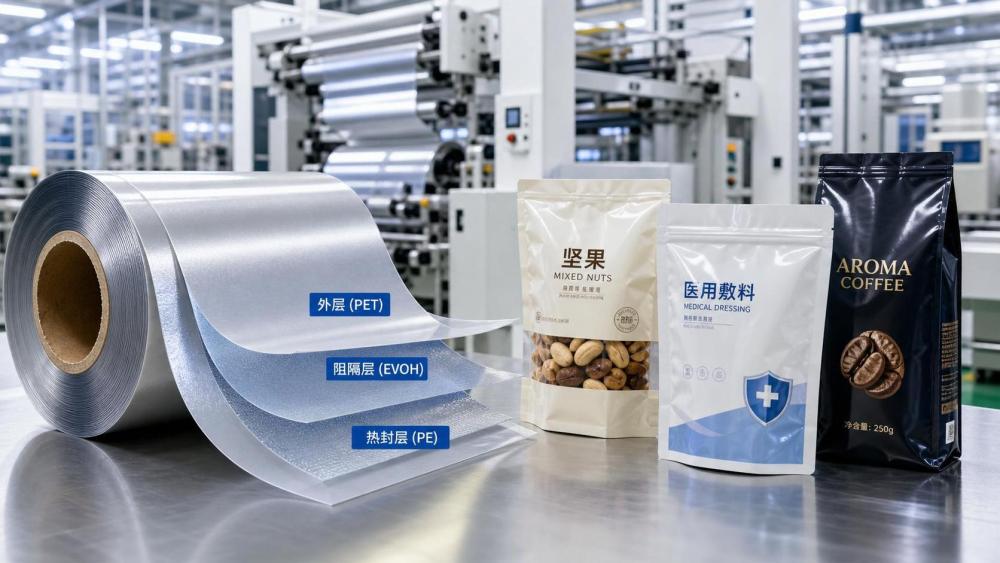
Multi layer film structures for packaging matter when protection and pack integrity must work together.
In real production, barrier performance alone is never enough.
A film can block oxygen well, yet still fail on the line if seals are weak or inconsistent.
That is why converters and packaging teams evaluate barrier and sealability as one linked decision.
From food pouches to medical sachets, structure design controls shelf life, machine speed, waste rate, and customer complaints.
The practical question is simple: which layer does what, and where does the tradeoff begin?
Why Multi Layer Film Structures for Packaging Exist
Single-layer films rarely deliver every property a package needs.
One resin may seal easily but allow oxygen transmission.
Another may give excellent barrier but crack during flexing or resist clean sealing.
Multi layer film structures for packaging solve this by assigning specific jobs to specific layers.
A common design may include sealant, tie, barrier, bulk, print, and abuse-resistant layers.
This approach improves performance without forcing one material to do everything.
It also gives processors more freedom to tune cost, thickness, and converting behavior.
Barrier Performance: What It Really Protects
Barrier is usually discussed in terms of oxygen, moisture, aroma, grease, chemicals, or light.
The right target depends on the packed product.
Dry snacks care about moisture pickup.
Fresh meat often needs oxygen control.
Pharmaceutical packaging may require very stable moisture and oxygen protection over time.
In multi layer film structures for packaging, common barrier materials include EVOH, PA, metallized layers, and aluminum foil.
EVOH offers strong oxygen barrier, but humidity can reduce performance.
Foil gives excellent total barrier, but it can reduce flex durability and complicate recycling.
PA improves puncture resistance and contributes some barrier, especially in vacuum packaging.
So the barrier choice must follow storage conditions, filling method, and shelf-life targets.
Sealability: The Layer Everyone Notices After Failure
Sealability often gets less attention at the design stage.
That changes quickly when leaks appear.
The sealant layer must close reliably within the machine’s heat, pressure, and dwell-time window.
It must also tolerate contamination from powder, oil, sauce, or product dust.
Typical sealant materials include LDPE, LLDPE, mPE, CPP, and ionomer-based blends.
Each has a different seal initiation temperature, hot tack behavior, and seal-through-contamination performance.
In practice, multi layer film structures for packaging fail more often at the seal interface than at the barrier layer.
This is why good laboratory barrier numbers do not guarantee successful commercial runs.
Where the Barrier vs Sealability Tradeoff Starts
The tradeoff begins when high-performance barrier materials limit sealing flexibility.
For example, stiff structures can hold shape well but resist uniform heat transfer.
Barrier layers may also demand tie layers and processing conditions that narrow the sealing window.
As a result, multi layer film structures for packaging must be built around the actual filling line, not only around target shelf life.
A premium barrier structure can become a poor packaging solution if line efficiency drops or scrap rises.
This is more obvious in high-speed form-fill-seal operations, where process stability matters every minute.
Typical Layer Functions in Practical Film Design
A useful way to assess multi layer film structures for packaging is to break each layer into a job list.
- Outer layer: printability, stiffness, scuff resistance, and appearance.
- Core layer: thickness build, mechanical support, and cost balance.
- Barrier layer: oxygen, aroma, moisture, or light protection.
- Tie layer: adhesion between incompatible polymers.
- Sealant layer: heat sealing, hot tack, peel behavior, and leak resistance.
When one layer is overloaded, performance usually shifts somewhere else.
That is why structure simplification must be tested carefully, especially in downgauged films.
Material Combinations Commonly Used
Several combinations appear often in multi layer film structures for packaging because they balance cost and function reasonably well.
These examples are starting points, not universal answers.
Actual film performance depends on thickness ratio, additives, orientation, lamination quality, and sealing conditions.
Application-Specific Decisions
Different products change the design logic of multi layer film structures for packaging.
For vacuum meat packs, puncture resistance and seal integrity are critical.
For coffee packaging, aroma retention and degassing features may dominate.
For medical packs, seal consistency and validation usually outrank pure cost reduction.
For aggressive powders or liquids, chemical resistance at the seal area becomes a real risk point.
This also means the best structure on paper may be the wrong one on the machine floor.
Processing Factors That Change Results
Even well-designed multi layer film structures for packaging can underperform if process control is weak.
- Seal jaw temperature that drifts too high can distort thin sealant layers.
- Low dwell time can reduce bond strength before the pack leaves the station.
- Excess tension can stretch oriented films and affect registration.
- Poor lamination cure can weaken interlayer adhesion.
- Contamination in the seal area can create microleaks that escape visual inspection.
This is why line trials must include both barrier validation and seal testing.
One without the other gives an incomplete decision.
How to Evaluate Multi Layer Film Structures for Packaging
A practical evaluation path keeps teams from focusing only on resin names or headline barrier numbers.
- Define product sensitivity to oxygen, moisture, light, odor, and contamination.
- Map the filling process, machine speed, and required sealing window.
- Check puncture, flex crack, drop, and transportation risks.
- Compare target shelf life with real storage conditions.
- Review recyclability, downgauging options, and total cost per usable pack.
This approach helps turn multi layer film structures for packaging into an operating decision, not just a material specification.
A More Balanced Packaging Decision
The best multi layer film structures for packaging are rarely the ones with the highest barrier alone.
They are the ones that protect the product, run steadily, seal cleanly, and stay cost-effective.
Barrier and sealability should be reviewed as one performance system.
When material choice, layer sequence, and process settings align, packaging results become far more predictable.
For teams reviewing a new structure, the most useful next step is a line-based trial with clear pass criteria for both barrier retention and sealing reliability.
Have questions about this sector analysis, or seeking best practices specific to your niche? Drop us a line below and let the senior consultants at APIM assist you.
We respect your privacy. Your information is strictly confidential.
Related News
- 00
0000-00
How does washing affect contamination in post-consumer recycled PP resins? - 00
0000-00
How does feedstock affect depolymerization equipment selection? - 00
0000-00
US Sets 213.44% Preliminary Antidumping Deposit on Chinese PTMEG - 00
0000-00
When should epoxy be used as a thermal interface material for semiconductors? - 00
0000-00
US Midterm Results Unlikely to Quickly Shift Recycled Plastics Market or Legislation