




Medical Packaging Polymers in the United Kingdom: Compliance and Barrier Priorities
Why are medical packaging polymers in the United Kingdom under closer scrutiny?
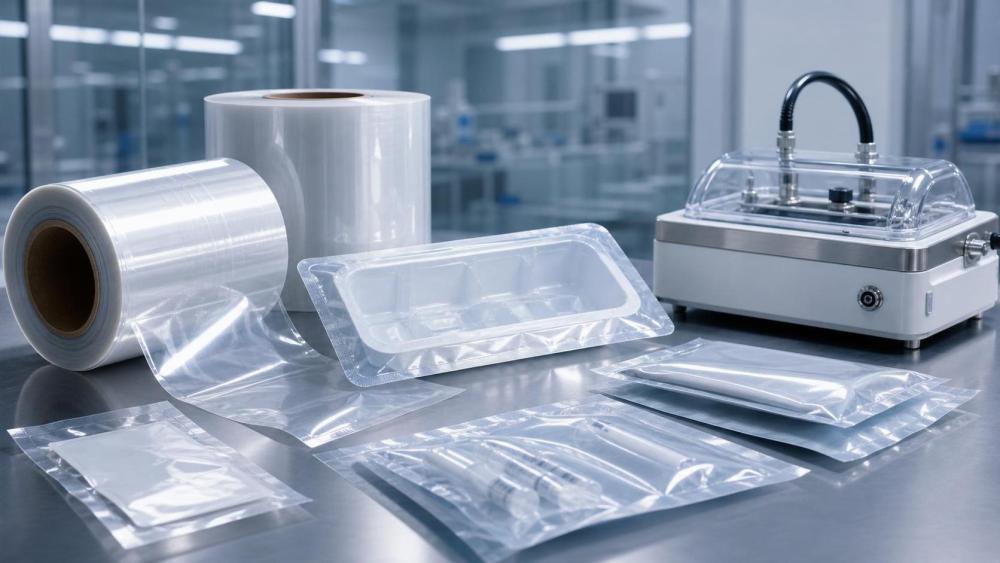
In the United Kingdom, medical packaging polymers are expected to do far more than hold a device or seal a tray.
They must support sterility, resist contamination, survive transport, and remain consistent across validated production runs.
That is why compliance and barrier performance are usually discussed together, not as separate material questions.
A film with strong oxygen resistance but weak seal stability may still fail in practice.
Likewise, a polymer with acceptable mechanical strength can become risky if extractables, traceability records, or sterilization compatibility are unclear.
When teams assess medical packaging polymers United Kingdom requirements, the focus usually turns to documented conformity, process control, and barrier reliability over the full product life cycle.
This is where structured material intelligence becomes useful.
APIM often frames polymer decisions through performance, processing, and supply consistency rather than resin names alone.
That approach fits medical packaging well, because the real question is rarely “Which polymer is popular?”
A better question is whether the selected structure remains compliant and protective after extrusion, conversion, sealing, sterilization, storage, and shipping.
Which compliance points usually matter first when selecting a polymer?
The first checkpoint is intended use.
A pouch for a sterile device, a blister for diagnostics, and a lidding film for pharmaceutical use may face different expectations.
In practical reviews, several issues come up repeatedly:
- Material traceability from resin source to converted packaging batch.
- Evidence of suitability for sterilization methods such as EtO, gamma, or steam.
- Extractables, leachables, and migration risk relevant to contact conditions.
- Seal performance consistency under validated process windows.
- Change control, including resin reformulation, additive shifts, or supplier changes.
The common mistake is treating compliance as a document pack collected at the end.
In reality, compliance starts with formulation discipline and manufacturing control.
For medical packaging polymers United Kingdom projects, buyers often want proof that the polymer grade is stable, well-characterized, and supported by repeatable processing data.
This matters especially for multilayer structures, where adhesives, tie layers, coatings, and recycled process scrap can complicate the compliance picture.
A quick judging table helps narrow the first review
Before comparing suppliers, many teams use a short screening table like the one below.
What barrier properties are actually critical, and when do they change?
Barrier performance is often oversimplified.
For some products, moisture barrier is the main concern.
For others, oxygen transmission, light protection, microbial barrier, puncture resistance, or aroma retention may carry more weight.
In medical packaging polymers United Kingdom applications, the best structure depends on the packaged product, sterilization route, and storage conditions.
Tyvek-based systems, PET films, PE sealant layers, EVOH barrier layers, PP structures, and specialty coextrusions each serve different priorities.
A useful way to think about barrier is to ask when performance is most likely to shift.
- During sterilization, heat or radiation can alter polymer structure.
- During storage, humidity may reduce the barrier effect of sensitive layers like EVOH.
- During transport, flex cracking or abrasion can damage coatings and multilayer interfaces.
- During sealing, narrow process windows can create channels or weak peel behavior.
That is why barrier data from flat laboratory samples is not enough on its own.
What matters is retained barrier after converting and real handling.
APIM’s material coverage often emphasizes this link between polymer formulation, extrusion control, and downstream performance.
For medical packaging, that link is central, not optional.
How should similar polymers be compared without relying on datasheets alone?
Datasheets are useful, but they rarely reflect the whole packaging system.
Two PET-based or PE-based structures can look similar on paper and behave very differently in production.
The better comparison method is scenario-based.
For example, ask how each option performs after gamma exposure, after six months at elevated humidity, or after repeated sealability checks across line speed variation.
Several comparison points usually expose the real differences:
- Thickness consistency and gauge control.
- Seal initiation temperature and peel behavior.
- Puncture resistance after sterilization.
- Chemical compatibility with inks, coatings, or adhesives.
- Supplier ability to maintain formulation continuity.
This is particularly relevant in the United Kingdom market, where compliance expectations tend to push teams toward better documentation and tighter validation logic.
A lower-cost polymer may appear attractive until revalidation costs, audit findings, or stability failures are considered.
In that sense, medical packaging polymers United Kingdom decisions are not only material decisions.
They are risk-management decisions shaped by processing and evidence quality.
Where do compliance and barrier failures usually begin?
Most failures do not begin with a dramatic defect.
They often start with a small assumption that goes unchallenged.
A common example is assuming that a polymer proven in food packaging will transfer easily into medical use.
Another is focusing on resin compliance while overlooking additives, tie layers, printing systems, or sealing coatings.
In actual packaging reviews, these are frequent warning signs:
- Barrier claims based only on supplier brochures.
- Sterilization testing performed on an early sample, not the final commercial structure.
- No formal threshold for supplier-initiated changes.
- Insufficient aging data for the intended shelf-life claim.
- Conversion settings that drift outside the validated seal window.
Needless complexity can also create trouble.
A multilayer high-barrier structure may look technically superior, yet be harder to validate and monitor.
Sometimes a simpler structure with stronger process stability gives better long-term control.
That trade-off is easy to miss if the review stays focused on barrier numbers alone.
What is a practical next step for medical packaging polymers United Kingdom reviews?
A useful next step is to build a short decision framework before the next material comparison begins.
Start with the product risk profile, intended shelf life, sterilization route, storage environment, and required barrier targets.
Then map those needs against evidence, not assumptions.
For medical packaging polymers United Kingdom selections, that usually means reviewing five areas together:
- Polymer composition and regulatory support.
- Barrier retention after sterilization and aging.
- Seal robustness across normal process variation.
- Traceability and change notification discipline.
- Supply continuity for commercial-scale production.
This is also where broader material intelligence can help.
Platforms such as APIM are useful when they connect polymer performance, compounding quality, extrusion behavior, and packaging application logic in one view.
That broader perspective reduces the chance of approving a material that looks compliant in isolation but performs poorly in the full packaging system.
The core takeaway is straightforward.
In the United Kingdom, strong medical packaging depends on both barrier design and compliance discipline.
The most dependable choices are usually the ones supported by stable processing, traceable documentation, and application-specific testing.
When the next review starts, compare materials by real-use evidence, define change-control triggers early, and verify barrier performance after conversion rather than before.
Have questions about this sector analysis, or seeking best practices specific to your niche? Drop us a line below and let the senior consultants at APIM assist you.
We respect your privacy. Your information is strictly confidential.
Related News
- 00
0000-00
How does washing affect contamination in post-consumer recycled PP resins? - 00
0000-00
How does feedstock affect depolymerization equipment selection? - 00
0000-00
US Sets 213.44% Preliminary Antidumping Deposit on Chinese PTMEG - 00
0000-00
When should epoxy be used as a thermal interface material for semiconductors? - 00
0000-00
US Midterm Results Unlikely to Quickly Shift Recycled Plastics Market or Legislation