




Food Packaging Materials for Trays: Barrier and Safety Guide
Why do food packaging materials for trays matter so much?
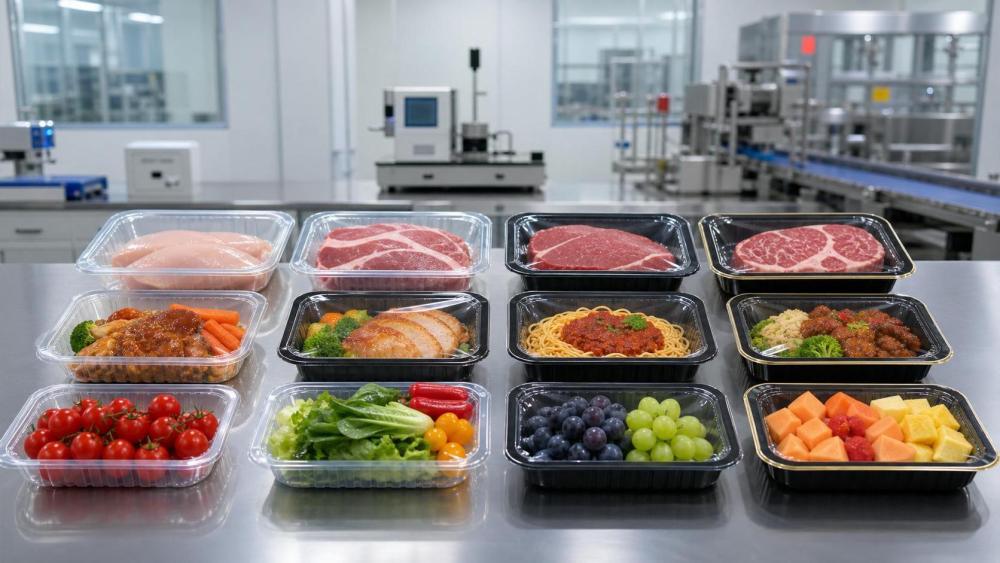
Food packaging materials for trays do far more than hold product shape.
They influence food safety, shelf life, seal integrity, transport damage, waste rates, and the final cost of packed goods.
That is why tray selection rarely starts with price alone.
In practice, the better question is this: which tray structure protects the food, runs well on existing lines, and stays compliant across markets?
For fresh meat, ready meals, bakery, produce, and frozen items, the answer can be very different.
Some products need strong oxygen barrier.
Others need freezer toughness, microwave resistance, grease resistance, or reliable heat sealing with top films.
APIM often frames these material choices through performance logic rather than simple resin labels.
That approach is useful here, because a PET tray, a PP tray, and an EPS tray may all look acceptable at first glance, yet behave very differently during filling, sealing, logistics, and shelf display.
Which tray materials are most common, and what do they actually solve?
The most common food packaging materials for trays include PET, PP, CPET, PE-based structures, aluminum-laminated formats, and foam trays such as EPS.
Each one solves a different packaging problem.
PET trays are widely chosen for clarity, stiffness, and good thermoforming performance.
They suit chilled foods, fresh produce, and many retail-ready packs.
PP trays usually make more sense when higher heat resistance matters.
They are common for hot-fill items, microwaveable meals, and applications needing better hinge or flex performance.
CPET goes further on temperature range.
It is often selected for ovenable ready meals because it can tolerate both freezing and elevated heating conditions.
EPS remains relevant in some fresh meat and produce applications due to low weight and cushioning.
Still, recycling pressure and retailer policies have reduced its appeal in many markets.
Barrier trays usually add EVOH or other functional layers.
These are important when oxygen exposure shortens product life or affects color, aroma, or microbial stability.
A simple comparison helps clarify where food packaging materials for trays tend to fit.
How much barrier is enough for a tray package?
This is where many sourcing discussions become more technical.
Not every product needs a high-barrier tray, but under-specifying barrier can create hidden cost through spoilage, shorter distribution range, or higher returns.
Oxygen barrier matters most for foods sensitive to oxidation or color loss.
Moisture barrier matters more when texture and water activity need to stay controlled.
In modified atmosphere packaging, tray barrier and lidding film barrier must work together.
A strong top film cannot compensate for a tray wall that allows fast gas transmission.
More common than expected is the case where seal quality, not resin choice, drives barrier failure.
For that reason, food packaging materials for trays should be evaluated as a full pack system.
Useful questions include shelf-life target, storage temperature, distribution distance, puncture risk, and gas-flush conditions.
APIM’s material coverage is helpful here because barrier performance is tied not only to polymer family, but also to co-extrusion design, layer thickness, processing control, and sealing compatibility.
A practical way to judge barrier need
- Short shelf life and local distribution usually allow simpler tray structures.
- Protein products with MAP often need higher oxygen barrier.
- Frozen products may prioritize crack resistance over premium barrier.
- Microwave or oven use changes the shortlist immediately.
What safety and compliance checks should come before supplier comparison?
Food-contact compliance should be verified before price negotiation becomes the main filter.
The basic requirement is that food packaging materials for trays do not transfer harmful substances under real use conditions.
That means migration testing, declaration of compliance, and traceability documents should match the intended food type and temperature range.
Fatty foods, acidic foods, reheating, freezing, and long storage can each change the compliance profile.
Needle-sharp attention is also required for recycled content claims.
A tray may contain recycled polymer, but the grade, approval route, and contact layer design still need confirmation.
Odor, taint, and color variation are not minor details either.
They can affect product acceptance even when formal compliance is in place.
Before locking in a supplier, it helps to review a short decision table.
Where do cost surprises usually come from?
The visible tray price is only one part of the real packaging cost.
A lower-cost tray can become expensive if it causes sealing defects, lower line speed, product deformation, or excess film consumption.
Freight is another factor.
Rigid trays with poor nesting efficiency can add storage and transport cost quickly.
Tooling and qualification lead time are often underestimated too.
Changing food packaging materials for trays may require seal trials, drop tests, shelf-life validation, artwork changes, and customer approval.
A resin that looks cheaper per kilogram may need higher gauge to deliver the same rigidity.
That can erase the original savings.
More strategic buyers compare total landed cost across five points:
- material cost per usable tray
- yield loss and scrap rate
- line speed and downtime effect
- damage, leakage, and returns risk
- qualification and changeover timeline
This broader view usually produces better sourcing decisions than unit price comparison alone.
How should sustainability claims be judged without losing performance?
Sustainability is now part of tray selection, but it should be checked with the same discipline as barrier and safety.
A mono-material tray may improve recyclability, yet it may not match the barrier performance of a multilayer structure.
A recycled PET tray may support circular targets, but feedstock quality, food-contact approval, and optical consistency still matter.
Bio-based and compostable options can fit some applications, though they are not universal replacements.
The better question is not whether a tray sounds greener.
It is whether the full structure supports recovery systems, product protection, and commercial reality at the same time.
This is where APIM’s broader coverage of recycled polymers, specialty films, and processing technologies becomes relevant.
A tray concept only works when material design, extrusion quality, sealing behavior, and end-of-life pathway align.
For next-step evaluation, build a shortlist around actual product conditions.
Match food type, temperature exposure, shelf-life target, sealing method, compliance region, and recovery route before requesting final quotations.
That keeps food packaging materials for trays tied to performance evidence rather than packaging claims alone.
Have questions about this sector analysis, or seeking best practices specific to your niche? Drop us a line below and let the senior consultants at APIM assist you.
We respect your privacy. Your information is strictly confidential.
Related News
- 00
0000-00
How does washing affect contamination in post-consumer recycled PP resins? - 00
0000-00
How does feedstock affect depolymerization equipment selection? - 00
0000-00
US Sets 213.44% Preliminary Antidumping Deposit on Chinese PTMEG - 00
0000-00
When should epoxy be used as a thermal interface material for semiconductors? - 00
0000-00
US Midterm Results Unlikely to Quickly Shift Recycled Plastics Market or Legislation