




EVOH Film Lead Times Stretch as Rule-Driven Demand Rises
The timing of this development is not clearly specified in the source material, but the signal is clear: updated food and pharmaceutical packaging requirements in Europe and the United States are already influencing demand patterns for EVOH high-barrier packaging film. With APIM supply chain monitoring indicating a sharp year-on-year increase in demand and longer lead times at major Chinese co-extruded film lines, this is relevant not only for film manufacturers, but also for exporters, converters, procurement teams, compliance staff, and buyers managing regulated packaging applications.
What the current market signal confirms
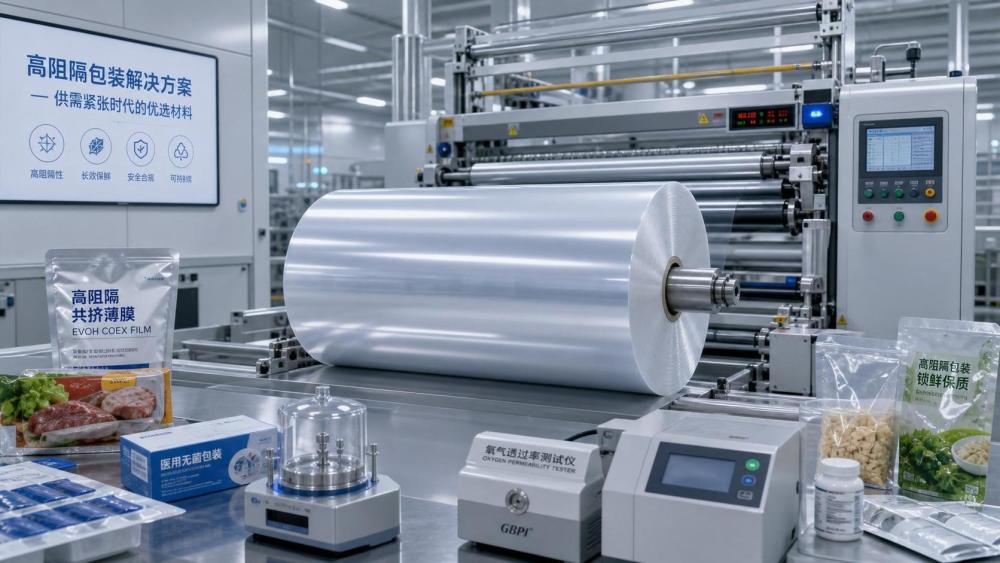
According to APIM supply chain monitoring data, demand for EVOH high-barrier packaging increased 47% year on year, driven by new food and pharmaceutical packaging rules in Europe and the United States. The cited regulatory reference is EU 2026/1389, which strengthens the oxygen transmission rate requirement to no more than 0.5 cm3/m2·day·atm.
The same source indicates that orders at China's top three EVOH co-extruded film production lines have already been scheduled through October 2026. For mainstream specifications, lead times have extended to 12 weeks.
On pricing, the latest FOB quotations dated July 17 were reported at 8.3% to 11.7% above the June average. Some higher-end five-layer structure orders were quoted with premiums reaching 15%.
Where the pressure is likely to appear first
Export quotations are becoming more sensitive to compliance-led demand
From an industry perspective, export-oriented suppliers are likely to feel the impact first because demand growth is tied to packaging rules rather than short-term discretionary buying. The immediate pressure points are quotation validity, delivery commitments, and technical alignment with barrier performance requirements. What deserves closer attention is whether buyers begin to request more explicit supporting documents around oxygen barrier performance in technical and commercial exchanges.
Converters and packaging processors may face tighter scheduling windows
For processing manufacturers using EVOH-based high-barrier film, the reported 12-week lead time for mainstream specifications could affect production planning, order confirmation, and customer delivery sequencing. Analysis shows that the practical issue is not only price movement, but also whether scheduled supply can still match regulated packaging timelines in food and pharmaceutical applications. Firms in this position should pay closer attention to specification consistency, purchase timing, and supplier delivery reliability.
Procurement teams may need to reassess sourcing and document readiness
Procurement functions are likely to be affected where purchases are linked to regulated end uses. In that context, sourcing decisions may increasingly depend on whether technical documents, testing records, and product specifications can support the intended compliance pathway. Observably, longer queues at major production lines can also change how buyers evaluate approved suppliers, substitute grades, and contract timing.
Testing and compliance service providers may see a more active review cycle
Where packaging performance must align with stricter oxygen transmission thresholds, testing and compliance-related service providers may become more involved in specification review and supporting documentation. This should not be understood as a confirmed surge in certification activity, since the source does not provide that detail, but it is a reasonable area to monitor as buyers and suppliers respond to tighter packaging requirements.
What companies should watch in the next round of execution
Check whether product specifications match the new barrier threshold
Analysis shows that the most immediate practical issue is whether existing EVOH high-barrier film specifications are suitable for applications affected by the cited oxygen transmission requirement. Companies involved in export sales, regulated packaging supply, or bid preparation should review whether their technical descriptions and supporting data are consistent with the stated threshold.
Revisit purchasing cycles against longer lead times
With mainstream specification lead times reported at 12 weeks and top Chinese lines booked through October 2026, purchasing teams should pay closer attention to order sequencing, safety timing, and contract execution. It is more appropriate to understand this as a supply scheduling issue linked to compliance-driven demand, rather than as a routine short-term fluctuation.
Prepare for more detailed technical and trade discussions
What deserves closer attention is the possibility that buyers may place greater weight on testing reports, technical datasheets, and specification language during supplier selection and order confirmation. The source does not define a mandatory documentation set, so this should be treated as a watchpoint rather than an established rule outcome.
Track price movement together with delivery risk
The reported FOB increase of 8.3% to 11.7%, and premiums of up to 15% for some higher-end five-layer structures, suggest that price review cannot be separated from capacity availability. For exporters and buyers, the practical issue is whether quotation changes are accompanied by revised lead-time commitments, production slot availability, or tighter acceptance conditions.
How this development is best understood at this stage
Observably, this is more than a simple pricing story. The combination of a stricter oxygen transmission benchmark, stronger demand for EVOH high-barrier packaging, longer lead times, and higher FOB quotations points to an execution signal from the regulated packaging market. At the same time, it should not yet be treated as a fully mapped regulatory outcome across all transactions, because the source material does not provide implementation detail, official enforcement timing, or buyer-side documentation requirements.
Analysis shows that the most useful reading for industry participants is that rule-driven demand is already affecting procurement and delivery conditions. The next phase to watch is not only whether prices keep moving, but also how technical requirements begin to appear in purchase specifications, qualification reviews, and trade negotiations.
A practical reading for the market
In practical terms, this development is best read as an early but tangible operating signal for the EVOH high-barrier packaging chain. Confirmed facts already show stronger demand, longer lead times, and higher export quotations. The broader market meaning, however, still depends on how regulatory language is translated into purchasing documents, compliance checks, and execution standards across food and pharmaceutical packaging workflows.
A neutral conclusion is that companies should not overstate the event as a final market reset, but they also should not treat it as a temporary headline. At this stage, it is more appropriate to understand it as a rule-linked shift in commercial and supply conditions that warrants continued monitoring.
Basis of this article and what still needs verification
This article is based on the user-provided news title, unspecified event timing, and the supplied event summary. No specific official source link was provided in the input, so any formal regulatory text, enforcement language, or market-wide execution conclusion still requires continued verification.
For this type of development, relevant source categories would typically include official regulatory notices, releases from supervisory authorities, customs or trade administration updates, industry association information, standard-setting documents, and reporting from authoritative trade media. What still needs ongoing observation includes detailed policy wording, compliance interpretation, buyer documentation requirements, tender specification changes, market feedback, and the extent of enterprise-level implementation.
Have questions about this sector analysis, or seeking best practices specific to your niche? Drop us a line below and let the senior consultants at APIM assist you.
We respect your privacy. Your information is strictly confidential.
Related News
- 00
0000-00
How does washing affect contamination in post-consumer recycled PP resins? - 00
0000-00
How does feedstock affect depolymerization equipment selection? - 00
0000-00
US Sets 213.44% Preliminary Antidumping Deposit on Chinese PTMEG - 00
0000-00
When should epoxy be used as a thermal interface material for semiconductors? - 00
0000-00
US Midterm Results Unlikely to Quickly Shift Recycled Plastics Market or Legislation
Tag