




EU PPWR Takes Effect for EVOH Barrier Packaging
On August 12, 2026, the EU Packaging and Packaging Waste Regulation (PPWR) became mandatory, bringing defined compliance requirements for multilayer EVOH high-barrier packaging. The development matters most to EVOH film suppliers, packaging converters, exporters, procurement teams, and downstream customers serving the EU market, because recyclability verification, standardized recycling labels, and material-structure choices now have a direct bearing on market access and delivery readiness.
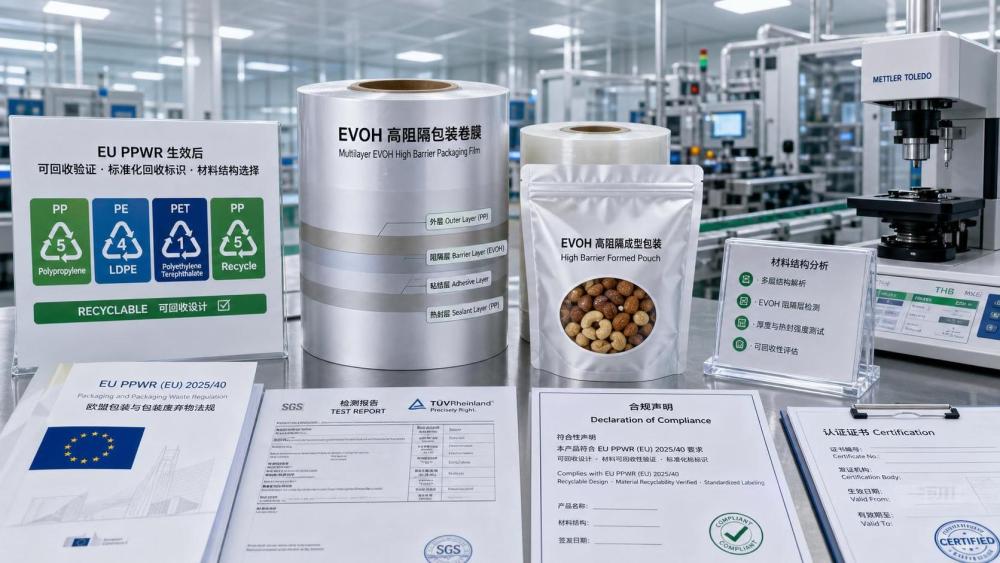
What the Regulation Now Requires for EVOH Packaging
According to the provided information, the PPWR formally entered mandatory effect on August 12, 2026. For multilayer EVOH high-barrier packaging, the regulation sets out clear compliance expectations: recyclability must be verified, standardized recycling identification must be added, and priority must be given to mono-material structures or to composite solutions whose compatibility has been certified. The information also states that these requirements directly affect export access, technology upgrade paths, and customer-compliance delivery schedules for Chinese EVOH film suppliers.
Where the Pressure Will Be Felt Across the Value Chain
Export-facing film supply is tied more closely to compliance proof
From an industry perspective, suppliers shipping EVOH-related materials into EU-bound packaging programs may be affected first because access to export business is now more closely linked to whether packaging structures can meet the stated recyclability and labeling requirements. The immediate business impact is likely to center on specification review, supporting documentation, and customer acceptance timelines.
Converters and manufacturers face structural design choices
Analysis shows that packaging processors and manufacturing teams are likely to feel the regulation through design and production decisions. The requirement to prioritize mono-material structures, or otherwise use certified compatible composite solutions, means the structure of high-barrier packaging itself becomes a compliance issue rather than only a performance decision. What deserves closer attention is how this may influence development cycles, internal validation work, and discussions with customers on acceptable formats.
Procurement and customer delivery functions may see longer coordination cycles
Observably, procurement teams and customer-facing delivery functions may be affected because packaging compliance is no longer limited to price, volume, and barrier performance. Recyclability verification and standardized recycling marks introduce additional checkpoints in supplier qualification, document review, and shipment preparation. For businesses serving EU customers, the practical issue may be whether internal and external teams can align on compliant materials within required delivery windows.
What Companies Should Watch Now
Track how compliance is expressed in customer requirements
What deserves closer attention is the difference between the regulatory requirement itself and the way it is translated into customer specifications. Companies involved in EU-facing business should watch whether buyers request recyclability verification records, label-related confirmations, or structure-specific declarations during quotation, approval, or shipment stages.
Review product lines against structure expectations
Analysis shows that firms should look closely at which EVOH high-barrier packaging products rely on multilayer designs and whether those products are positioned around mono-material solutions or composite structures requiring compatibility certification. This is not only a technical review; it also affects which products remain straightforward to deliver into EU-related orders.
Prepare documentation and communication earlier in the delivery cycle
For exporters and suppliers, a practical focus is timing. Since the provided information points directly to export access and customer compliance delivery cycles, companies may need earlier coordination among sales, technical, regulatory, and supply-chain teams. The key issue is whether compliance evidence and labeling readiness can be aligned before final delivery commitments are made.
Keep watching for follow-through in official wording and implementation detail
Observably, businesses should continue monitoring how official language, customer interpretations, and execution practices develop after the mandatory date. The confirmed fact is that the regulation is in force and that these requirements apply; the operational question for many companies is how consistently those requirements will be reflected in procurement, acceptance, and project timelines.
Why This Looks Like More Than a Short-Term Adjustment
As an editorial observation, this development is more appropriate to understand as a clear compliance signal rather than a temporary market fluctuation. The information provided already points beyond a single labeling change: it connects recyclability verification, labeling, and material design with export access and technology upgrade paths. That combination suggests the issue reaches into product development and customer delivery discipline, not just regulatory paperwork.
At the same time, it would be premature to turn that observation into a broader market conclusion beyond the supplied facts. Analysis shows the main point for now is that EVOH high-barrier packaging used in EU-related business is moving under stricter compliance logic, and companies should treat that as an active operating condition.
How the Industry May Best Read This Development
In practical terms, the mandatory application of the PPWR on August 12, 2026 gives the EVOH high-barrier packaging segment a more explicit compliance framework. The confirmed change is regulatory; the broader commercial effect will depend on how suppliers, converters, and customers implement verification, labeling, and structure selection in daily business. It is more appropriate to understand this as an established regulatory shift with continuing operational implications, rather than as a one-off news event.
About the Basis of This Article
This article is based on the user-provided news title, event date, and event summary. For developments of this kind, relevant source categories typically include official regulatory announcements, company disclosures, industry association updates, authoritative media coverage, and standard-setting documents. No specific official source link was provided in the input, so the exact official reference still requires ongoing verification. What remains worth tracking is whether later official wording, customer compliance requests, or implementation practices further clarify verification, labeling, and compatible structure expectations for EVOH high-barrier packaging.
Have questions about this sector analysis, or seeking best practices specific to your niche? Drop us a line below and let the senior consultants at APIM assist you.
We respect your privacy. Your information is strictly confidential.
Related News
- 00
0000-00
How does washing affect contamination in post-consumer recycled PP resins? - 00
0000-00
How does feedstock affect depolymerization equipment selection? - 00
0000-00
US Sets 213.44% Preliminary Antidumping Deposit on Chinese PTMEG - 00
0000-00
When should epoxy be used as a thermal interface material for semiconductors? - 00
0000-00
US Midterm Results Unlikely to Quickly Shift Recycled Plastics Market or Legislation
Tag