




EU PPWR Takes Effect August 12, Tightening Rules for EVOH Packaging
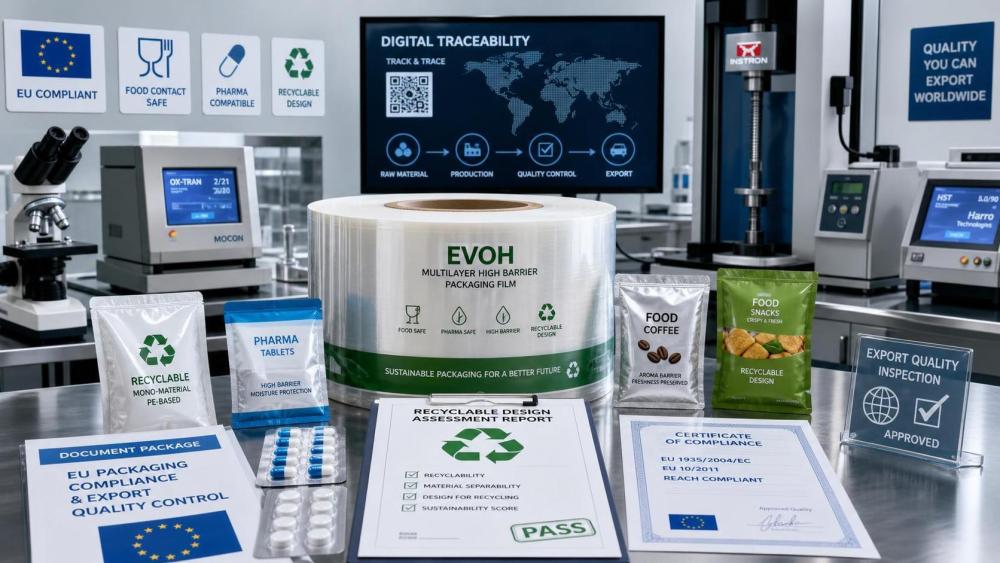
On 2026-08-12, the EU Packaging and Packaging Waste Regulation (PPWR) formally took effect, bringing new mandatory requirements for EVOH multilayer high-barrier packaging in recyclable design, recycled content targets, and Digital Product Passport disclosure. From an industry perspective, this matters most for exporters and supply-chain participants serving food, pharmaceutical, and electronics packaging into the EU, because compliance now sits directly inside procurement, documentation, and delivery workflows rather than remaining a downstream market preference.
What the new rule covers
The confirmed change is that the PPWR became effective on 2026-08-12. It introduces mandatory recyclable-design requirements for EVOH multilayer high-barrier packaging, recycled content targets, and disclosure obligations through Digital Product Passport labeling. The rule applies directly to Chinese suppliers exporting high-end packaging for food, medicine, and electronics to the EU. Non-compliant products may face customs delays, market exclusion, and distributor rejection.
Where the pressure will land across the supply chain
Exporters and contract packers
Direct exporters are likely to feel the earliest impact because the rule changes what can be offered to EU buyers and what supporting documents may be needed at shipment stage. The practical issue is not only product design, but whether the packaging specification can be aligned with the new recyclable-design expectations and the disclosure demands tied to the Digital Product Passport.
Materials sourcing and conversion steps
For raw material buyers and processing plants, the main pressure point is specification control. EVOH multilayer structures often depend on exact layer design and performance tradeoffs, so procurement decisions may now need to track recyclability requirements alongside barrier performance. That pushes compliance questions upstream into material selection, supplier qualification, and technical documentation.
EU-facing buyers, distributors, and import channels
Purchasing teams and distributors handling EU-bound packaging need to examine whether current approval files, product labels, and traceability records are sufficient under the new regime. The stated risk of customs delay, market ban, and distributor refusal means acceptance criteria may become tighter before goods reach the end customer, especially where packaging is a core part of regulated or brand-sensitive supply.
Testing, certification, and documentation services
Testing bodies and compliance service providers are also affected because companies will look for proof points on recyclability-related design claims, recycled content positioning, and label disclosure readiness. Even where detailed enforcement practice is still developing, the demand for technical files and verifiable records is likely to increase in parallel with customer review and customs scrutiny.
What companies should check now
Review the packaging specification against the new baseline
Companies exporting EVOH high-barrier packaging to the EU should first map current structures against the PPWR requirements already stated in the rule: recyclable design, recycled content targets, and Digital Product Passport disclosure. The key is to identify which SKUs are exposed, rather than treating compliance as a general policy issue.
Prepare documentation before shipment decisions are locked
Technical files, label content, product descriptions, and customer-facing declarations should be reviewed together, because packaging compliance now touches both product design and trade paperwork. For exporters, this is especially important where order lead times are long and packaging formats are customized for a specific buyer or end use.
Watch for execution details and buyer-side enforcement
Because the input does not provide detailed implementation guidance, it is more appropriate to treat the current stage as an enforcement signal rather than a fully mapped operating manual. Companies should monitor official interpretations, customer specifications, and any tightening in acceptance checks, since market access risk may appear first through buyer requirements and customs handling rather than formal penalties alone.
How this should be read
Analysis shows this is best understood as a rule that has already entered force, with immediate relevance for export packaging that depends on EVOH multilayer structures. It is not just a policy headline; it is a compliance signal that reaches product design, sourcing, labeling, and cross-border delivery at the same time. What deserves closer attention is how the rule is translated into buyer specifications, documentation requests, and customs practice over the next stage.
What it means for the market
For now, the most prudent reading is that PPWR has moved from policy discussion into an active trade requirement for affected packaging categories. The industry impact will be shaped by how quickly suppliers can align design, disclosure, and supporting records with EU-facing demand. The practical conclusion is straightforward: this should be treated as a live compliance change, while the exact execution path still needs continued observation.
Source basis and follow-up
This article is based on the title, event date, and summary provided by the user. Typical source types for this kind of development include official regulatory notices, customs or trade authority updates, industry association guidance, standard-setting documents, and authoritative media reporting. No specific official source link was included in the input, so the underlying regulatory text and any execution guidance still need to be continuously verified. The most important items to watch next are detailed implementation rules, certification practice, buyer procurement language, tender or specification changes, industry feedback, and company-level execution results.
Have questions about this sector analysis, or seeking best practices specific to your niche? Drop us a line below and let the senior consultants at APIM assist you.
We respect your privacy. Your information is strictly confidential.
Related News
- 00
0000-00
Do polyolefin hot melt adhesives bond well to polyethylene? - 00
0000-00
Korean Study Finds PLA Barely Degrades in Landfill After 320 Days - 00
0000-00
How to assess batch consistency from a thermal potting compounds supplier - 00
0000-00
How much weight can carbon fiber reinforced plastics save in cars? - 00
0000-00
Switching from PS to ABS Sheet Extrusion: Equipment Checks
Tag