




ECHA PFAS Proposal Puts EVOH Packaging Exports Under Review
On July 21, 2026, the European Chemicals Agency (ECHA) proposed adding two PFAS-related substance groups to the REACH Annex XVII restriction list, a move expected to take effect in Q1 2027. For exporters of EVOH high-barrier packaging used in food contact and pharmaceutical packaging, the development is immediately relevant because it shifts compliance from general material claims toward document-backed PFAS declarations, substitution validation, and batch-level test data. Importers, brand owners, and Chinese suppliers of EVOH laminated films and multilayer coextrusion products are now facing a tighter review cycle.
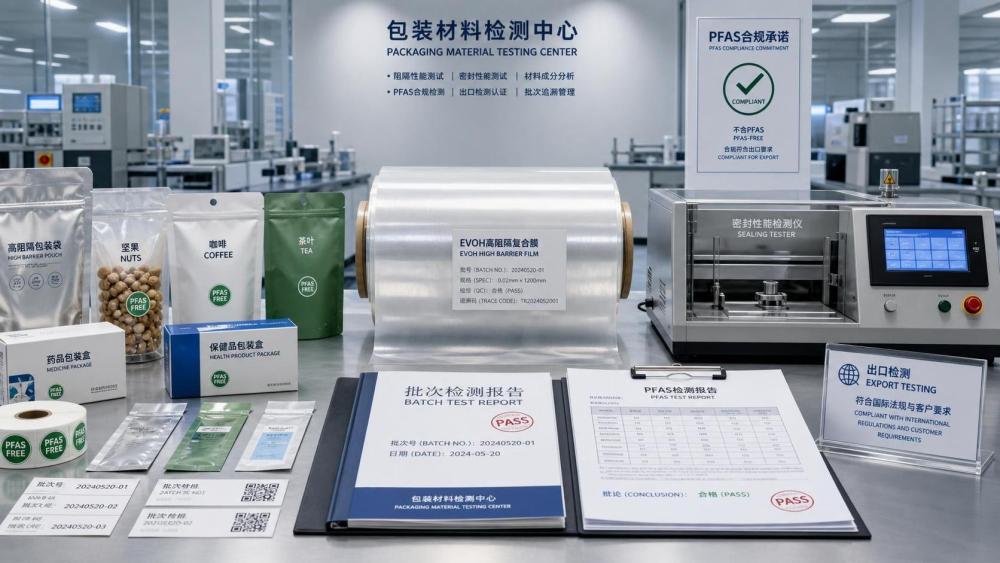
What the proposal specifically covers
According to the information provided, ECHA formally proposed including PFOA derivatives and new fluoropolymer processing aids described as C6-C10 fluorotelomer-based substances in the REACH Annex XVII restriction list on July 21, 2026. The proposed effective timing is Q1 2027.
The same information states that the proposal directly affects the export compliance of EVOH high-barrier packaging materials in highly regulated applications, including food contact and pharmaceutical packaging. Suppliers are being required to provide a complete PFAS declaration, a substitution validation report, and batch-level testing data.
It is also confirmed that overseas importers and brand owners have already started supply chain screening, and that Chinese suppliers of EVOH composite films and multilayer coextruded materials are expected to complete technical document upgrades within 90 days.
Where the pressure will show up first in the supply chain
Export-facing packaging manufacturers will face documentation pressure first
From an industry perspective, manufacturers shipping EVOH composite films and multilayer coextruded materials into the EU market may be affected first because the proposal is tied directly to export compliance. The main pressure point is not only the material itself, but the ability to present complete PFAS declarations, substitution validation records, and batch-level testing data in a form that overseas customers can use for review.
Importers and brand owners are moving upstream in their screening
Analysis shows that overseas importers and brand owners are likely to focus on upstream traceability because supply chain screening has already started. The business impact for these parties may appear in supplier qualification, product continuation decisions, and internal risk review for food-contact and pharmaceutical packaging lines that depend on high-barrier structures.
Procurement and compliance teams will need tighter coordination
What deserves closer attention is the operational link between procurement, regulatory review, and customer communication. Where a product was previously sold on performance and existing qualification, the current proposal may shift attention toward whether supporting documents can be delivered at the right level of detail and at the right batch frequency for customer review.
What companies need to check now
Review whether current PFAS statements are complete enough
Analysis shows that companies should compare their current declarations against the stated requirement for complete PFAS disclosure. A broad compliance statement may no longer be sufficient where customers now expect a clearer substance-level position tied to the proposed restriction scope.
Prepare substitution validation materials for customer review
Where substitution has been considered or implemented, the key issue is whether the supporting validation has been organized into a customer-facing technical package. The proposal makes this especially relevant for regulated end uses such as food contact and pharmaceutical packaging, where customers may ask not only what changed, but how the alternative was verified.
Check whether batch-level data can support delivery schedules
Observably, batch-level testing data introduces a practical execution issue as much as a regulatory one. Companies should examine whether existing testing, recordkeeping, and release procedures can match shipment timing and customer document requests without delaying order confirmation or delivery.
Use the 90-day window to update technical files and customer communication
The stated 90-day requirement for Chinese EVOH-related suppliers makes technical file upgrades an immediate task. What deserves closer attention is the difference between having internal information and having documentation formatted for importer, brand owner, and audit review. Customer communication plans may need to be updated at the same time to avoid inconsistency across quotations, specifications, and compliance responses.
Why this should be read as a regulatory signal, not only a filing event
Analysis shows that this development is more than a routine list update for companies supplying high-barrier packaging into regulated EU applications. Even though the proposal is described with a proposed effective timing of Q1 2027, supply chain screening has already begun, which means the commercial response is arriving before formal implementation. It is more appropriate to understand this as an active regulatory signal with near-term commercial consequences, while still recognizing that the final compliance path requires continued observation of official wording and implementation details.
How the market is likely to frame it for now
At this stage, the most balanced reading is that the proposal creates an immediate need for compliance reassessment rather than a confirmed end-state for all EVOH high-barrier packaging exports. The direct message to the market is that PFAS-related documentation, substitution evidence, and batch-level data are becoming central to continued access in sensitive applications. For industry participants, this is best understood as both a short-term documentation challenge and a longer-term signal that export compliance expectations are becoming more exacting.
Basis of this article and points for continued verification
This article is based on the user-provided news title, event date, and event summary. For this type of development, commonly relevant source categories may include official notices, company disclosures, industry association updates, authoritative media reports, and standards or regulatory documents. No specific official source link was provided in the input, so the exact official link still needs to be verified on an ongoing basis. Continued attention should be paid to any official clarification of the proposal text, the timing toward the stated Q1 2027 effectiveness, and any further changes affecting PFAS declarations, substitution validation, and batch-level testing expectations for EVOH high-barrier packaging exports.
Have questions about this sector analysis, or seeking best practices specific to your niche? Drop us a line below and let the senior consultants at APIM assist you.
We respect your privacy. Your information is strictly confidential.
Related News
- 00
0000-00
Do polyolefin hot melt adhesives bond well to polyethylene? - 00
0000-00
Korean Study Finds PLA Barely Degrades in Landfill After 320 Days - 00
0000-00
How to assess batch consistency from a thermal potting compounds supplier - 00
0000-00
How much weight can carbon fiber reinforced plastics save in cars? - 00
0000-00
Switching from PS to ABS Sheet Extrusion: Equipment Checks