




China Tightens Germplasm Export Controls, Affecting EVOH Material Shipments
On 2026-08-01, China will begin applying a new approval regime for the outbound shipment of crop and forest germplasm resources under a joint notice from the Ministry of Agriculture and Rural Affairs, the National Forestry and Grassland Administration, and the General Administration of Customs. The change matters to exporters, overseas packaging buyers, and supply-chain teams that rely on China-linked EVOH high-barrier materials or customized bio-based barrier masterbatches, because the summary indicates that certain related materials and upstream inputs may fall under stricter customs approval handling and mandatory declaration-field requirements.
What the new export approval rule changes
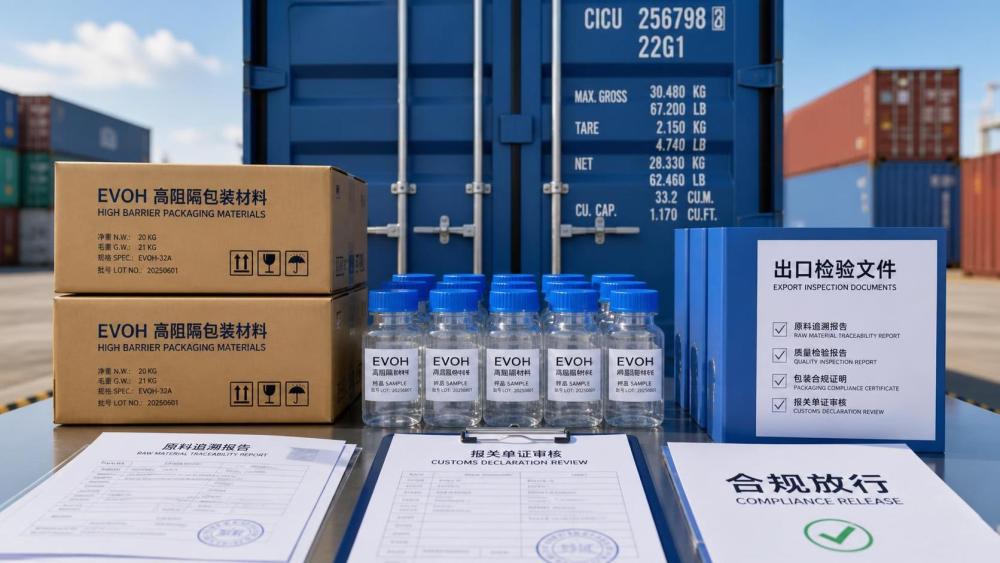
The confirmed change is straightforward: from 2026-08-01, outbound shipments involving agricultural and forestry germplasm resources must follow a special export approval process, and exporters must complete mandatory qualification-field entries on customs declaration forms. The summary also notes that while EVOH itself is not a germplasm resource, some upstream or derivative materials tied to EVOH development, including precursor materials, bio-based EVOH research strains, and enzyme preparations, may be managed in practice under 333/334 category approval directories. That makes the rule relevant not only to agricultural and forestry resource exporters, but also to parties whose trade documentation and customs classification depend on how related materials are identified at the border.
Why packaging and materials supply chains should pay attention
Direct traders and export suppliers
Direct traders that move China-origin EVOH-related inputs, or handle customized bio-based barrier materials, may face longer document review and a tighter classification check before shipment. The practical issue is not the resin label alone, but whether the underlying materials, traces, or development inputs trigger approval handling. At this stage, the main point to watch is whether the export path can be supported by a clean source trail and the correct customs filing fields.
Overseas packaging manufacturers and film converters
For overseas packaging manufacturers and composite film importers, the likely impact is on procurement timing and supplier qualification. If a China-based supplier is delayed by approval or filing issues, downstream production plans may need to absorb a longer lead time. From an industry perspective, the immediate compliance focus is on whether the supplier can provide traceability records, product classification support, and export-clearance documentation without gaps.
Brand owners and procurement teams
Terminal brand owners that depend on China-sourced barrier materials should treat this as a sourcing verification issue rather than a narrow customs matter. The summary suggests that the compliance burden may sit upstream, but the operational risk reaches the buyer through delivery certainty, documentation completeness, and substitution planning. Procurement teams should therefore examine whether current contracts and supplier files already cover the approval pathway now being signaled.
What companies should check now
Review the export route and traceability file
Companies should first confirm whether their products, precursors, or related research inputs are likely to be caught by the approval directory referenced in the summary. That means checking source documentation, product classification records, and any traceability material that supports customs declaration.
Verify declaration data before shipment
The new mandatory customs-field requirement makes declaration quality a front-end control point. Firms should review whether their internal shipping process can consistently populate the required qualification fields and whether the trade desk, compliance team, and customs broker are aligned on the filing logic.
Stress-test alternate supply options
Where China supply is critical, buyers should assess whether alternative qualified sources or substitute materials can be validated in time. This is not a forecast of disruption, but a prudent response to a rule change that may affect approval speed and document acceptance.
How to read the signal in the market
At this stage, this should be understood as an execution signal rather than a purely theoretical policy discussion. The fact pattern points to a more disciplined customs and approval environment for certain outbound materials and related inputs. What still needs closer observation is the final filing practice at the border, how the 333/334 category treatment is applied in real shipments, and whether trade participants encounter additional document expectations beyond the summary provided here. In other words, the rule direction is clear, but the market will still watch how consistently it is enforced across different product forms and supply chains.
What this means for near-term trade planning
The immediate takeaway is that firms tied to China-origin EVOH high-barrier packaging inputs should not treat this as a background regulatory update. It is better read as a compliance checkpoint that may affect sourcing, lead time, and customs execution. For now, the most reasonable approach is to verify traceability, align export paperwork, and monitor how the approval requirement is applied in practice before committing to shipment schedules that leave no room for review delays.
Source basis and follow-up items
This article is based on the user-provided title, event date, and summary. No direct official source link was provided in the input. The information type associated with this event would normally include official notices, regulatory releases, customs-related guidance, and industry follow-up reporting. Further verification is still needed on the detailed implementation wording, approval filing practice, customs classification treatment, and actual trade execution feedback after 2026-08-01.
Have questions about this sector analysis, or seeking best practices specific to your niche? Drop us a line below and let the senior consultants at APIM assist you.
We respect your privacy. Your information is strictly confidential.
Related News
- 00
0000-00
Do polyolefin hot melt adhesives bond well to polyethylene? - 00
0000-00
Korean Study Finds PLA Barely Degrades in Landfill After 320 Days - 00
0000-00
How to assess batch consistency from a thermal potting compounds supplier - 00
0000-00
How much weight can carbon fiber reinforced plastics save in cars? - 00
0000-00
Switching from PS to ABS Sheet Extrusion: Equipment Checks
Tag