




Barrier Packaging Materials for Pharmaceuticals: How to Compare Moisture and Oxygen Protection
Why Barrier Performance Matters in Pharmaceutical Packaging
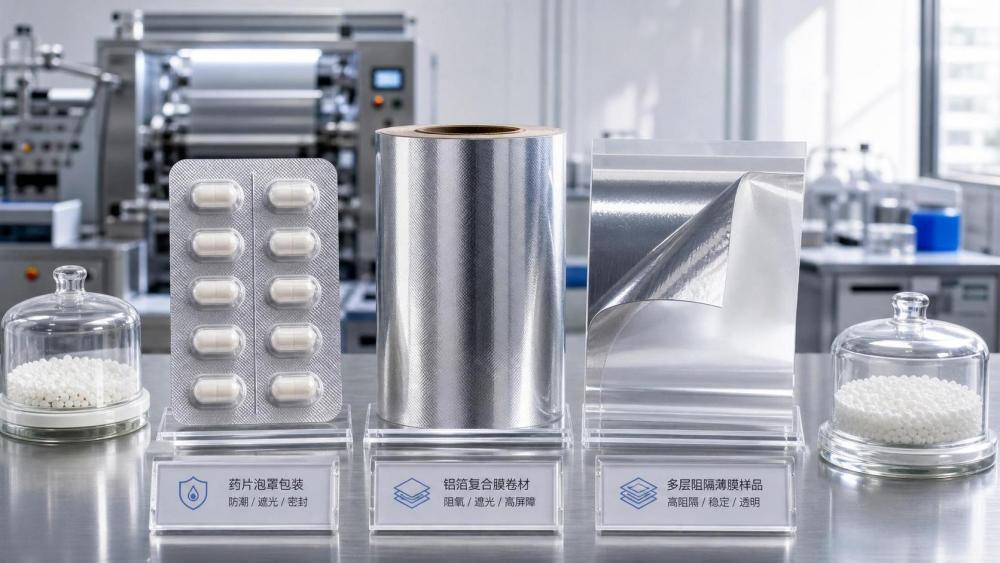
Choosing barrier packaging materials for pharmaceuticals is rarely a routine packaging decision.
Moisture and oxygen can change potency, appearance, dissolution behavior, and shelf life.
That risk becomes more serious when products move across climates, storage conditions, and long distribution cycles.
For that reason, barrier packaging materials for pharmaceuticals sit at the intersection of material science, compliance, and product protection.
The topic also matters beyond pharma alone.
Advanced polymer selection, multilayer film design, extrusion quality, and sealing behavior all influence final barrier results.
This is where structured materials intelligence becomes useful.
Platforms such as APIM help connect barrier data with film structures, processing choices, and supply chain considerations.
That wider view is important when packaging must perform consistently, not just look good on a specification sheet.
Moisture Barrier and Oxygen Barrier Are Not the Same Problem
A common mistake is treating moisture protection and oxygen protection as interchangeable.
They are related, but they do not behave the same way.
Moisture barrier is usually discussed through water vapor transmission rate, often called WVTR.
Oxygen barrier is commonly measured through oxygen transmission rate, or OTR.
A film can be strong in one area and weaker in the other.
For example, aluminum foil delivers excellent protection against both oxygen and moisture.
EVOH can provide very strong oxygen barrier, yet its performance changes when humidity rises.
Polyethylene often contributes moisture resistance and sealability, but not premium oxygen barrier.
Simple comparisons based on one barrier number can therefore be misleading.
In practice, barrier packaging materials for pharmaceuticals must be matched to the degradation pathway of the drug product.
How Material Structure Changes Real Protection
Barrier performance depends on more than the polymer name.
Structure, thickness, orientation, coatings, lamination quality, and seal integrity all matter.
This is why pharmaceutical packaging often relies on multilayer systems.
Each layer contributes a different function.
- PET may add stiffness, printability, and dimensional stability.
- Aluminum foil may provide near-total barrier protection.
- EVOH may improve oxygen barrier in flexible structures.
- PE or PP may support heat sealing and moisture resistance.
- Adhesive tie layers hold the structure together under converting stress.
The best barrier packaging materials for pharmaceuticals are often engineered combinations rather than single resins.
That engineering detail affects both protection and manufacturability.
If co-extrusion control, lamination quality, or thickness consistency drifts, barrier performance may drift as well.
For regulated packaging, consistency is often as important as peak performance.
Typical material options and what they really offer
What Quality Review Should Focus On
When comparing barrier packaging materials for pharmaceuticals, the right question is not only which material has the lowest transmission rate.
The better question is whether the package protects the product under actual use conditions.
That means reviewing several layers of evidence together.
- Transmission data at defined temperature and humidity
- Film thickness tolerance and structure consistency
- Seal strength and seal window stability
- Resistance to pinholes, cracking, or flex damage
- Compatibility with desiccants, inks, adhesives, and sterilization steps
- Migration, extractables, and regulatory documentation
- Stability data from the finished pack, not only raw film data
This broader review helps avoid a narrow materials decision that later becomes a product stability problem.
It also aligns with how APIM approaches industrial materials analysis.
Material performance, conversion quality, and downstream application cannot be separated cleanly.
Testing Conditions Can Change the Comparison
Barrier data only makes sense when test conditions are visible.
A supplier data sheet may report excellent oxygen barrier.
That result may come from a dry laboratory environment rather than real storage exposure.
Humidity, temperature, mechanical stress, and package geometry can all affect outcome.
Blister cavities, sachet corners, folds, and seals often become weak points.
The same material may therefore perform differently in bottle induction seals, strip packs, unit-dose pouches, or blister webs.
In actual use, package design and converting quality can outweigh a small difference in published WVTR or OTR values.
This is one reason pharmaceutical packaging teams increasingly ask for application-specific validation rather than generic comparison charts.
Points worth verifying in supplier discussions
- Which test standard was used for WVTR and OTR?
- At what temperature and relative humidity was the test run?
- Is the result for monolayer film or finished laminate?
- How does the structure perform after forming or sealing?
- What variability exists across production lots?
Current Industry Priorities Behind Material Selection
The market is paying closer attention to three pressures at once.
The first is stronger product protection for more sensitive formulations.
The second is supply chain resilience, including dual sourcing and material traceability.
The third is sustainability, especially where regulators and brand owners want lower material impact.
These goals do not always move together.
For example, a mono-material concept may support recyclability, yet it may not match the barrier of foil-based pharmaceutical packs.
A downgauged film may reduce material use, yet it may narrow the processing window.
That is why barrier packaging materials for pharmaceuticals should be assessed through total packaging performance, not environmental claims alone.
APIM’s broader coverage of advanced polymers, extrusion systems, specialty films, and sustainable material development reflects this shift.
Packaging choices now require technical, operational, and supply-side visibility at the same time.
Where Comparison Becomes Practical
A useful comparison starts with the product, not the material catalog.
Identify the main degradation route first.
Then define the distribution environment, target shelf life, pack format, and sealing process.
From there, a shortlist becomes easier to build.
This approach makes barrier packaging materials for pharmaceuticals easier to compare in a disciplined, business-relevant way.
A Better Next Step for Material Evaluation
Good barrier selection is rarely solved by one number or one supplier brochure.
The stronger approach is to build a comparison framework.
List the required moisture and oxygen limits.
Add pack structure, process demands, storage conditions, and documentation requirements.
Then compare candidate materials using finished-package evidence wherever possible.
That process leads to better decisions than choosing the highest claimed barrier by default.
For organizations tracking polymer performance, specialty films, converting quality, and supply chain trends, that wider technical context is increasingly valuable.
It helps turn barrier packaging materials for pharmaceuticals from a specification exercise into a more reliable protection strategy.
Have questions about this sector analysis, or seeking best practices specific to your niche? Drop us a line below and let the senior consultants at APIM assist you.
We respect your privacy. Your information is strictly confidential.
Related News
- 00
0000-00
Do polyolefin hot melt adhesives bond well to polyethylene? - 00
0000-00
Korean Study Finds PLA Barely Degrades in Landfill After 320 Days - 00
0000-00
How to assess batch consistency from a thermal potting compounds supplier - 00
0000-00
How much weight can carbon fiber reinforced plastics save in cars? - 00
0000-00
Switching from PS to ABS Sheet Extrusion: Equipment Checks