




How to Compare High Impact Modified Resins for Toughness and Processability
How to Compare High Impact Modified Resins for Toughness and Processability
Selecting the right high impact modified resins requires more than checking impact strength alone.
Technical evaluators need a balanced view of toughness, flow, heat resistance, filler response, and process stability.
That balance matters because a resin can look strong in a datasheet, yet create molding problems, scrap, or unstable part quality.
In practical selection work, the best option is usually the resin that performs reliably across the whole production window.
Start With the Real Impact Requirement
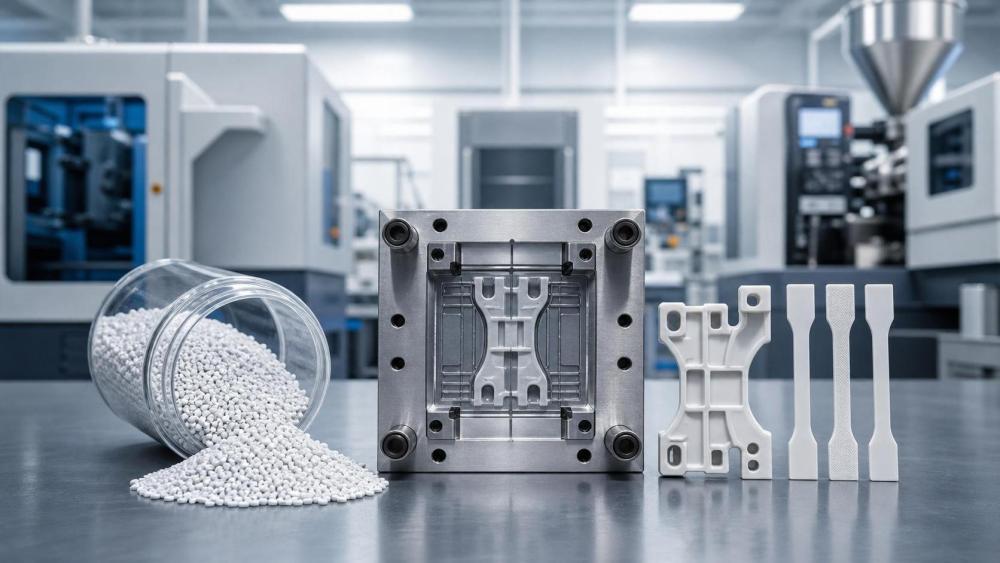
The first step is defining what toughness actually means in the target application.
For high impact modified resins, impact numbers alone rarely tell the full story.
A housing for consumer electronics sees different stress than an automotive bracket or industrial guard.
So compare results under the actual failure mode: drop impact, repeated shock, notch sensitivity, or low-temperature brittle fracture.
Key toughness questions
- Does the resin retain impact strength at cold temperatures?
- How much does notching reduce energy absorption?
- Does the grade stay ductile after aging or humidity exposure?
- Is weld line toughness acceptable for the part geometry?
This is where many comparisons become more honest.
Some high impact modified resins test well in standard bars, but lose too much toughness in molded parts with ribs or gates.
That gap should be treated as a selection risk, not a minor detail.
Compare Processability as Early as Toughness
The next filter is processability, because production efficiency can change the economics of the material decision.
High impact modified resins often gain toughness through elastomer phases, but that can also affect flow and cycle time.
A grade with excellent impact resistance may still struggle in thin-wall molding or complex tool layouts.
What to compare in processing
- Melt flow index or viscosity under the intended shear range
- Recommended melt and mold temperature window
- Sensitivity to moisture and drying conditions
- Shrinkage consistency and warpage behavior
- Surface quality, gloss stability, and flow mark risk
In real plants, flow behavior often decides whether the grade can run smoothly at scale.
That is especially true for large parts, multi-cavity tools, or applications with tight cosmetic standards.
When comparing high impact modified resins, ask for molding trial feedback, not only lab values.
Check Heat Performance and Property Retention
Impact modification can improve ductility, but sometimes at the cost of stiffness or heat resistance.
That tradeoff needs clear review before shortlisting any high impact modified resins.
For parts used near motors, lighting systems, battery zones, or outdoor surfaces, heat matters as much as impact.
Heat-related checks
- Review HDT and Vicat, but also check long-term thermal aging data.
- Compare stiffness retention after heat exposure.
- Confirm color stability if appearance is important.
- Assess whether impact performance drops after repeated thermal cycling.
A resin that passes room-temperature impact tests may still fail after aging in a hotter service environment.
This is a common blind spot when teams focus too heavily on initial toughness values.
The better comparison method is property retention over time, not just peak performance on day one.
Evaluate Filler Compatibility and Compound Stability
Many industrial applications do not use neat resin.
They use mineral-filled, glass-fiber reinforced, flame-retardant, or color-modified formulations.
That makes compatibility a core part of comparing high impact modified resins.
An impact modifier that works well in one base polymer may perform differently when fillers or flame retardants are introduced.
Important formulation risks
- Loss of impact performance after glass fiber loading
- Poor dispersion causing inconsistent toughness
- Increased plate-out or die build-up during processing
- Unexpected viscosity shifts after additive blending
- Surface defects from phase separation or unstable color packages
This is why compound quality matters almost as much as polymer family selection.
Stable compounding, controlled dispersion, and consistent pellet quality usually separate dependable grades from risky ones.
When data is limited, pilot trials can reveal these issues quickly.
Use a Practical Comparison Table
A structured table helps turn scattered supplier claims into a decision-ready view.
For high impact modified resins, a useful comparison should combine material performance with production and quality risks.
This kind of framework keeps selection discussions grounded.
It also helps procurement, quality, and engineering teams align around the same evaluation logic.
Look Beyond the Datasheet Before Final Approval
Datasheets are necessary, but they are only the starting point for selecting high impact modified resins.
More useful signals often come from supplier responsiveness, testing transparency, and experience in similar applications.
From a business perspective, those factors can reduce qualification delays and future troubleshooting costs.
Final decision checklist
- Shortlist grades based on real application impact conditions.
- Compare flow and molding stability under expected throughput.
- Review heat aging, dimensional stability, and property retention.
- Check formulation compatibility with fillers and additives.
- Run trials and record scrap, appearance, and cycle data.
- Confirm supplier consistency, documentation, and technical support.
The strongest decision usually comes from combining lab results with line-level evidence.
That approach makes it easier to compare high impact modified resins in a way that supports both performance and efficient manufacturing.
In a market where material choices directly affect quality, cost, and launch timing, disciplined comparison is a competitive advantage.
Use that discipline early, and the final resin choice will be easier to defend across technical and commercial teams.
Have questions about this sector analysis, or seeking best practices specific to your niche? Drop us a line below and let the senior consultants at APIM assist you.
We respect your privacy. Your information is strictly confidential.
Related News
- 00
0000-00
Do polyolefin hot melt adhesives bond well to polyethylene? - 00
0000-00
Korean Study Finds PLA Barely Degrades in Landfill After 320 Days - 00
0000-00
How to assess batch consistency from a thermal potting compounds supplier - 00
0000-00
How much weight can carbon fiber reinforced plastics save in cars? - 00
0000-00
Switching from PS to ABS Sheet Extrusion: Equipment Checks