




Gravimetric Feeding Systems Feeder Calibration: Fix Accuracy Drift Fast
Gravimetric Feeding Systems Feeder Calibration: Fix Accuracy Drift Fast
When output consistency starts slipping, gravimetric feeding systems feeder calibration becomes the first place operators should check.
Small calibration errors can quickly cause ratio drift, unstable throughput, higher scrap, and downstream quality problems.
This guide explains how to identify accuracy drift fast, verify feeder performance, and restore reliable dosing before minor deviations turn into costly production issues.
Why Gravimetric Feeding Systems Feeder Calibration Matters So Much
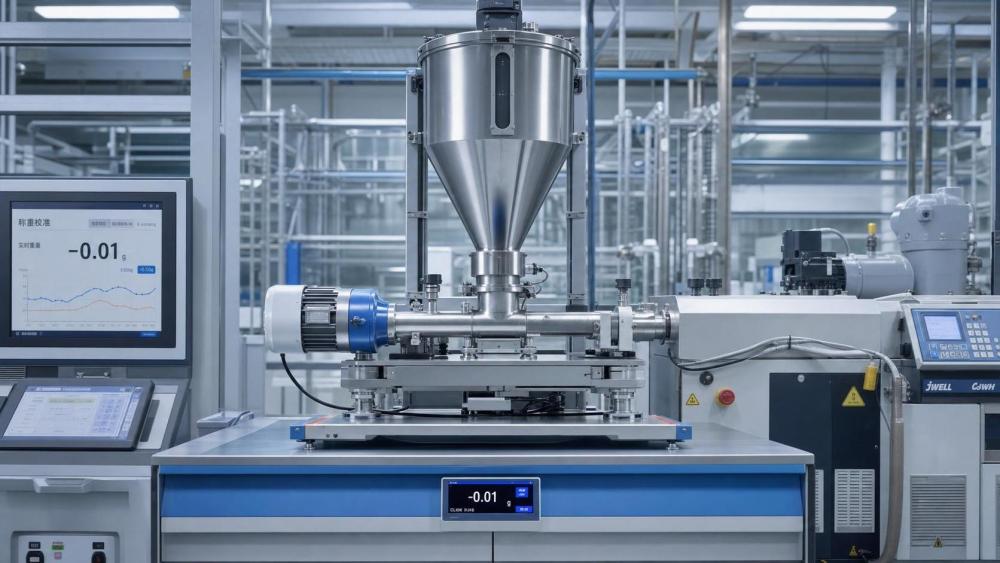
In compounding and extrusion, feeding accuracy directly shapes product quality.
A small error at the feeder can become a much larger problem at the die, pelletizer, film line, or molding stage.
That is why gravimetric feeding systems feeder calibration is not just a maintenance task.
It is a process control checkpoint.
When calibration drifts, blend ratios shift.
Throughput may look acceptable on screen, yet the actual material flow can be wrong.
This often affects color consistency, filler loading, additive levels, melt stability, and final mechanical properties.
In practical production, the cost shows up fast.
- Higher scrap and rework
- Off-spec density or thickness
- Inconsistent additive performance
- More start-up waste
- Troubleshooting time across multiple departments
A fast calibration check can prevent days of quality drift.
Early Signs of Accuracy Drift
Most accuracy problems do not begin with a complete feeder failure.
They begin with subtle changes that are easy to dismiss.
From recent operating changes, a few signals usually appear first.
Process Signals Worth Watching
- Frequent recipe corrections without a raw material change
- Unexpected line speed variation
- Poor repeatability after restart
- Additive consumption above plan
- Weight control alarms appearing more often
Product Quality Clues
- Color shade variation between batches
- Mechanical test scatter increasing
- More gels, weak spots, or appearance variation
- Film gauge or sheet thickness drifting
- Pellet bulk density moving outside normal range
The stronger signal is when several of these happen together.
That usually points back to gravimetric feeding systems feeder calibration or feeder mechanics.
What Usually Causes Feeder Calibration Drift
A feeder rarely loses accuracy for one reason only.
Most cases involve a mix of mechanical, material, and control factors.
Common Root Causes
- Load cell contamination, damage, or loose mounting
- Vibration transferred from nearby equipment
- Material bridging, rat-holing, or inconsistent bulk density
- Screw wear, refill valve issues, or hopper flow restrictions
- Incorrect zeroing after cleaning or changeover
- Software settings changed without verification
- Moisture pickup changing flow behavior
This also means calibration should never be checked in isolation.
If the feeder is mechanically unstable, recalibrating alone may only hide the real problem for a short time.
How to Verify Gravimetric Feeding Systems Feeder Calibration Fast
When production is at risk, the check needs to be quick and disciplined.
Use a short sequence that separates calibration drift from process noise.
- Review recent alarms, recipe edits, and maintenance records.
- Check feeder mounting, cable condition, and visible contamination.
- Confirm hopper discharge is smooth and refill timing is normal.
- Verify zero point with an empty, stable feeder.
- Apply certified test weights if the system allows it.
- Run a timed discharge test and compare actual versus displayed mass flow.
- Repeat the test at low, medium, and high operating rates.
That final step matters more than many teams expect.
Some gravimetric feeding systems feeder calibration problems only appear at one section of the operating window.
A feeder can pass at high output and still drift badly at low additive rates.
A Practical Calibration Checklist for Operators
A simple checklist reduces guesswork and helps keep calibration repeatable across shifts.
Before Calibration
- Warm the system to stable operating conditions when required.
- Use the same material type planned for production, if possible.
- Isolate unusual vibration sources.
- Clear buildup from screws, hoppers, and discharge zones.
- Confirm scale surfaces move freely without contact points.
During Calibration
- Follow the machine sequence exactly.
- Wait for stable readings before saving values.
- Record actual test conditions, not just pass or fail.
- Check each feeder separately before validating the full recipe.
After Calibration
- Run a short production confirmation test.
- Compare feeder totals with expected consumption.
- Monitor the first stable batch for ratio consistency.
- Log the result for trend tracking.
When Calibration Passes but Accuracy Still Drifts
This is a common and frustrating situation.
The gravimetric feeding systems feeder calibration may look correct during testing, yet production remains unstable.
In most cases, dynamic process conditions are the reason.
Look Beyond Static Calibration
Check refill disturbances.
A feeder can lose control briefly during refill, especially with low-rate additives.
Check material behavior.
Free-flowing virgin resin behaves differently from regrind, fiber-filled pellets, powder blends, or sticky compounds.
Check control tuning.
Feed algorithms, averaging filters, and response settings can create overshoot or delayed correction.
Check upstream and downstream interactions.
Extruder surging, vacuum changes, or line speed adjustments can make the feeder appear inaccurate.
Recommended Tolerance Review Table
How to Keep Gravimetric Feeding Systems Feeder Calibration Stable Longer
Fast recovery matters, but preventing repeat drift matters more.
A few operating habits usually make the biggest difference.
- Standardize cleaning points after every product change
- Use scheduled zero and span checks
- Track drift trends by feeder, not only by line
- Separate calibration issues from material flow issues in reports
- Review wear parts before accuracy complaints become frequent
- Control humidity and material conditioning where needed
In actual operations, trend records are often the missing link.
When gravimetric feeding systems feeder calibration results are logged consistently, repeating patterns become easier to spot.
That makes maintenance more targeted and production more predictable.
Final Action Steps
When output starts drifting, act early.
Start with gravimetric feeding systems feeder calibration, then confirm the feeder is mechanically stable and the material is flowing correctly.
Use timed verification, multi-rate checks, and short production confirmation runs.
That approach catches most accuracy drift before it spreads into scrap, complaints, or missed output targets.
In fast-moving polymer processing, stable feeding is not a small detail.
It is one of the clearest ways to protect quality, cost, and line reliability at the same time.
Have questions about this sector analysis, or seeking best practices specific to your niche? Drop us a line below and let the senior consultants at APIM assist you.
We respect your privacy. Your information is strictly confidential.
Related News
- 00
0000-00
Do polyolefin hot melt adhesives bond well to polyethylene? - 00
0000-00
Korean Study Finds PLA Barely Degrades in Landfill After 320 Days - 00
0000-00
How to assess batch consistency from a thermal potting compounds supplier - 00
0000-00
How much weight can carbon fiber reinforced plastics save in cars? - 00
0000-00
Switching from PS to ABS Sheet Extrusion: Equipment Checks