




Filler Masterbatch Manufacturing: Cost Drivers, Loading Limits, and Quality Risks
Filler Masterbatch Manufacturing: Cost Drivers, Loading Limits, and Quality Risks
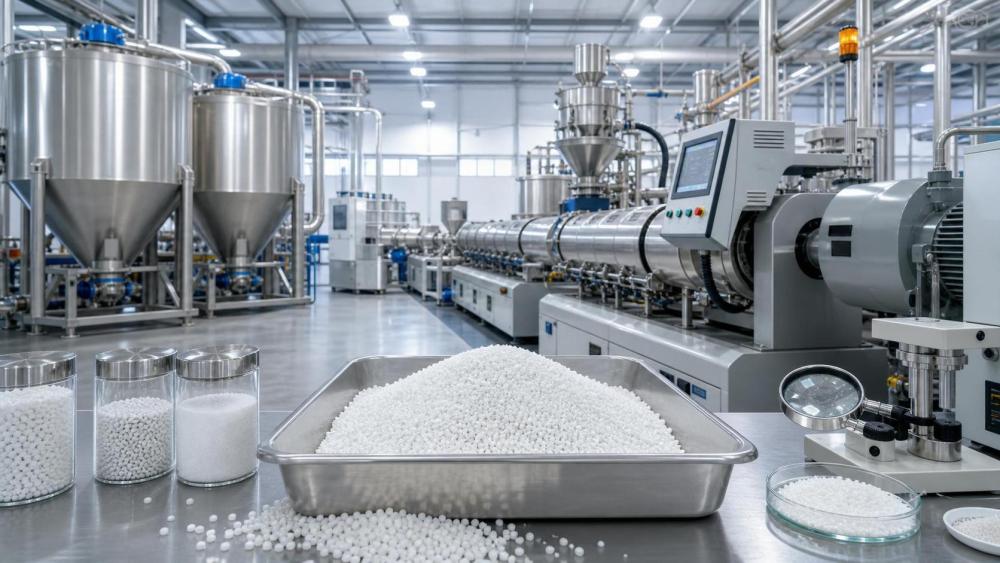
In filler masterbatch manufacturing, lower raw material cost does not always mean better value.
The buying decision often looks simple at first.
A higher filler ratio seems to promise a lower compound cost.
In practice, the result depends on processing behavior, defect rates, and end-use performance.
That is why masterbatch manufacturing filler masterbatch choices need technical and commercial review together.
For cost-focused purchasing, the real question is not only price per kilogram.
The better question is how the filler masterbatch performs on the line, in the product, and across batches.
Why Filler Masterbatch Cost Is More Complex Than It Looks
In filler masterbatch manufacturing, the cost structure has several moving parts.
Calcium carbonate, talc, or barium sulfate may be the largest raw material component.
But carrier resin, surface treatment, additives, and processing energy also matter.
More importantly, low-cost input does not guarantee low total conversion cost.
A cheaper filler masterbatch can increase melt pressure, raise scrap, and slow output.
That hidden cost rarely appears in a supplier quotation.
From a sourcing view, three cost drivers deserve early attention:
- filler type, purity, and particle size distribution
- carrier resin quality and compatibility with the base polymer
- dispersion performance under real extrusion or molding conditions
This is where masterbatch manufacturing filler masterbatch evaluation becomes more practical.
A low invoice price may still lead to a higher production cost per good part.
Loading Limits: The Point Where Savings Turn Into Problems
Every application has a practical loading limit.
This limit depends on resin system, product design, equipment, and performance targets.
In film, excessive loading may reduce elongation and increase breakage.
In injection molding, it may affect weld line strength and surface finish.
In raffia or extrusion coating, it can change drawdown stability and thickness control.
This is why filler masterbatch manufacturing should always be linked to the final process window.
Recent market pressure has pushed some buyers toward higher filler loading.
The stronger signal is that many later face line instability or product claims.
A realistic review should check these points before expanding loading levels:
- Maximum addition rate without visible dispersion defects
- Impact on tensile strength, elongation, and stiffness
- Effect on die build-up, screen pack life, and pressure stability
- Color, gloss, opacity, and printability changes
Once the loading threshold is crossed, the savings curve usually reverses.
The unit material cost falls, but total operating cost climbs.
The Quality Risks Hidden Inside Cheap Filler Masterbatch
Quality risk in filler masterbatch manufacturing often starts with inconsistency.
A supplier may quote the same filler percentage, but the real product can behave very differently.
The reason is simple.
Moisture, particle size, poor coating, or unstable carrier resin can weaken dispersion.
That can trigger fish eyes, brittleness, pinholes, black specks, or surface haze.
For packaging and consumer goods, these defects can quickly become a commercial issue.
For industrial parts, the bigger concern may be dimensional variation or reduced toughness.
Common quality risks in masterbatch manufacturing filler masterbatch supply include:
- broad particle size causing poor dispersion
- insufficient surface treatment reducing filler wetting
- carrier resin mismatch causing melt flow issues
- volatile content creating bubbles or odor
- batch-to-batch variation affecting process repeatability
These are not minor technical details.
They directly influence complaint rates, conversion losses, and supplier switching cost.
How to Compare Suppliers Beyond Filler Content
In actual business, supplier comparison should go beyond headline loading rate.
Two filler masterbatch products with similar specifications may deliver very different line results.
A practical buying review should include material, process, and service criteria together.
This approach makes filler masterbatch manufacturing decisions more measurable.
It also helps separate low-price offers from genuinely efficient supply.
Questions That Should Be Asked Before Purchase Approval
Before approving a filler masterbatch source, clear questions can prevent avoidable risk.
The goal is not to create paperwork.
The goal is to confirm whether the supplier understands real production conditions.
- What is the recommended addition rate by application type?
- Which base resin grades have been validated with this product?
- What test data supports dispersion and mechanical performance?
- How are moisture and ash content controlled during production?
- What is the batch traceability process if a complaint occurs?
- Has the product been tested on similar extrusion or molding equipment?
These questions quickly reveal how mature a filler masterbatch manufacturing operation really is.
They also improve negotiation quality, because price discussions become data-based.
A Smarter Purchasing Strategy for Filler Masterbatch
The most effective strategy is usually balanced, not extreme.
Pushing filler content too high can damage product value.
Avoiding filler entirely may miss a real cost advantage.
A stronger approach is to qualify filler masterbatch by total manufacturing impact.
That means checking resin compatibility, loading window, defect behavior, and supply consistency together.
For many applications, the best supplier is not the one with the cheapest offer.
It is the one that keeps output stable, defects low, and product quality predictable.
Seen this way, masterbatch manufacturing filler masterbatch sourcing becomes a margin protection decision.
The practical next step is simple.
Compare suppliers using trial data, defect history, and processing stability, not only quoted filler percentage.
That is usually where better long-term purchasing results begin.
Have questions about this sector analysis, or seeking best practices specific to your niche? Drop us a line below and let the senior consultants at APIM assist you.
We respect your privacy. Your information is strictly confidential.
Related News
- 00
0000-00
How does washing affect contamination in post-consumer recycled PP resins? - 00
0000-00
How does feedstock affect depolymerization equipment selection? - 00
0000-00
US Sets 213.44% Preliminary Antidumping Deposit on Chinese PTMEG - 00
0000-00
When should epoxy be used as a thermal interface material for semiconductors? - 00
0000-00
US Midterm Results Unlikely to Quickly Shift Recycled Plastics Market or Legislation