




Engineering Resins Selection Guide for Heat, Impact, and Dimensional Stability
Selecting engineering resins is rarely a simple material swap. In projects exposed to heat, shock, and tight tolerances, resin choice shapes product life, processing stability, warranty risk, and total cost.
That is why engineering resins remain a central topic across automotive, electronics, industrial machinery, medical components, and precision consumer products. A resin that performs well in one condition may fail when temperature cycles, assembly loads, or moisture change.
A practical selection guide must therefore connect resin properties with actual operating environments, part design, processing limits, and supply chain reliability. That broader view is increasingly important in modern manufacturing.
Why material selection has become more demanding
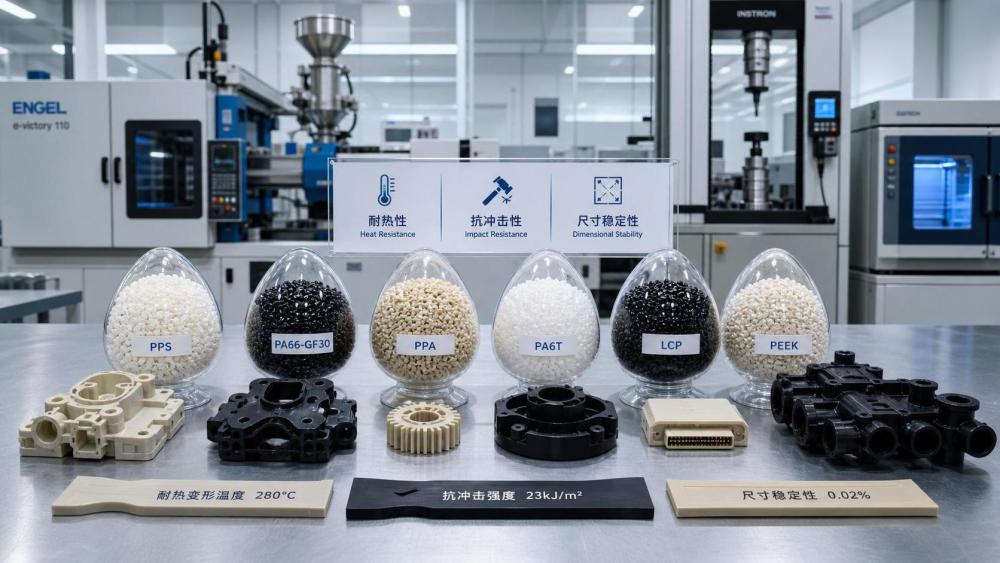
Heat resistance, impact strength, and dimensional stability often compete with each other. Improving one property can shift cost, moldability, shrinkage behavior, or toughness in an unwanted direction.
At the same time, many industries are replacing metal, glass, rubber, and commodity plastics with higher performance polymers. This expands design freedom, but it also raises the consequences of a poor resin decision.
In electronics, a housing may need flame resistance, thin-wall flow, and dimensional control. In automotive parts, under-hood heat, fluid exposure, and vibration may matter more than room-temperature tensile strength.
For this reason, engineering resins should be evaluated as engineered systems, not only as resin names on a datasheet. Formulation, reinforcement, moisture sensitivity, and process discipline all influence performance.
What engineering resins really cover
The term engineering resins usually refers to polymers designed for higher mechanical, thermal, or dimensional demands than standard plastics. Common examples include PA, PBT, PET, PC, POM, PPS, PEEK, ABS blends, and TPU.
However, the useful comparison is not only between base polymers. Modified compounds often change the selection outcome more than the polymer family itself.
Glass fiber reinforcement can raise stiffness and heat deflection. Mineral filling can improve dimensional control. Impact modifiers can prevent brittle failure. Flame-retardant systems can support electrical compliance while affecting flow and toughness.
That is why structured material intelligence matters. Platforms such as APIM are valuable because they connect polymer chemistry, compounding quality, processing behavior, application logic, and sourcing considerations in one decision framework.
Balancing heat, impact, and dimensional stability
In practice, these three priorities should be judged together.
Heat resistance
Heat resistance is more than a maximum service temperature. It includes short-term peaks, long-term aging, creep under load, and property retention after repeated thermal cycles.
PPS and PEEK are often chosen for demanding thermal environments. PBT, PET, reinforced PA, and flame-retardant PC can also perform well when the service profile is clearly defined.
Impact strength
Impact performance should be tested in the real failure mode. Drop shock, notch sensitivity, cold impact, vibration, and assembled-part stress may produce different results than a simple laboratory impact number.
PC, TPU, and impact-modified blends are often selected where sudden loading matters. Some high-temperature engineering resins lose toughness if reinforcement or wall design is not managed carefully.
Dimensional stability
Dimensional stability affects fit, sealing, assembly speed, noise, and optical or electrical performance. It is shaped by shrinkage, water absorption, filler content, fiber orientation, post-mold conditioning, and thermal expansion.
POM, PBT, PET, PPS, and mineral-filled or glass-filled compounds are often considered where tolerance control is critical. Polyamide can deliver strength, but moisture response must be understood early.
Common resin families and where they fit
A quick comparison helps narrow the field before deeper testing.
This table is only a starting point. Final selection depends on geometry, finishing steps, joining method, certification needs, and expected service life.
Where engineering resins create business value
The value of engineering resins is not limited to material performance. Better resin selection can shorten cycle times, reduce scrap, stabilize dimensions, improve assembly yield, and lower field failure rates.
In automotive programs, reinforced polyamide or PPS may cut weight while keeping thermal integrity. In electronics, flame-retardant polycarbonate or polyester blends can support safety standards and housing precision.
Industrial components often need wear resistance, lubrication compatibility, and repeatable dimensions. Medical and precision products may place more emphasis on sterilization response, purity, and controlled molding windows.
The same logic also extends into adjacent material systems. Specialty films, industrial adhesives, and thermally functional compounds increasingly interact with engineering resins in final assemblies.
What often gets missed during selection
Material mistakes often come from incomplete assumptions rather than wrong data. Several factors deserve more attention before grade approval.
- Processing window: drying, melt temperature, residence time, and cooling strongly affect final properties.
- Compounding quality: filler dispersion and additive consistency can shift impact and warp behavior.
- Part design: ribs, sharp corners, wall transitions, and gate location can override resin advantages.
- Chemical environment: oils, cleaners, humidity, UV, and voltage stress may change long-term results.
- Supply stability: regional availability, batch consistency, and documentation quality affect program continuity.
APIM’s broader coverage is useful here because resin selection is linked to extrusion, compounding, downstream conversion, bonding methods, and sustainability requirements, not only polymer labels.
A practical framework for comparing options
A better selection process starts with ranking failure risks before ranking resin names.
- Define the real thermal profile, including peaks, cycles, and loaded conditions.
- Map the impact scenario, including drop, assembly stress, vibration, or abuse.
- Set dimensional limits by function, not by drawing alone.
- Compare unfilled and modified grades where stiffness and toughness compete.
- Review process capability with the actual equipment and mold design.
- Check compliance, traceability, and long-term supply conditions before final release.
This approach keeps engineering resins tied to measurable project risk. It also helps prevent late-stage redesign caused by warpage, cracking, poor fit, or unstable sourcing.
How to move from comparison to decision
The next step is not to search for a perfect material. It is to narrow engineering resins into a short list that fits the application, process, and commercial reality at the same time.
Start with the dominant failure mode. Then test the most relevant properties under realistic conditions. Use supplier data, but balance it with molding trials, dimensional studies, and aging results.
Where applications involve reinforced compounds, specialty films, or bonded assemblies, include the full system in evaluation. Many failures come from interface behavior rather than base resin limits alone.
A structured knowledge source such as APIM can support that review by organizing performance data, formulation context, process factors, and market developments into a clearer basis for material judgment.
When heat, impact, and dimensional stability all matter, the best decision usually comes from disciplined comparison, not quick substitution. That is where engineering resins deliver their real value.
Have questions about this sector analysis, or seeking best practices specific to your niche? Drop us a line below and let the senior consultants at APIM assist you.
We respect your privacy. Your information is strictly confidential.
Related News
- 00
0000-00
How does washing affect contamination in post-consumer recycled PP resins? - 00
0000-00
How does feedstock affect depolymerization equipment selection? - 00
0000-00
US Sets 213.44% Preliminary Antidumping Deposit on Chinese PTMEG - 00
0000-00
When should epoxy be used as a thermal interface material for semiconductors? - 00
0000-00
US Midterm Results Unlikely to Quickly Shift Recycled Plastics Market or Legislation