




How to Evaluate an Extrusion Equipment Manufacturer for Line Reliability
How to Evaluate an Extrusion Equipment Manufacturer for Line Reliability
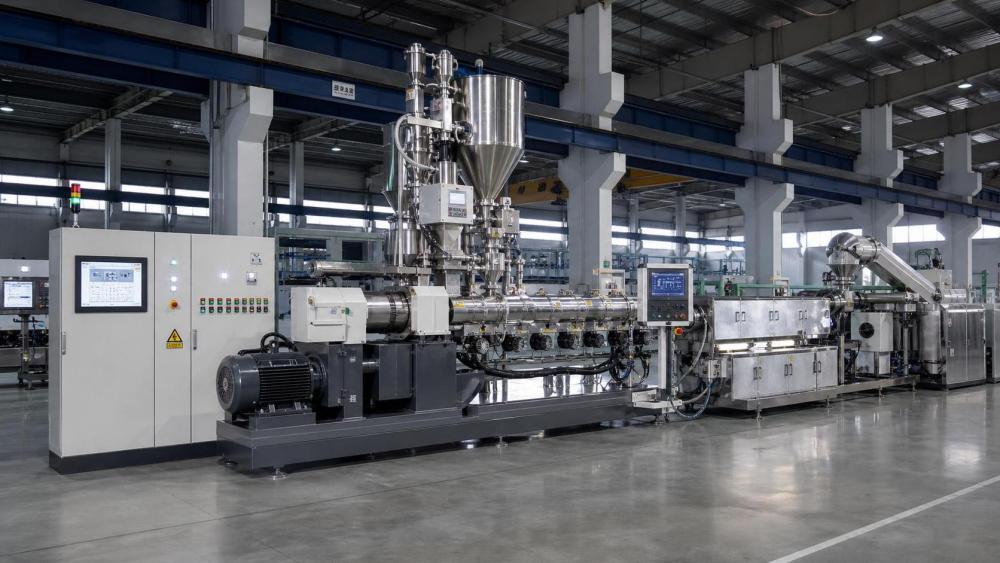
Choosing the right extrusion equipment manufacturer shapes output stability, melt consistency, maintenance risk, and total operating cost over many years.
For procurement decisions, the biggest mistake is comparing quotes before comparing process capability, engineering depth, and service discipline.
A low initial price can still lead to higher scrap, longer downtime, unstable throughput, and expensive troubleshooting later.
That is why evaluating an extrusion equipment manufacturer should focus on line reliability first, then cost, speed, and optional features.
In practical terms, line reliability means the system can run predictable hours with stable output, acceptable tolerances, and manageable service intervals.
It also means the supplier understands your polymers, product targets, and downstream production reality, not just machine assembly.
Start with Process Fit, Not Brochure Claims
A capable extrusion equipment manufacturer should begin with questions about materials, output range, product geometry, and process sensitivity.
If the supplier jumps directly to a standard model, that is usually a warning sign.
Different polymers behave very differently under heat, shear, moisture, and residence time.
Engineering plastics, filled compounds, recycled blends, films, sheets, and adhesive materials need different screw designs and control strategies.
Ask whether the extrusion equipment manufacturer has proven references for your material family and product category.
That reference should match more than output size. It should match viscosity behavior, filler loading, temperature sensitivity, and quality requirements.
- Material type and formulation complexity
- Required throughput window and turndown ratio
- Tolerance requirements for thickness, pellet quality, or dispersion
- Expected shift pattern and annual operating hours
- Integration needs with feeders, screen changers, pelletizers, or downstream converting lines
A reliable extrusion equipment manufacturer will translate those inputs into a process-based proposal, not a generic equipment list.
Check Engineering Depth Behind the Machine
Line reliability usually comes from engineering discipline that is invisible in a sales deck.
This includes screw geometry, barrel metallurgy, gearbox sizing, heater layout, control logic, and mechanical access for maintenance.
A serious extrusion equipment manufacturer should explain why each core component was selected for your application.
That explanation matters more than a long options list.
Look closely at how the supplier handles wear, thermal stability, feeding consistency, and pressure fluctuation.
These factors directly affect uptime and product consistency.
Questions worth asking
- How is screw design adapted for filler content, shear sensitivity, or devolatilization needs?
- What is the expected wear life for screws, barrels, and kneading elements?
- How is temperature stability maintained across long runs?
- What pressure control methods reduce surging or output variation?
- How easy is it to clean, inspect, and replace wear parts?
A strong extrusion equipment manufacturer answers with data, drawings, and operating logic, not broad promises.
Evaluate Control Systems and Repeatability
Reliable output depends on control quality as much as mechanical quality.
Even a robust machine can perform poorly if feeders drift, temperature loops overshoot, or alarms are too basic.
A qualified extrusion equipment manufacturer should show how the line maintains repeatability across startup, steady production, grade changes, and restarts.
This is especially important for compounds, specialty films, multilayer structures, and recycled polymer processing.
Check whether the system includes recipe management, trend history, alarm logging, remote diagnostics, and practical operator interfaces.
These features reduce troubleshooting time and support more stable production between shifts.
When comparing suppliers, the better extrusion equipment manufacturer usually makes process variation visible and manageable.
Review Reliability Proof, Not Just Reference Lists
Most suppliers can provide customer names. Fewer can provide useful reliability evidence.
A careful buyer should ask for operating data, acceptance standards, maintenance records, and startup results from comparable lines.
This is where a strong extrusion equipment manufacturer stands apart.
If possible, visit an installed line or request a live remote review with actual production conditions.
Pay attention to operator feedback, housekeeping, changeover effort, spare part usage, and noise around recurring faults.
Those details often reveal more than polished case studies.
Useful proof points
- Documented throughput at target quality levels
- Scrap rate after commissioning
- Unplanned downtime frequency
- Time needed for startup and grade transition
- Actual maintenance intervals and part replacement history
A reliable extrusion equipment manufacturer should be comfortable discussing both performance and limits.
Look Hard at Service Response and Lifecycle Support
For procurement teams, lifecycle support often becomes the hidden cost driver after installation.
A machine can be technically sound and still become operationally risky if spare parts are slow or field service is inconsistent.
That is why service capability should be part of extrusion equipment manufacturer evaluation from the beginning.
Review local support coverage, parts stocking, remote troubleshooting workflow, and escalation procedures.
Also confirm whether critical components come from standard global suppliers or proprietary sources with long lead times.
In real operations, this difference affects recovery time far more than many buyers expect.
- Ask for a recommended spare parts list by risk level.
- Confirm response time commitments for phone, remote, and on-site support.
- Review training scope for operators, maintenance staff, and process engineers.
- Check documentation quality, including drawings, manuals, and troubleshooting logic.
- Verify upgrade support for future output, automation, or material changes.
The best extrusion equipment manufacturer usually treats service as part of line performance, not a separate afterthought.
Compare Total Cost Through Reliability Risk
Price comparison is still necessary, but it should come after technical evaluation.
The more useful model is total cost of ownership shaped by reliability risk.
An extrusion equipment manufacturer with higher upfront pricing may still deliver lower long-term cost through better uptime and lower waste.
Include energy use, wear part replacement, labor efficiency, scrap, maintenance hours, software support, and restart losses in the comparison.
From a decision perspective, the goal is not buying the cheapest machine.
The goal is selecting the extrusion equipment manufacturer most likely to protect output and reduce disruption over the equipment life.
A practical supplier scorecard often works best because it keeps internal discussions grounded in measurable criteria.
- Application fit
- Mechanical design quality
- Control and data capability
- Installed base performance
- Service readiness
- Lifecycle cost outlook
Make the Final Decision with Fewer Blind Spots
A dependable extrusion equipment manufacturer should demonstrate process understanding, engineering logic, repeatable control, and credible service support.
That combination is what creates line reliability in the real world.
When reviewing proposals, keep the discussion tied to operating evidence and application risk.
If two suppliers look similar on paper, the better choice is usually the extrusion equipment manufacturer with clearer process ownership and stronger support behavior.
In the end, reliable extrusion lines are rarely the result of one component.
They come from a manufacturer that can connect material behavior, equipment design, control stability, and service execution into one workable system.
Use that standard during evaluation, and your final selection will be more defensible, more practical, and far less exposed to avoidable production risk.
Have questions about this sector analysis, or seeking best practices specific to your niche? Drop us a line below and let the senior consultants at APIM assist you.
We respect your privacy. Your information is strictly confidential.
Related News
- 00
0000-00
NAPCOR Report: US PET Bottle Recycling Rate Fell to 29% in 2025 - 00
0000-00
How does washing affect contamination in post-consumer recycled PP resins? - 00
0000-00
How does feedstock affect depolymerization equipment selection? - 00
0000-00
US Sets 213.44% Preliminary Antidumping Deposit on Chinese PTMEG - 00
0000-00
When should epoxy be used as a thermal interface material for semiconductors?