




How to Evaluate Polymer Extrusion Systems for Stable Multi-Layer Output
How to Evaluate Polymer Extrusion Systems for Stable Multi-Layer Output
Evaluating polymer extrusion systems for stable multi-layer output requires more than checking machine specifications. For project managers and engineering leads, the right system affects layer uniformity, material compatibility, process stability, production efficiency, and long-term cost control. This guide outlines the key technical and operational factors that help teams compare solutions with greater confidence and reduce risk in demanding multi-layer extrusion applications.
In practice, the best polymer extrusion systems are not always the fastest or the most expensive. They are the systems that can hold consistent output across different materials, shifts, and product demands. That is where a structured evaluation process makes a real difference.
Start with the end product requirement
The first step is to define what the multi-layer structure must achieve. Barrier performance, stiffness, surface quality, heat resistance, or sealability all lead to different machine and die choices. If the target is a packaging film, the focus may be gauge control and oxygen barrier. If the target is an industrial sheet, rigidity and dimensional stability may matter more.
This also means the extrusion line should be matched to the application, not just to the resin. A co-extrusion system for EVOH multilayer film will need tighter control than a standard mono-layer setup. Once the performance target is clear, it becomes easier to judge whether a system is truly suitable.
Questions worth asking early
- How many layers are required, and what does each layer do?
- Which polymers must run together without instability?
- What tolerances are acceptable for thickness, haze, or adhesion?
- What output rate is needed to meet commercial demand?
These questions prevent teams from overbuying capacity or underestimating process risk. They also help compare polymer extrusion systems on the basis of real use conditions.
Evaluate melt control and layer accuracy
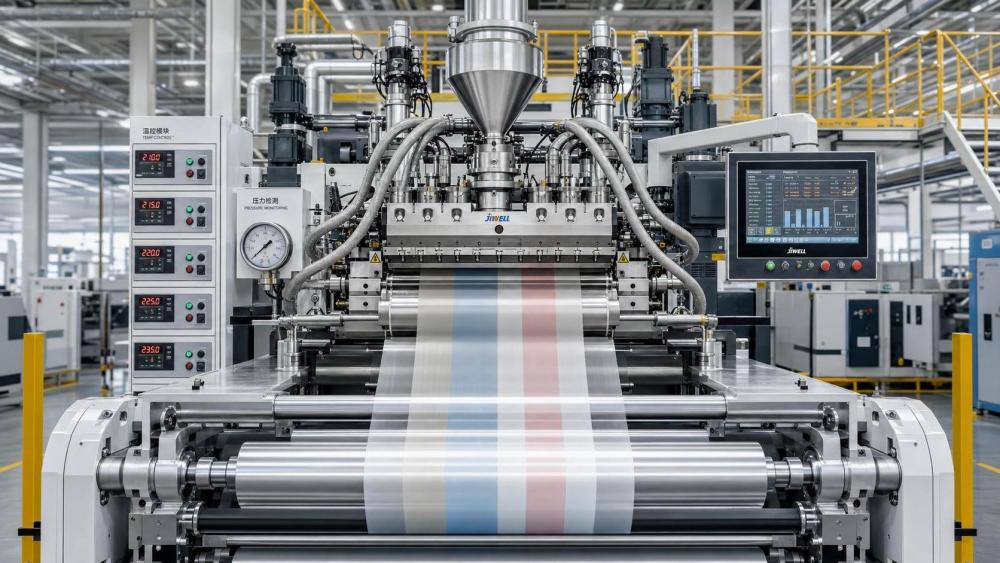
Stable multi-layer output depends on how well the system controls melt flow. In many cases, small changes in pressure or temperature can shift layer ratio and create quality drift. That is why melt pumps, screen changers, die design, and temperature zoning deserve close attention.
A well-designed line should keep each layer within a narrow output band. It should also recover quickly after startup, resin change, or brief interruption. If the process takes too long to stabilize, the hidden cost can be high scrap, inconsistent performance, and more operator intervention.
For project teams, a useful test is to ask how the line performs during real production variation, not only during ideal trials. Stable polymer extrusion systems should maintain output when ambient conditions, material lots, or line speed change.
Check material compatibility across layers
Multi-layer output often combines materials with different melt behavior, viscosity, and thermal sensitivity. The system must handle these differences without causing interfacial defects, uneven distribution, or poor bonding. This is especially important when working with barrier films, functional coatings, or recycled content blends.
If the process involves engineering plastics, modified compounds, or specialty films, compatibility should be reviewed from both the material and equipment side. Screw design, feeding accuracy, and degassing capacity all influence how each layer behaves in the melt stream.
From recent industry changes, more teams are also asking whether a line can adapt to recycled polymers or bio-based materials without losing stability. That is a fair question. These inputs can be more variable, so the system needs extra control margin.
Look at automation, monitoring, and repeatability
A modern extrusion line should make stability easier to repeat, not harder to manage. Automation around feeding, temperature control, pressure sensing, and line speed can reduce operator dependence and improve consistency across shifts.
The best polymer extrusion systems usually provide clear process data. That includes melt pressure trends, zone temperatures, throughput signals, and alarm history. When problems appear, the team should be able to trace them quickly. Without this visibility, root-cause analysis becomes slow and expensive.
Repeatability matters just as much as peak performance. A line that produces one excellent batch and three unstable ones is not a safe choice for production programs with tight delivery commitments.
Compare maintenance, serviceability, and changeover time
Stable output is not only a design issue. It is also a maintenance issue. Screws, dies, feeders, heaters, filters, and control components all wear over time. If replacement is difficult or service support is weak, output stability will decline faster than expected.
Changeover time is another practical factor. Many plants need to switch materials, colors, or layer structures with minimal downtime. A system that is easy to clean, reset, and requalify can protect throughput while reducing contamination risk.
In procurement reviews, it helps to ask for maintenance intervals, spare part availability, and local response time. These details often matter more than brochure-level performance claims.
Use a simple comparison framework
To compare polymer extrusion systems objectively, teams can score each option across a few practical categories. This keeps discussions focused and reduces personal preference or vendor pressure.
This framework does not replace trials, but it does make trials more useful. It shows whether a system can support stable multi-layer output in a repeatable, commercial setting.
Validate with pilot runs and real operating data
Before final approval, request pilot runs under realistic conditions. Use the actual target materials, expected line speed, and planned layer structure. If possible, test with the same operators and shift setup that will run production.
The most useful results often come from watching consistency over time. Short demonstrations can hide drift, but longer runs reveal whether the polymer extrusion systems can hold output without constant tuning. That is the difference between a machine that looks good and a line that performs well.
It also helps to document scrap rate, dimensional variation, and recovery after stops. Those numbers are easier to compare than subjective comments, and they support stronger internal decisions.
Make the final decision around risk, not just price
Price matters, but it should not be the final filter. A lower-cost system that creates unstable multi-layer output can cost more through waste, delays, and customer complaints. In contrast, a better-controlled line may reduce risk across the full project life cycle.
For project managers, the key question is simple: which system gives the team the highest confidence in stable output, manageable maintenance, and future material flexibility? When that question leads the review, the selection process becomes clearer.
If you are comparing polymer extrusion systems for a new line or an upgrade, start with process requirements, validate with real trials, and weigh operating risk alongside capital cost. That approach usually leads to safer decisions and better long-term performance.
Have questions about this sector analysis, or seeking best practices specific to your niche? Drop us a line below and let the senior consultants at APIM assist you.
We respect your privacy. Your information is strictly confidential.
Related News
- 00
0000-00
How does washing affect contamination in post-consumer recycled PP resins? - 00
0000-00
How does feedstock affect depolymerization equipment selection? - 00
0000-00
US Sets 213.44% Preliminary Antidumping Deposit on Chinese PTMEG - 00
0000-00
When should epoxy be used as a thermal interface material for semiconductors? - 00
0000-00
US Midterm Results Unlikely to Quickly Shift Recycled Plastics Market or Legislation