




What does qualification compliance mean for advanced materials?
What Does Qualification Compliance Mean for Advanced Materials?
Qualification compliance advanced materials is the disciplined process of proving that a material, formulation, manufacturing route, and documentation package meet defined application requirements consistently.
For technical evaluators, the central question is not whether a polymer performs well in one laboratory test, but whether it remains reliable across production, service conditions, suppliers, and batches.
Qualification compliance connects material data with regulatory obligations, customer specifications, processing controls, traceability, and long-term performance evidence. It provides the basis for approving materials with defensible technical confidence.
When evaluating engineering plastics, specialty films, adhesives, recycled compounds, or reinforced polymers, teams need more than a datasheet. They need evidence that reflects the real product and process.
What Technical Evaluators Are Really Trying to Confirm
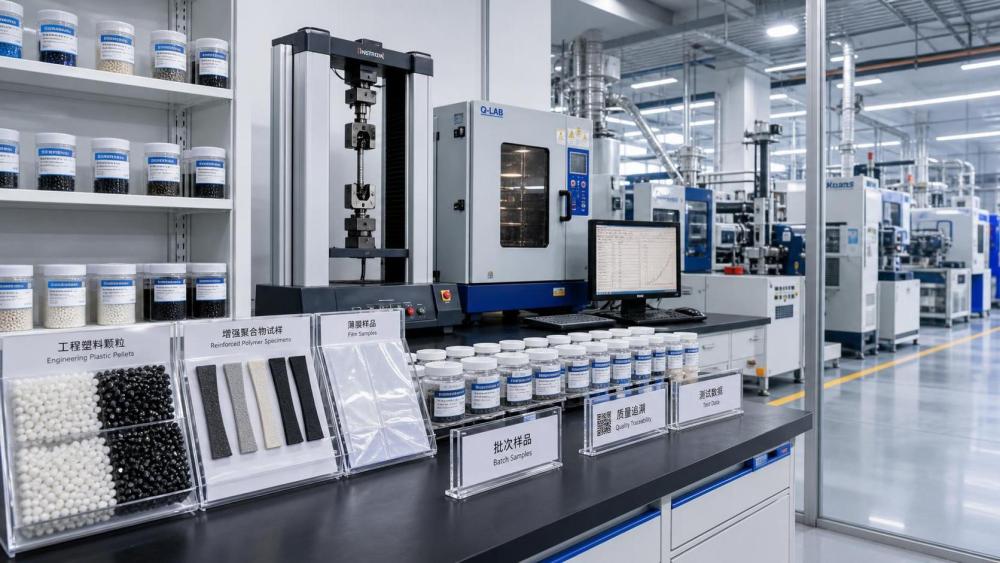
Most searches for qualification compliance advanced materials come from evaluators who need to determine whether a candidate material can be approved without creating downstream quality, safety, or supply risks.
They commonly need answers about required tests, acceptable documentation, sample representativeness, supplier controls, regulatory declarations, and the difference between material qualification and final-product validation.
The practical value of qualification compliance is risk reduction. It helps prevent a material that passes initial testing from failing during molding, extrusion, assembly, environmental exposure, or field service.
Technical evaluators also need a repeatable decision framework. A clear framework makes it easier to compare competing grades, communicate findings internally, and justify approval conditions to procurement and management.
In advanced materials, qualification is especially important because performance depends on formulation details. A small change in filler loading, additive package, recycled content, or processing history can alter behavior significantly.
For example, two glass-fiber reinforced polyamide grades may show similar tensile strength values, yet differ in moisture sensitivity, warpage behavior, color stability, weld-line strength, or electrical performance.
Qualification compliance therefore asks whether the supplied material matches the tested material. It also asks whether the manufacturer can reproduce that result under normal commercial production conditions.
Qualification Compliance Is More Than Passing a Test
A test result is one piece of qualification evidence, but compliance requires a broader demonstration. The relevant material must meet specifications before, during, and after its intended manufacturing process.
For an automotive connector, this may include flame resistance, heat aging, dimensional stability, dielectric strength, chemical resistance, and compatibility with automated molding and assembly operations.
For a multilayer packaging film, qualification may involve thickness consistency, oxygen transmission, seal strength, migration compliance, printability, barrier retention, and resistance to transport conditions.
For industrial adhesives, evaluators may review cure profile, bond strength, surface preparation needs, thermal cycling resistance, chemical exposure, storage stability, and production-line application capability.
Compliance also includes the applicable rules. These may involve customer specifications, internal engineering standards, regional chemical regulations, food-contact requirements, medical requirements, or restricted-substance declarations.
Material qualification should be distinguished from product qualification. A resin may be approved for a defined application, while a finished component still requires validation for geometry, tooling, assembly, and use conditions.
This distinction avoids a common mistake: assuming a supplier’s general certification automatically proves compliance for every end-use application. Qualification evidence must match the actual performance requirement.
Build Requirements Before Comparing Material Grades
The strongest qualification programs begin with a structured requirement profile. Evaluators should define what the material must do, where it will be used, and how failure would affect the product.
Start with functional requirements such as load bearing, flexibility, electrical insulation, optical clarity, thermal conductivity, barrier performance, adhesion, wear resistance, or flame retardancy.
Then define the operating environment. Important factors include maximum and minimum temperature, humidity, ultraviolet exposure, pressure, vibration, cleaning agents, fuels, oils, sterilization methods, and electrical loading.
Processing requirements must be included early. A technically capable material may still be unsuitable if it causes unstable feeding, excessive scrap, die buildup, poor dispersion, mold deposits, or inconsistent cycle times.
For compounded polymers, determine acceptable variation in filler content, melt flow, moisture level, pellet quality, color, ash content, and mechanical properties across commercial batches.
For recycled polymers, define requirements for source traceability, contamination control, odor, volatile content, property consistency, and the permitted range of recycled content in the final formulation.
Requirements should be prioritized. Critical safety and regulatory characteristics require stricter evidence than desirable features such as appearance improvements or minor processing advantages.
A requirements matrix gives evaluators a practical comparison tool. It maps each requirement to a test method, acceptance limit, sample condition, document source, and approval owner.
Use Relevant Tests Instead of Generic Datasheet Values
Datasheets are useful screening documents, but they rarely provide enough evidence for qualification compliance advanced materials decisions. Published values may use standardized samples and controlled laboratory conditions.
Technical evaluators should confirm the exact test standard, specimen orientation, conditioning method, temperature, humidity, test speed, thickness, and statistical basis behind every critical result.
Mechanical testing may include tensile strength, flexural modulus, impact resistance, creep, fatigue, abrasion resistance, compression set, puncture resistance, or peel strength depending on the application.
Thermal assessment may require heat deflection temperature, continuous-use temperature, thermal cycling, solder resistance, melt stability, aging retention, coefficient of thermal expansion, or thermal conductivity.
Electrical applications often need dielectric breakdown, comparative tracking index, volume resistivity, arc resistance, flame behavior, and performance after humidity or temperature exposure.
Chemical resistance should be tested against actual service media whenever possible. Generic resistance tables cannot fully predict behavior under combined stress, temperature, concentration, and exposure-time conditions.
For films and sheets, evaluators should examine haze, gloss, light transmission, surface energy, tensile behavior, thickness tolerance, barrier properties, and adhesion after coating or lamination.
The test plan should simulate real risk. A material that only meets requirements in an isolated test may not perform adequately after processing, assembly, aging, and repeated service exposure.
Confirm That Production Conditions Match the Qualified Sample
Qualification evidence loses value when the commercial material differs from the tested material. Technical teams should understand the complete route from raw materials through compounding, conversion, and delivery.
For polymer compounds, important controls include resin source, reinforcement type, additive suppliers, dosing accuracy, screw configuration, melt temperature, residence time, filtration, pelletizing, and packaging conditions.
A change in glass-fiber length distribution can affect stiffness, impact behavior, surface quality, anisotropy, and wear. It may therefore require formal review even when resin chemistry remains unchanged.
Similarly, replacing a flame-retardant package can influence processing stability, color, electrical properties, smoke behavior, and regulatory status. Such changes should not be treated as routine substitutions.
Evaluators should request process-flow information and identify critical control points. This supports a practical judgment about whether the supplier can maintain the same material characteristics at scale.
Manufacturing trials are essential when process sensitivity is high. Molded parts, extruded profiles, films, coatings, or bonded assemblies should be produced under representative commercial conditions.
During trials, teams should record processing windows, equipment settings, defect rates, cycle time, scrap generation, drying requirements, energy use, and operator observations.
These observations often reveal issues that laboratory testing cannot detect, including feeding inconsistency, poor dispersion, unexpected shrinkage, plate-out, surface defects, or unstable adhesive curing.
Documentation Is a Core Part of Compliance Evidence
Technical qualification requires controlled documentation, not verbal confirmation. Evaluators need records that establish identity, compliance status, testing basis, manufacturing consistency, and supplier accountability.
A typical documentation package includes technical datasheets, safety data sheets, certificates of analysis, regulatory declarations, test reports, specifications, change-control procedures, and traceability information.
For regulated sectors, additional records may include declarations concerning REACH, RoHS, PFAS, food-contact compliance, biocompatibility, medical-device standards, automotive requirements, or customer-specific restricted substances.
Documents should identify the exact grade, color, reinforcement level, additive system, production location, and revision date. Broad family-level statements are usually insufficient for high-risk applications.
Certificates of analysis are particularly valuable when linked to defined control limits. They show whether incoming batches meet the agreed material characteristics before use in production.
However, a certificate alone is not proof of application suitability. It confirms measured batch characteristics, while qualification must also address conversion behavior and end-use performance.
Change notification requirements should be written into supplier agreements. Teams need advance visibility when suppliers modify raw materials, formulas, sites, equipment, quality systems, or test methods.
Without effective change control, previously qualified materials can drift away from the tested baseline. That creates a compliance gap even if part production continues without immediate failure.
Assess Supplier Capability Alongside Material Performance
Qualification compliance advanced materials depends partly on supplier capability. A high-performing formulation remains a weak choice when the supplier cannot provide consistent quality, technical support, or reliable documentation.
Supplier assessment should consider quality management systems, production capacity, backup sites, incoming inspection, batch traceability, complaint handling, technical service, and historical delivery performance.
For critical applications, audits may review compounding controls, calibration practices, laboratory competence, nonconformance management, warehouse conditions, and prevention of cross-contamination between product grades.
Supply-chain resilience also matters. Evaluators should understand dependency on specific monomers, fillers, pigments, flame retardants, films, curing agents, or geographically concentrated production assets.
Approved alternatives should be evaluated before disruption occurs. A dual-source strategy is useful only when both sources have been independently qualified for the same application and processing conditions.
Technical teams should avoid approving a substitute purely because it has similar nominal properties. Equivalent tensile strength or melt flow does not establish equivalent durability, safety, or manufacturability.
Supplier communication quality is another practical indicator. Responsive technical support, transparent deviation reporting, and well-managed change control reduce the effort required to sustain compliance over time.
Manage Qualification as a Lifecycle Process
Qualification does not end when a material receives initial approval. Material properties, regulations, supplier processes, product designs, and customer requirements can change throughout the product lifecycle.
Teams should define requalification triggers. Common triggers include formulation changes, manufacturing-site transfer, new tooling, higher operating temperature, altered recycled content, regulatory updates, and repeated quality deviations.
Periodic review is useful for materials used in safety-critical, electrical, medical, food-contact, or long-life industrial products. Review frequency should reflect application risk and supplier stability.
Post-approval monitoring can include incoming inspection trends, production yield, defect analysis, field returns, supplier corrective actions, and updated compliance declarations from material manufacturers.
When deviations occur, evaluators should determine whether they affect critical characteristics. A color shift may be cosmetic, while a moisture change could influence hydrolysis, molding defects, or electrical reliability.
A controlled lifecycle approach prevents approval records from becoming outdated. It also creates a traceable history that supports audits, customer reviews, incident investigations, and future material-selection decisions.
Digital material records can improve this process by linking specifications, test data, supplier documents, process trials, approved applications, and change notices in one controlled system.
A Practical Decision Framework for Technical Evaluators
A sound approval decision should combine performance evidence, processing evidence, compliance documentation, supplier capability, and lifecycle controls. No single test report should determine the outcome alone.
First, confirm that the material meets all mandatory requirements. These include safety, legal, customer, environmental, and application-specific limits that cannot be compromised for lower cost or availability.
Second, evaluate performance margin. A material that only narrowly meets a requirement may become unsuitable when normal manufacturing variation, aging, or environmental exposure is considered.
Third, verify representative production trials. The approved grade should be processed on relevant equipment using expected part geometry, film structure, adhesive application method, or assembly conditions.
Fourth, assess documentation completeness and supplier change control. Missing declarations, unclear grade identification, or weak notification practices can create substantial future compliance exposure.
Finally, record approval scope clearly. State the material grade, supplier, manufacturing site, color or formulation restrictions, approved process window, intended application, and requalification conditions.
This approach gives technical evaluators a defensible basis for approval. It also helps procurement teams understand why material selection requires more than a price comparison or catalog review.
Conclusion
Qualification compliance for advanced materials means proving that a defined material performs reliably, complies with applicable requirements, and can be produced consistently for its intended industrial application.
For technical evaluators, the most reliable decisions come from combining relevant testing, representative processing trials, complete documentation, supplier assessment, and disciplined change management throughout the material lifecycle.
When these elements are treated as one connected system, teams can approve polymers, compounds, films, and adhesives with greater confidence while reducing quality failures, compliance gaps, and costly rework.
Have questions about this sector analysis, or seeking best practices specific to your niche? Drop us a line below and let the senior consultants at APIM assist you.
We respect your privacy. Your information is strictly confidential.
Related News
- 00
0000-00
How does washing affect contamination in post-consumer recycled PP resins? - 00
0000-00
How does feedstock affect depolymerization equipment selection? - 00
0000-00
US Sets 213.44% Preliminary Antidumping Deposit on Chinese PTMEG - 00
0000-00
When should epoxy be used as a thermal interface material for semiconductors? - 00
0000-00
US Midterm Results Unlikely to Quickly Shift Recycled Plastics Market or Legislation