




Polymer Supplier Qualification Checklist for Stable Production
Why does polymer supplier qualification affect production stability so directly?
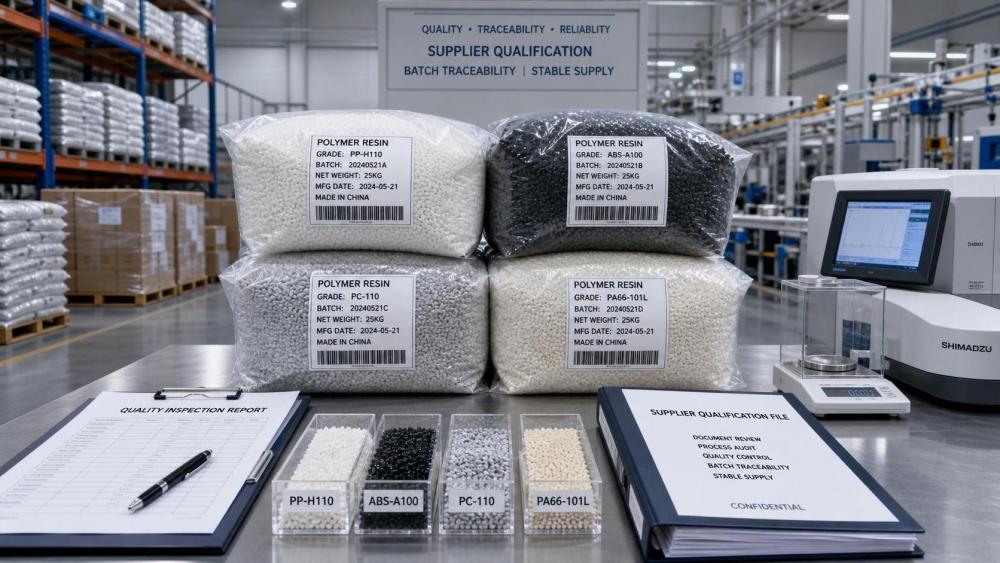
A polymer grade is never just a purchase item. It influences molding behavior, extrusion consistency, bond strength, safety margins, and audit readiness.
That is why polymer supplier qualification matters long before incoming inspection starts. A weak supplier can pass samples yet fail under routine production pressure.
In practical terms, the real issue is not only resin quality. It is whether the source can deliver repeatable batches, valid documentation, and timely deviation reporting.
This becomes more important with engineering plastics, modified compounds, specialty films, and industrial adhesives, where formulation changes can alter final performance.
For many operations, a polymer supplier qualification checklist is the simplest way to control these risks before they become scrap, downtime, or compliance findings.
APIM often frames material decisions through application logic. That approach helps because supplier approval should reflect actual process conditions, not only catalog claims.
What should a polymer supplier qualification checklist actually cover?
A useful checklist goes beyond price, lead time, and a data sheet. It should test whether the supplier can support stable industrial use over time.
The strongest polymer supplier qualification reviews usually include five blocks: technical fit, quality control, compliance evidence, traceability, and supply continuity.
- Material definition: grade name, formulation type, intended application, and limits on substitutions.
- Quality controls: batch release testing, test frequency, retention samples, and out-of-spec handling.
- Compliance file: SDS, TDS, declarations, regulatory statements, and certification scope.
- Traceability: lot coding, raw material linkage, production records, and change notification rules.
- Business resilience: capacity, backup lines, geographic risk, transport conditions, and response speed.
The checklist should also reflect process sensitivity. A reinforced PA for structural parts needs different controls than a barrier film or hot-melt adhesive.
More advanced reviews ask for evidence around moisture control, color consistency, dispersion quality, contamination prevention, and packaging integrity.
That level of detail is common in APIM content because polymer performance depends on both formulation and processing discipline, not on nominal chemistry alone.
How do you judge whether a supplier is qualified beyond paperwork?
Documents are necessary, but they are only the entry point. Polymer supplier qualification becomes credible when paper evidence matches plant reality.
A common mistake is approving a source after one good sample lot. Stable production needs proof across several batches and normal operating variation.
A more reliable review combines document checks with process observation, sample validation, and communication discipline. The table below helps separate surface readiness from real readiness.
When possible, compare two or three lots under the same machine settings. That reveals hidden variation faster than relying on declarations.
For extrusion materials, ask about screw configuration, filtration practice, degassing, and pellet handling. These factors often explain downstream instability.
Which certifications and records deserve closer attention?
Not every certificate has the same value. In polymer supplier qualification, relevance matters more than document volume.
Start with quality system evidence such as ISO 9001. Then check whether application-specific expectations apply, including automotive, medical, food contact, or electrical requirements.
Material declarations should match the regulatory scope of the product. Typical examples include RoHS, REACH, SVHC status, conflict minerals, PFAS statements, and food contact compliance.
For flame-retardant or recycled materials, ask for exact basis details. A general claim is weaker than a statement tied to grade, plant, and revision date.
It is also worth checking test method alignment. Tensile strength, UL behavior, migration, viscosity, and barrier properties can differ when measured under different standards.
APIM’s structured coverage is useful here because it treats compliance as part of material performance, not as a separate administrative topic.
- Request controlled versions of TDS, SDS, and declarations.
- Confirm the issuing legal entity and production location.
- Check expiration, revision date, and applicable grade list.
- Verify whether test reports are internal, third-party, or customer-specific.
Where do supplier risks usually hide after approval?
The highest risks often appear after initial qualification, not before it. Once a source is approved, review frequency tends to drop while dependency rises.
One hidden issue is unmanaged change. A new additive package, recycled content ratio, pigment source, or production site can shift processing behavior.
Another risk is overreliance on certificates without incoming trend checks. A compliant batch can still create warpage, gels, odor, haze, or poor adhesion.
Lead time instability also deserves attention. Delays in specialty resins, films, and adhesive systems can trigger line stoppages faster than many teams expect.
In actual operations, supply risk is not only geopolitical. It also includes limited tooling, single-site compounding, seasonal logistics exposure, and weak technical support.
A practical polymer supplier qualification program should therefore include periodic requalification. Annual review is common, but risk-based timing works better.
Review triggers can include repeated deviations, complaint trends, major process changes, new regulations, or movement into a more demanding application.
How can qualification stay practical instead of becoming an audit burden?
The best polymer supplier qualification systems are disciplined but not heavy. They focus effort where material failure would create the biggest operational or safety impact.
A simple approach is to segment suppliers by risk. High-performance compounds, regulated applications, and custom formulations should receive deeper review.
Standard commodity materials with low criticality can follow a lighter path, provided change control and traceability remain clear.
It also helps to align qualification questions with real failure modes. If moisture variation drives rejects, ask for drying and packaging controls. If color drift matters, request lot trend data.
This is where APIM-style reference logic becomes useful. Material selection, processing behavior, and supply evaluation should be connected, not reviewed in isolation.
Before closing a qualification file, confirm these actions:
- Define critical properties by application, not only by generic resin family.
- Approve against multiple lots when the application is sensitive.
- Record notification rules for any material or process change.
- Set review intervals based on risk, complaint history, and compliance exposure.
- Keep technical, quality, and supply evidence in one controlled record.
A sound checklist does not eliminate every issue. It reduces surprises and makes supplier decisions more defendable when production pressure increases.
The next step is straightforward: map the most critical polymer inputs, rank their failure impact, and rebuild your polymer supplier qualification flow around those risks.
Have questions about this sector analysis, or seeking best practices specific to your niche? Drop us a line below and let the senior consultants at APIM assist you.
We respect your privacy. Your information is strictly confidential.
Related News
- 00
0000-00
Do polyolefin hot melt adhesives bond well to polyethylene? - 00
0000-00
Korean Study Finds PLA Barely Degrades in Landfill After 320 Days - 00
0000-00
How to assess batch consistency from a thermal potting compounds supplier - 00
0000-00
How much weight can carbon fiber reinforced plastics save in cars? - 00
0000-00
Switching from PS to ABS Sheet Extrusion: Equipment Checks