




Metal Replacement Plastics for Connectors: Key Material Tradeoffs
Connector design is under pressure from several directions at once. Weight targets are tighter, corrosion risk is less tolerated, and production lines expect faster, more repeatable assembly.
That is why metal replacement plastics for connectors are receiving closer attention across automotive, electronics, industrial equipment, medical devices, and power distribution systems.
The issue is rarely a simple metal-versus-plastic decision. Real evaluation depends on how a material behaves under heat, load, vibration, moisture, chemicals, and long service intervals.
In practice, the best answer often comes from understanding tradeoffs early. Material choice affects connector reliability, molding stability, certification pathways, and total installed cost.
Why the topic matters now
A connector is a small component, but it sits at the intersection of electrical performance, mechanical retention, and manufacturing efficiency.
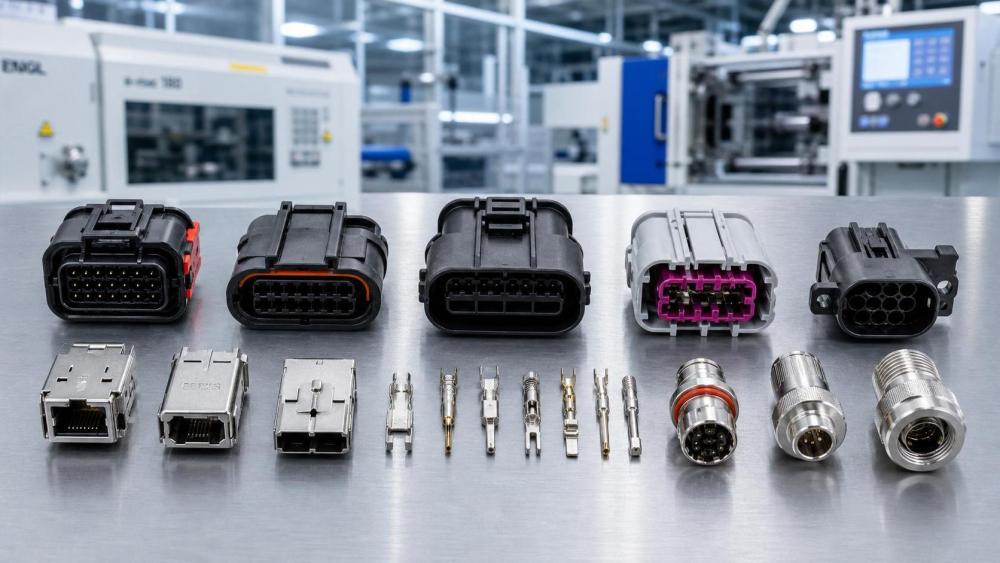
When designers consider metal replacement plastics for connectors, they are usually responding to a broader system requirement, not a material trend alone.
Lighter housings can support vehicle electrification and portable devices. Corrosion-resistant materials can improve field durability. Injection molding can also reduce secondary machining and part consolidation.
At the same time, failure tolerance is low. A connector body that creeps, warps, cracks, or loses dimensional control can compromise contact alignment and sealing performance.
This is where structured materials intelligence becomes useful. APIM tracks how engineering plastics, modified compounds, and processing choices affect downstream performance in demanding industrial applications.
What metal replacement really means in connectors
In most cases, the replacement target is not the conductive terminal. It is the surrounding housing, latch, spacer, insulator, carrier, or support feature.
The selected plastic must hold geometry around metal inserts, protect electrical isolation, and survive assembly stress without excessive deformation.
This is why metal replacement plastics for connectors are often evaluated as engineered compounds rather than neat resins.
Glass fiber, mineral reinforcement, flame retardants, impact modifiers, lubricants, and heat stabilizers may all be part of the final solution.
The working question is simple: can the polymer system deliver enough structural and thermal performance without creating new risks in molding, assembly, or use?
The main material families and their tradeoffs
No single resin family fits every connector environment. The practical choice depends on temperature, load, chemical exposure, insulation demands, and cost discipline.
Common candidates
Polyamide remains attractive when cost and mechanical performance must stay balanced. It is widely used, but water absorption must be treated as a design variable.
PBT is often favored for electrical connectors because it molds efficiently and maintains good dielectric behavior. It is a frequent choice for compact consumer and industrial applications.
PPS and PEEK enter the conversation when thermal exposure, aggressive fluids, or long-life reliability become more important than raw material price.
LCP is especially relevant where miniaturization matters. Very fine features can be molded, but orientation effects must be managed carefully.
Where tradeoffs usually become visible
The strongest connector plastic on a datasheet may still be the wrong choice in production. Problems often appear at the boundaries between material, part design, and process control.
Key decision points
- Heat resistance must be checked against both continuous use temperature and short assembly peaks, including soldering or nearby heat sources.
- Dimensional stability matters because terminal position, latch engagement, and sealing compression all depend on tight geometry.
- Creep resistance becomes critical when connectors stay clamped or loaded for years.
- Electrical insulation cannot be reduced to one dielectric number. Tracking resistance, flame performance, and contamination risk also matter.
- Chemical compatibility should include oils, coolants, cleaning agents, humidity, and possible field contaminants.
- Processing behavior affects yield. Warpage, flash, weld lines, fiber orientation, and mold wear all change the real economics.
This is why APIM places equal weight on compound formulation and processing conditions. Material performance is shaped by both resin chemistry and manufacturing discipline.
How application context changes the answer
Metal replacement plastics for connectors are not judged the same way across industries. The environment changes the ranking of every property.
Automotive and e-mobility
Under-hood connectors need heat resistance, chemical durability, and vibration tolerance. Battery systems add stricter insulation, flame, and long-term dimensional requirements.
Consumer electronics
Here, miniaturization and high-volume molding dominate. Thin walls, fine pitch, and stable molding shrinkage can matter more than extreme structural strength.
Industrial machinery
Connectors may face oil mist, temperature cycling, and mechanical abuse. Serviceability and field replacement also influence material choices.
Medical and specialized equipment
Sterilization, repeated disinfection, traceability, and regulatory documentation may drive selection toward higher-value materials with proven long-term consistency.
Business value goes beyond part weight
The appeal of metal replacement plastics for connectors is often introduced through lightweighting, but the real business case is broader.
A well-selected compound can reduce corrosion claims, simplify component architecture, lower assembly steps, and improve production repeatability.
Material selection also affects supply chain resilience. Widely available engineering plastics may offer easier sourcing, while niche high-temperature polymers may require tighter qualification planning.
Sustainability increasingly enters the discussion as well. Lower mass, part consolidation, and better durability can support lifecycle targets, even when recycled content is not the primary lever.
A practical framework for evaluation
Good decisions usually come from comparing material options against the connector system, not against a single target property.
Useful questions to organize the review
- Which part functions are structural, insulating, sealing, or cosmetic?
- What are the true temperature peaks, not only the nominal operating range?
- How much dimensional drift is acceptable after moisture exposure or thermal aging?
- Will the connector face insertion abuse, vibration, or repeated mating cycles?
- Do flame, UL, automotive, or medical compliance requirements limit formulation options?
- Can the selected resin run consistently in the intended mold design and production window?
These questions sound basic, but they prevent many late-stage material changes. They also help separate real performance needs from inherited assumptions about metal parts.
What to watch next
Material development is moving toward more specialized compounds for connectors, including halogen-free flame retardant systems, thermally stable reinforced grades, and better flow materials for compact geometries.
There is also more attention on compounding quality, fiber distribution, and batch consistency. Those factors influence performance as much as headline resin type.
For anyone reviewing metal replacement plastics for connectors, the next step is usually to build a short comparison set, then test it against actual service conditions and processing realities.
That approach creates a clearer path than debating material families in the abstract. It aligns design intent, manufacturing capability, and long-term reliability before the connector enters volume production.
Have questions about this sector analysis, or seeking best practices specific to your niche? Drop us a line below and let the senior consultants at APIM assist you.
We respect your privacy. Your information is strictly confidential.
Related News
- 00
0000-00
How does washing affect contamination in post-consumer recycled PP resins? - 00
0000-00
How does feedstock affect depolymerization equipment selection? - 00
0000-00
US Sets 213.44% Preliminary Antidumping Deposit on Chinese PTMEG - 00
0000-00
When should epoxy be used as a thermal interface material for semiconductors? - 00
0000-00
US Midterm Results Unlikely to Quickly Shift Recycled Plastics Market or Legislation