




How to verify whether a flame retardant plastics supplier meets REACH and RoHS requirements
Choosing a reliable flame retardant plastics supplier is not only about price and material availability. For procurement teams, verifying compliance with REACH and RoHS is essential to reduce regulatory risk, protect product quality, and avoid supply chain disruption. This guide explains how to assess supplier documents, testing records, material declarations, and compliance processes before making a purchasing decision.
What procurement teams really need to verify before approving a supplier
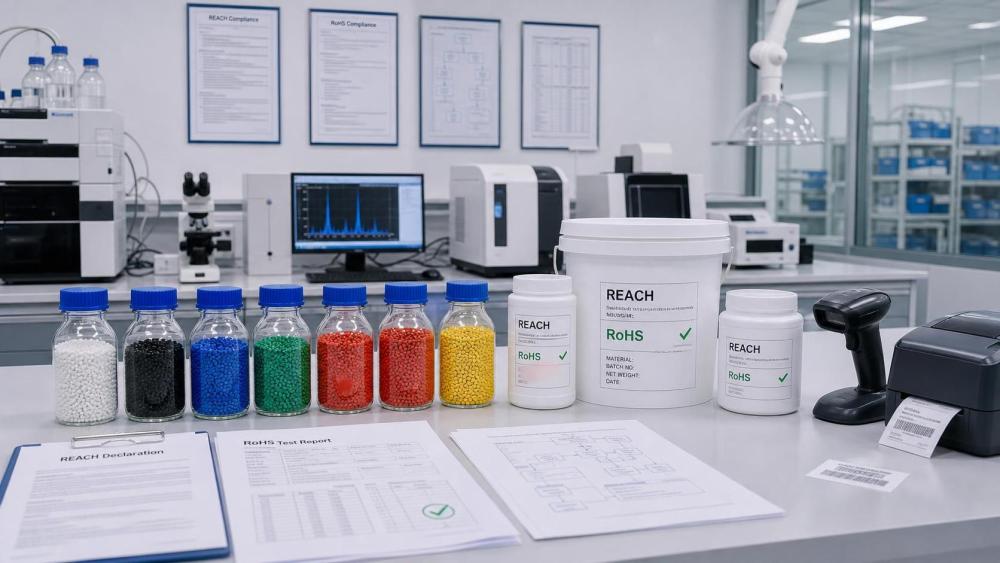
When buyers search for a flame retardant plastics supplier, they usually want one practical answer: can this supplier provide compliant material with evidence strong enough for audits, customer reviews, and product launches?
That means compliance should not be treated as a marketing claim. A supplier saying a compound is “RoHS compliant” or “REACH friendly” is not enough without supporting declarations, traceability, and testing discipline.
For procurement teams, the core task is not to become a regulatory expert. It is to confirm whether the supplier has a reliable compliance system that reduces legal exposure and purchasing risk.
In practice, the best verification method combines document review, material-level technical checks, and supplier process evaluation. If one of these three areas is weak, the compliance claim is incomplete.
Why REACH and RoHS matter when sourcing flame retardant plastics
Flame retardant compounds often involve additive packages that require closer scrutiny than standard plastics. Depending on formulation design, they may contain substances that trigger declaration obligations, restriction risks, or customer concern.
RoHS mainly focuses on restricting specific hazardous substances in electrical and electronic applications. REACH is broader and can affect substance registration, SVHC communication, and ongoing compliance management across the supply chain.
For procurement professionals, the risk is not only regulatory fines. Non-compliant material can delay shipments, trigger product redesign, fail customer qualification, or create costly replacement actions after market entry.
This is especially important in electronics, automotive electrical systems, appliances, industrial equipment, and building-related components where flame retardant performance and chemical compliance must be managed together.
Start with the supplier declaration, but do not stop there
The first document to request is a formal supplier declaration for both REACH and RoHS. This should be material-specific, dated, signed, and linked to the exact grade you intend to purchase.
A useful declaration should identify the resin grade, applicable regulation version, and whether the material complies with thresholds for restricted substances. Generic statements covering an entire product family are less reliable.
Buyers should also check whether the declaration mentions exemptions. Some suppliers state compliance without clarifying whether it depends on a legal exemption that may not fit your product application.
If the document is undated, unsigned, or too broad, treat it as a weak control document. Strong suppliers usually maintain updated declarations as part of routine commercial and technical support.
Review whether the test reports actually match the product being quoted
Third-party test reports are often requested early in supplier qualification, but many buyers make the mistake of accepting any test report with a familiar material name. That approach creates avoidable risk.
Check whether the report matches the exact compound grade, color, flame retardant system, and manufacturing source. A natural-color grade may not fully represent a black or custom-colored version.
Pay attention to the test date and laboratory credentials. An old report does not automatically mean the material is non-compliant, but it may not reflect current formulation control or updated regulatory lists.
It is also important to confirm what was tested. A RoHS report may cover the restricted substances list, while REACH support may rely more on declarations, screening, and substance knowledge than one simple lab report.
Ask for full material disclosure logic, not necessarily full formulation disclosure
Many suppliers will not reveal their complete formulation, especially for proprietary flame retardant compounds. That is normal. However, they should still provide enough disclosure to support compliance assessment.
Procurement teams should ask how the supplier evaluates restricted substances, how they screen raw materials, and whether they collect upstream declarations from additive and resin vendors.
A capable supplier can explain whether halogenated or non-halogen flame retardants are used, whether antimony-based systems are involved, and whether any substances are near reporting or restriction thresholds.
You do not always need every ingredient percentage. What you need is confidence that the supplier understands the composition risk and can defend the compliance status with a controlled process.
Check how the supplier manages REACH SVHC updates over time
One of the biggest gaps in supplier qualification is treating compliance as a one-time event. REACH is dynamic, especially because the SVHC candidate list changes over time.
A supplier may have been compliant when a material was first approved, but that does not guarantee the same status after later regulatory updates. Buyers should ask how updates are monitored and communicated.
Strong suppliers usually have a formal review cycle for regulatory changes, revised declarations, and customer notifications. Weak suppliers often respond only when a customer raises a problem.
For long-life products, this issue matters even more. Procurement should confirm whether the supplier can support ongoing compliance through annual reviews, specification updates, or change notification procedures.
Evaluate traceability from raw materials to finished compound batches
Compliance is more credible when the supplier can trace raw material inputs, additive lots, and finished production batches. Without traceability, even a good declaration becomes harder to trust.
Ask whether the supplier can link each shipment to a production lot and whether upstream documents are retained for resin, flame retardant additives, stabilizers, pigments, and fillers.
This is especially relevant for modified plastics because compliance can be affected by multiple ingredients. A small additive change may alter the regulatory profile of the finished compound.
If a supplier cannot explain its batch control and change management process, procurement should assume a higher risk of inconsistency between sample approval and mass production supply.
Look beyond compliance papers and assess change control discipline
A common procurement problem is that initial sample material passes review, but later production batches differ because of raw material substitution, cost-down reformulation, or secondary sourcing changes.
For a flame retardant plastics supplier, disciplined change control is as important as the original compliance statement. Buyers should ask whether formulation changes trigger re-evaluation of REACH and RoHS status.
Request a written policy for change notification. This should cover raw material substitutions, additive source changes, pigment changes, manufacturing site transfer, and process modifications that may affect compliance.
Reliable suppliers usually define notification timing and customer approval rules. That process is valuable because procurement risk often appears after supplier onboarding, not during the first document exchange.
Confirm whether the supplier understands your application and market requirements
Not every compliant material is suitable for every end use. RoHS relevance depends strongly on application category, while REACH communication duties may differ depending on product structure and customer requirements.
Procurement should explain the target market, product type, and customer compliance expectations. A supplier serving consumer electronics may be more prepared for detailed declarations than one focused on general industrial molding.
It is also worth asking whether the supplier has experience with export markets such as the European Union, where documentation discipline and regulatory awareness are often more demanding.
A supplier who understands your application can usually provide cleaner declarations, faster answers, and better technical support when compliance questions arise during qualification or customer audit.
Use a practical supplier verification checklist during sourcing
To keep qualification efficient, buyers should use a structured checklist instead of reviewing documents in an ad hoc way. This improves consistency across suppliers and shortens internal approval cycles.
Your checklist should include grade-specific REACH and RoHS declarations, latest test reports, SVHC update process, batch traceability, upstream raw material control, and formal change notification procedures.
It should also include basic commercial safeguards such as document validity dates, responsible contact person, manufacturing site identification, and confirmation that compliance applies to the quoted grade and color.
For strategic or high-risk projects, procurement may also involve quality, regulatory, and engineering teams in a cross-functional review. That approach is often justified for electrical and safety-critical applications.
Warning signs that a supplier may not be ready for serious compliance review
Several red flags usually appear early. The supplier may provide only a generic certificate, avoid discussing additive chemistry, or send test reports that do not match the quoted material grade.
Another warning sign is slow or unclear response to simple questions about SVHC monitoring, raw material traceability, or change notification. Weak answers often indicate weak internal compliance systems.
Buyers should also be cautious if the supplier relies only on verbal assurances from upstream vendors without documented evidence. In regulated purchasing, undocumented confidence has little value.
Low price alone should not offset these risks. A cheaper compound can become more expensive if it leads to qualification delays, customer complaints, or product compliance failures later.
How a qualified flame retardant plastics supplier creates business value
For procurement teams, supplier compliance verification is not just a defensive exercise. It directly supports smoother sourcing, faster approval, and lower lifecycle cost across product programs.
A qualified flame retardant plastics supplier helps reduce repeated document chasing, lowers audit preparation time, and improves confidence when responding to customer or regulatory requests.
It also supports more stable production planning. When compliance systems are controlled, the risk of sudden supply interruption, emergency resourcing, or last-minute material substitution becomes lower.
In sectors where safety, electrical performance, and export compliance intersect, that reliability is a real purchasing advantage, not just an administrative benefit.
Conclusion
To verify whether a flame retardant plastics supplier meets REACH and RoHS requirements, procurement teams should look beyond broad compliance claims and focus on evidence quality, process control, and update discipline.
The strongest suppliers can provide grade-specific declarations, relevant testing support, traceable batch records, upstream material control, and a clear system for managing regulatory and formulation changes.
That is the practical standard buyers should use. Compliance is credible when it is documented, current, traceable, and supported by a supplier that understands both material chemistry and end-market expectations.
For procurement, this approach leads to better decisions: lower regulatory risk, better supplier comparison, and more confidence that the selected material will remain compliant throughout the supply relationship.
Have questions about this sector analysis, or seeking best practices specific to your niche? Drop us a line below and let the senior consultants at APIM assist you.
We respect your privacy. Your information is strictly confidential.
Related News
- 00
0000-00
NAPCOR Report: US PET Bottle Recycling Rate Fell to 29% in 2025 - 00
0000-00
How does washing affect contamination in post-consumer recycled PP resins? - 00
0000-00
How does feedstock affect depolymerization equipment selection? - 00
0000-00
US Sets 213.44% Preliminary Antidumping Deposit on Chinese PTMEG - 00
0000-00
When should epoxy be used as a thermal interface material for semiconductors?