




How to Choose Reinforced Polymer Compounds for Electrical Housings
How to Choose Reinforced Polymer Compounds for Electrical Housings
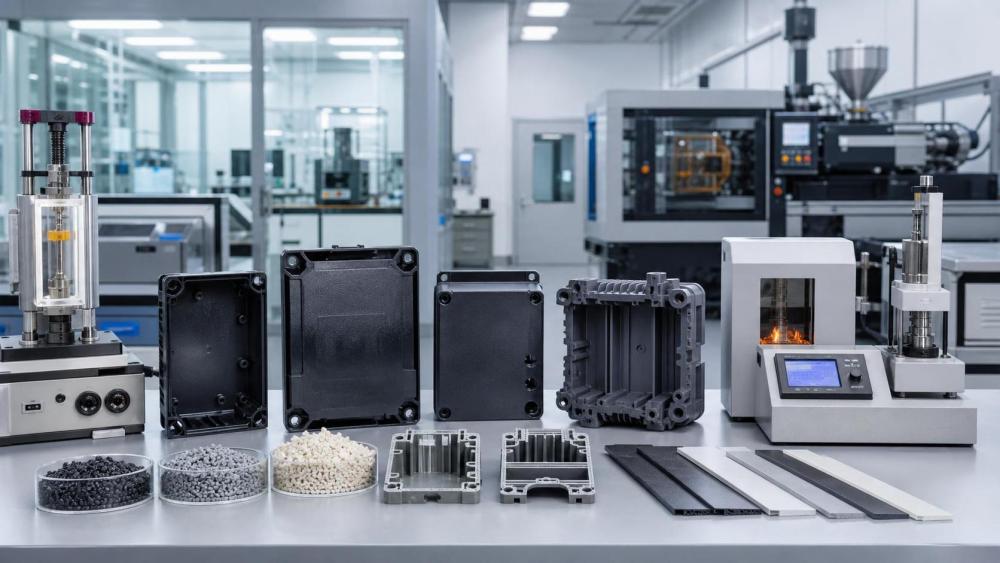
Choosing reinforced polymer compounds for electrical housings starts with the job the enclosure must do. Strength matters, but it is rarely the first filter in real evaluations.
Most failures come from heat, flame, warpage, cracking, poor insulation, or unstable molding behavior. That is why reinforced polymer compounds for electrical housings should be judged as application systems, not just resin grades.
In practice, material selection usually sits between product design, compliance targets, and factory capability. A compound that performs well on paper can still create issues in tool wear, dimensional drift, or certification cost.
This guide breaks down how to compare reinforced polymer compounds for electrical housings in a way that supports technical decisions and avoids expensive late-stage changes.
Start with the housing’s real operating profile
Before comparing materials, define the environment. Indoor control boxes, EV charging parts, power tool shells, terminal blocks, and appliance housings all stress materials differently.
A useful evaluation begins with five questions:
- What is the continuous and peak operating temperature?
- Is flame retardancy required by regulation or customer specification?
- Will the housing face chemicals, oils, cleaning agents, or humidity?
- How tight are the dimensional tolerances?
- What molding process and production volume are planned?
This stage usually narrows the field faster than broad resin comparisons. It also prevents over-specifying a premium compound where a more balanced option would work better.
Focus on the performance properties that actually drive risk
When reviewing reinforced polymer compounds for electrical housings, several properties deserve priority because they influence safety, fit, and service life at the same time.
Flame retardancy and compliance behavior
Many electrical housings require UL 94 performance, often V-0 or V-1, depending on wall thickness and application. Glow wire testing may also matter for household and connector-related products.
Do not treat flame retardancy as a single checkbox. A compound may pass UL 94 at 1.6 mm but fail at thinner sections. Certification should match the actual part design.
Electrical insulation performance
Comparing reinforced polymer compounds for electrical housings also means checking dielectric strength, CTI, arc resistance, and tracking behavior where applicable.
For high-voltage or compact layouts, small differences in insulation properties can change creepage design, wall thickness, and long-term safety margin.
Dimensional stability
Glass-fiber reinforcement improves stiffness, but it can increase anisotropic shrinkage and warpage. That matters when the housing must align with seals, clips, inserts, or PCB assemblies.
Low moisture uptake and stable shrinkage are especially important for parts stored globally or assembled after long transport cycles.
Heat resistance and aging
Electrical housings often sit near heat sources, power devices, or outdoor exposure. Heat deflection temperature, RTI, and long-term aging behavior should therefore be reviewed together.
A compound that keeps stiffness at temperature may still embrittle after thermal cycling. That is a common blind spot in early screening.
Compare common material families with application logic
Different reinforced polymer compounds for electrical housings solve different problems. The right choice depends on which trade-off matters most in the design.
For many indoor electrical housings, flame-retardant reinforced PBT is a strong starting point. For harsh thermal conditions, PPS often enters the shortlist despite higher cost.
Reinforced polyamide compounds are common where structural strength matters, but moisture behavior must be handled carefully during design validation.
Evaluate reinforcement type, loading, and side effects
Not all reinforcement works the same way. Glass fiber is the most common choice, but mineral fillers and hybrid systems can improve specific performance profiles.
Higher glass loading usually improves stiffness and heat resistance. It may also increase brittleness, mold abrasion, weld line weakness, and visible fiber read-through on the housing surface.
This is where reinforced polymer compounds for electrical housings should be reviewed with part geometry. Thin ribs, snap fits, screw bosses, and cosmetic faces react differently to fiber content.
If the housing needs both precision and appearance, a lower reinforcement level or a different matrix can produce a better manufacturing result than the stiffest option.
Check processability before approving the material
A technically suitable compound still has to run reliably in production. Processing risk is one of the main reasons material programs slip after lab approval.
Review drying conditions, melt temperature window, flow length, venting needs, mold temperature, and cycle time sensitivity. These factors influence scrap rates and consistency more than many teams expect.
Ask suppliers for realistic processing guidance, not just datasheet ranges. Reinforced polymer compounds for electrical housings often behave differently in complex molds than in standard test bars.
It is also worth checking tool wear. Glass-filled flame-retardant compounds can raise maintenance cost, especially in high-volume programs.
Use compliance and reliability data as decision filters
Material selection for electrical housings is rarely complete without formal documentation. Compliance data should support the exact use case, thickness range, and target market.
- UL 94 flammability rating by thickness
- RTI or thermal aging information
- CTI and electrical insulation data
- RoHS, REACH, and halogen-related declarations if needed
- Color stability and batch consistency records
More importantly, request test evidence tied to molded parts or representative samples whenever possible. Datasheet values alone are not enough for final approval.
Build a practical shortlist with cost in context
Cost should be measured across the full program, not just resin price per kilogram. A cheaper compound can become more expensive through higher rejects, longer cycles, thicker walls, or extra certification work.
A practical shortlist for reinforced polymer compounds for electrical housings usually compares three levels:
- A baseline material with proven market availability.
- A balanced option with stronger compliance or processing stability.
- A premium option for high heat, high precision, or harsh exposure.
This structure makes trade-offs visible and supports cleaner discussions across engineering, sourcing, and manufacturing teams.
A simple decision path for final selection
If the application has moderate heat, strong electrical requirements, and stable molding needs, reinforced PBT often deserves early attention.
If structural demands are higher and moisture can be managed, reinforced polyamide may offer a strong performance-cost balance.
If the housing faces sustained high temperature, aggressive chemicals, or tight long-term dimensional control, reinforced PPS may justify the premium.
The most reliable route is simple: define the load case, screen compliance data, review processing risk, then validate with molded-part testing. That is how reinforced polymer compounds for electrical housings should be selected when failure cost is real.
In day-to-day evaluation work, the best material is rarely the strongest one. It is the compound that meets safety, stays stable, runs cleanly, and holds performance over time.
Have questions about this sector analysis, or seeking best practices specific to your niche? Drop us a line below and let the senior consultants at APIM assist you.
We respect your privacy. Your information is strictly confidential.
Related News
- 00
0000-00
How does washing affect contamination in post-consumer recycled PP resins? - 00
0000-00
How does feedstock affect depolymerization equipment selection? - 00
0000-00
US Sets 213.44% Preliminary Antidumping Deposit on Chinese PTMEG - 00
0000-00
When should epoxy be used as a thermal interface material for semiconductors? - 00
0000-00
US Midterm Results Unlikely to Quickly Shift Recycled Plastics Market or Legislation