




How to Choose Engineering Plastic Materials for Electronics Housings
Choosing engineering plastic materials for electronics housings is a design decision with long consequences. It affects safety compliance, thermal behavior, dimensional control, drop resistance, finish quality, and the stability of mass production.
In practice, the right choice is rarely about selecting one popular resin. Housing performance depends on how material properties, part geometry, processing conditions, certification targets, and supply consistency work together.
That is why engineering plastic materials for electronics are now evaluated more rigorously across consumer devices, connectors, power products, industrial controls, and smart equipment. A housing must protect electronics, support assembly, and still remain commercially viable.
Why housing material selection matters more now
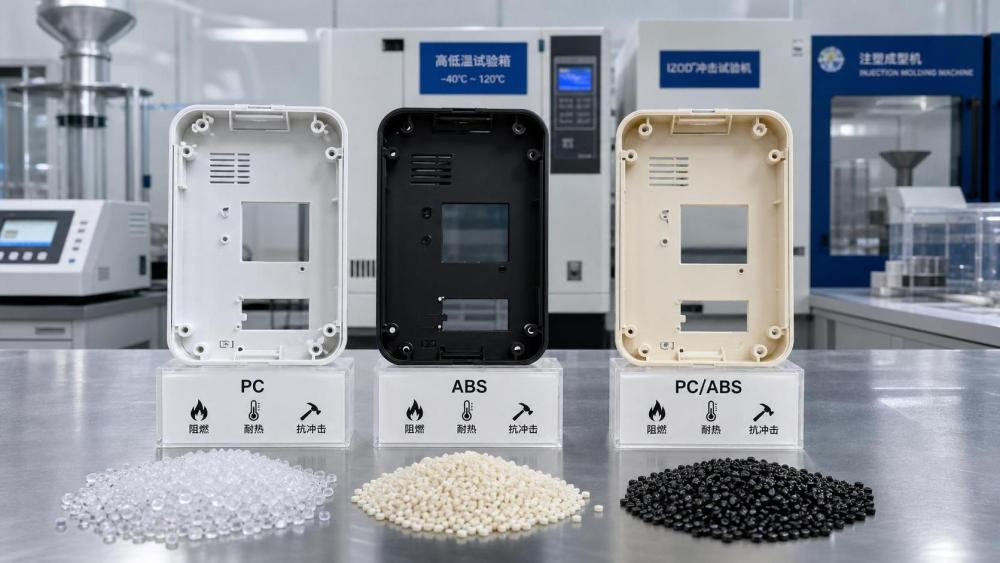
Electronics housings used to be judged mainly by appearance and basic toughness. That is no longer enough. Devices are becoming thinner, hotter, more integrated, and more exposed to chemicals, impact, and higher regulatory expectations.
A poor material decision can show up as warpage, sink marks, stress cracking, poor snap-fit durability, color shift, or failure during flammability testing. These issues often appear late, when tooling and qualification costs are already high.
From an industry perspective, advanced polymers are replacing heavier and less flexible materials in more electronic products. Platforms such as APIM have become useful because selection now requires structured comparison, not just datasheet reading.
What engineering plastic materials for electronics really include
Engineering plastic materials for electronics usually refer to resins with stronger thermal, mechanical, and electrical performance than commodity plastics. Common options include PC, ABS, PC/ABS, PBT, PA, PPS, POM, PET, PMMA, and high-temperature polymers.
The actual choice often depends on whether the housing is cosmetic, structural, insulating, flame-retardant, transparent, conductive, or thermally managed. A single category name is not enough because modified grades can behave very differently.
For example, flame-retardant polycarbonate may suit power-related enclosures, while PC/ABS may better balance toughness and appearance in consumer devices. Glass-filled polyamide may fit structural brackets, but not always visible outer shells.
Base resin is only the starting point
Many electronics housings use compounded materials rather than neat resin. Flame retardants, impact modifiers, glass fiber, mineral fillers, UV stabilizers, conductive additives, and thermal fillers all change final performance and process behavior.
This is where engineering plastic materials for electronics become more application-specific. A grade designed for thin-wall molding, laser marking, EMI control, or UL compliance may outperform a resin with better headline numbers.
The property checks that deserve real attention
Material screening works better when property review follows the housing’s real service conditions. Instead of asking which resin is best in general, it is more useful to ask which failure mode is least acceptable.
More worth watching is the interaction between these properties. A resin with excellent flame resistance may show lower toughness. A strong impact grade may create molding or cosmetic challenges.
Common housing scenarios and suitable directions
Different electronics categories push material selection in different directions. Application context gives structure to the comparison and helps reduce unnecessary candidate grades.
- Portable consumer devices: often need strong appearance, drop resistance, thin-wall flow, and balanced cost. PC/ABS, PC, and selected ABS blends are common starting points.
- Power tools and chargers: usually require flame-retardant performance, toughness, screw retention, and thermal stability. FR-PC, FR-PC/ABS, and reinforced PBT are often reviewed.
- Connectors and electrical modules: thermal endurance, creepage support, and dimensional precision become more critical. PBT, PA, PPS, and high-temperature grades are typical candidates.
- Industrial control housings: chemical resistance, rigidity, long-term aging, and certification traceability matter more. Reinforced compounds and higher-spec engineering plastics are often justified.
- Transparent covers or display windows: clarity, haze control, scratch resistance, and optical consistency become central. PC and PMMA are common, depending on impact and heat demands.
In many assemblies, housings also interact with films, gaskets, labels, coatings, and adhesives. Compatibility with bonding, printing, or overmolding should be checked early, not after resin approval.
Processing behavior often decides success
Engineering plastic materials for electronics can look strong on a datasheet and still fail in production. Flow length, melt viscosity, drying sensitivity, mold temperature window, and gate design can reshape outcomes.
Polyamide grades may absorb moisture and shift dimensions. Polycarbonate may require careful drying to avoid splay or brittleness. Filled materials may reduce warpage in one direction while increasing anisotropy in another.
APIM’s focus on compounding and extrusion is relevant here. Consistent material quality depends on formulation control, additive dispersion, pellet quality, and stable processing conditions across batches and suppliers.
Questions that help during evaluation
- Is the housing cosmetic, structural, or both?
- What is the highest local operating temperature?
- Will the part face cleaners, oils, UV, or repeated handling?
- Does the part need UL, glow wire, or other compliance evidence?
- Can the selected grade mold the required wall thickness and texture?
- How sensitive is the design to shrinkage, warpage, and lot variation?
Certification, appearance, and cost should be reviewed together
A frequent mistake is separating technical evaluation from commercial review. In electronics housings, compliance, finish quality, and total part cost are tightly connected.
A lower-priced resin may need thicker walls, slower cycles, secondary coating, or more scrap control. A premium grade may reduce tooling risk, shorten qualification, and improve long-term supply predictability.
Engineering plastic materials for electronics should therefore be compared on cost-to-performance, not resin price alone. Certification documents, color consistency, lot traceability, and regional supply capacity also belong in the same review.
How to build a better selection path
A useful selection path starts with failure risks, not with a catalog of resin families. That keeps the process focused and improves communication between material, design, tooling, and sourcing decisions.
- Define the housing’s most critical requirements in ranked order.
- Shortlist candidate grades by certification, thermal range, and process fit.
- Check interaction with texture, coating, labeling, films, or bonding systems.
- Review supplier support, batch stability, and technical documentation quality.
- Validate with molding trials and application-relevant testing, not only standard plaques.
This approach aligns with how APIM organizes material intelligence. Better decisions usually come from connecting performance data, processing realities, and application context in one place.
Where to focus next
When comparing engineering plastic materials for electronics housings, the next step is to turn broad requirements into a decision matrix. Heat, flame resistance, impact, appearance, dimensional stability, and certification needs should be weighted against the actual product environment.
That usually narrows the field faster than broad resin comparisons. It also makes supplier discussions more precise, especially when modified compounds, specialty additives, or regional supply risks are involved.
For teams reviewing engineering plastic materials for electronics, the strongest results come from combining material data, processing knowledge, and end-use logic early. That is where a structured information base becomes practical, not theoretical.
Have questions about this sector analysis, or seeking best practices specific to your niche? Drop us a line below and let the senior consultants at APIM assist you.
We respect your privacy. Your information is strictly confidential.
Related News
- 00
0000-00
How does washing affect contamination in post-consumer recycled PP resins? - 00
0000-00
How does feedstock affect depolymerization equipment selection? - 00
0000-00
US Sets 213.44% Preliminary Antidumping Deposit on Chinese PTMEG - 00
0000-00
When should epoxy be used as a thermal interface material for semiconductors? - 00
0000-00
US Midterm Results Unlikely to Quickly Shift Recycled Plastics Market or Legislation