




How to Choose Electrical Insulation Materials for Heat, Voltage, and Compliance
How to Choose Electrical Insulation Materials for Heat, Voltage, and Compliance
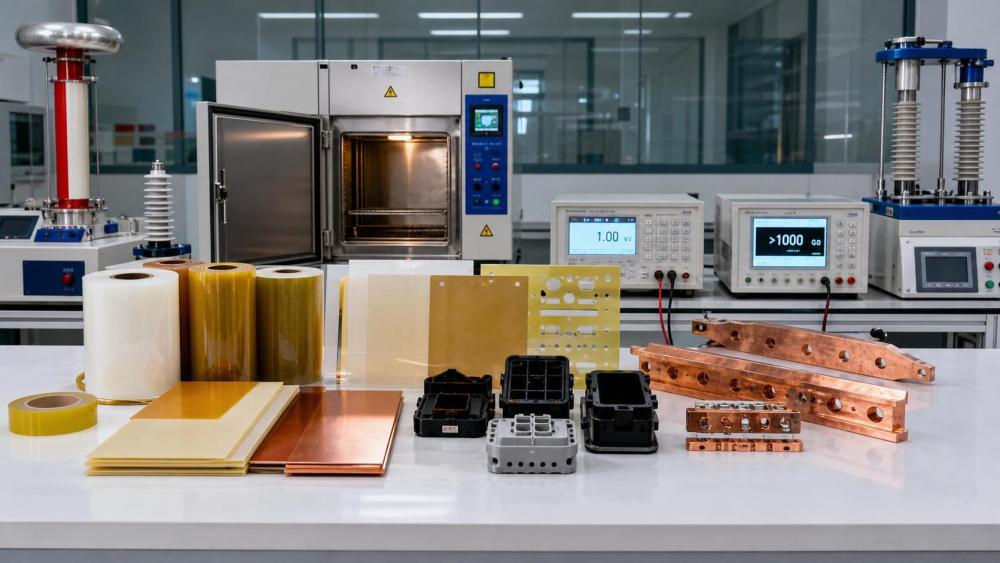
Choosing electrical insulation materials is not just about dielectric strength. Technical evaluators have to balance thermal load, voltage stress, processing limits, expected lifetime, and compliance requirements at the same time. That is where many selection mistakes start: a material looks good on one headline property, then fails in heat aging, creepage design, flame rating, or production handling. If you are comparing insulation options for coils, connectors, busbars, motor parts, cable systems, housings, films, or laminated components, this checklist is the practical way to narrow the field before a bad material decision turns into a reliability problem.
The short version is simple. Define the real operating condition first, then check electrical performance under that condition, then validate how the material behaves in manufacturing and how it meets the required standards in the target market. In actual projects, that order saves time.
Start with the real thermal environment, not the catalog temperature
A common mistake is using the supplier’s maximum service temperature as the decision anchor. That number matters, but it is rarely enough on its own. What you need to know is whether the material can survive the actual heat profile in the product: continuous temperature, short spikes, thermal cycling, hotspot distribution, and whether the part is under electrical and mechanical stress at the same time.
- Ask for continuous use temperature data and heat aging information, not just short-term heat resistance.
- Check whether the application sees repeated temperature swings. Thermal cycling can crack rigid materials, weaken adhesion, or change dimensions enough to affect insulation spacing.
- If the part sits near a motor, transformer, resistor, power module, or battery component, verify hotspot temperature rather than ambient temperature.
- For films, tapes, molded parts, and potting systems, ask how thermal aging affects dielectric properties over time.
In practice, this is where high-temperature polymers, polyimide films, certain thermosets, silicone-based systems, PPS, PEEK, or specialty polyester materials may stay on the list while cheaper general-purpose plastics drop out. But material family alone is not a decision. Formulation, reinforcement, thickness, and processing quality can change the result significantly.
Separate dielectric strength from long-term voltage performance
Many teams over-focus on dielectric strength because it is easy to compare on a data sheet. It tells you the breakdown level under a test condition. Useful, yes. Sufficient, no.
For real selection work, look at the broader electrical picture:
- Dielectric strength for the intended thickness range.
- Volume resistivity and surface resistivity, especially in humid or contaminated environments.
- Arc resistance and tracking resistance where surface leakage is a concern.
- Partial discharge resistance for high-voltage systems, inverter-driven motors, and compact power electronics.
- Creepage and clearance implications when material choice affects enclosure geometry or insulation coordination.
This matters even more when the system uses fast switching and higher frequencies. A material that looks acceptable in a static low-frequency test may not behave the same way in modern power electronics. If the project involves EV components, high-speed drives, charging systems, or compact industrial controls, bring in the electrical stress profile early. Waiting until design verification is where expensive redesigns usually appear.
Check humidity, chemicals, and contamination before you trust the insulation system
A dry lab result can be misleading if the finished product works in a plant, outdoors, under hood, or around cleaning agents. Moisture absorption, fluid exposure, salt mist, dust, process fumes, and oil contamination can change electrical insulation materials more than buyers expect.
Polyamides are a good example. They can be excellent engineering materials, but their moisture behavior has to be understood case by case. Likewise, some films and adhesives perform well electrically until plasticizers, solvents, or thermal oxidation start affecting them. For encapsulation and potting materials, long-term chemical compatibility is often the hidden failure point.
At this stage, a useful question is not “Is this material resistant?” but “Resistant to what, for how long, at what temperature, and under what voltage?” If your supplier cannot answer that with test scope or application notes, keep the claim in the caution column.
Do not treat compliance as a paperwork step
Compliance needs to be screened during selection, not after the design is frozen. The exact requirement depends on the end product and target market, but electrical insulation decisions commonly intersect with UL, IEC, flammability, RoHS, REACH, and sector-specific safety standards. The relevant standard set will differ for appliances, industrial controls, wire and cable, automotive electrical systems, electronics, and energy equipment.
Two practical checks help here:
- Confirm whether the exact grade, thickness, color, and processing form are covered by the certification file. A family approval does not always mean your variant is included.
- Check whether the compliance need is about material recognition, finished part approval, or system-level validation. Teams lose time when they confuse these.
UL 94 flammability ratings, RTI-related data, CTI values, and insulation system recognition can all influence the decision, but only in the right context. If a supplier sends a broad compliance slide and no underlying file references, ask for the formal documentation. If the documentation is unavailable, mark it as 【待核实】 rather than assuming the gap will be solved later.
Match the material to the process, or the data sheet will not matter
A technically strong insulation material can still be the wrong choice if your process window is too narrow or your production line cannot handle it consistently. This is especially relevant with filled compounds, flame-retardant formulations, extrusion coatings, multilayer films, and adhesive systems.
Check the manufacturing side with the same discipline you use for electrical properties:
This is where APIM-style material evaluation becomes useful: the insulation choice is rarely just a resin choice. Processing method, additive package, and equipment control can determine whether the same nominal material works well or causes unstable output.
Pay attention to thickness, geometry, and assembly details
Electrical insulation materials do not perform in isolation. Thickness variation, sharp corners, molded knit lines, voids, edge trimming, burrs, insert locations, and compression damage can all lower the effective insulation margin.
For films and sheet materials, thickness tolerance matters more than many sourcing teams assume. For molded parts, gate location and fiber orientation can influence both dimensions and dielectric behavior. For tapes, sleeves, and laminates, assembly handling can create hidden defects before testing even starts.
If a design needs the material to save space, be careful. Pushing toward thinner insulation often raises dependence on process consistency and test discipline. That is manageable, but only if the validation plan reflects it.
Build a short list around failure modes, not around resin names
Technical evaluators usually get better results when they frame the comparison around expected failure modes. Ask what is most likely to go wrong in the application:
- Thermal embrittlement?
- Surface tracking in humid conditions?
- Partial discharge erosion?
- Flame performance gap?
- Chemical attack from coolant, oil, electrolyte, or cleaning fluid?
- Processing defects that create local weak points?
Once those are ranked, comparing options becomes clearer. A high-CTI compound may matter more than a slightly higher dielectric strength. A better thermal aging profile may beat a lower-cost alternative. A film with stronger thickness control may be the safer choice than a nominally similar material with variable conversion quality.
Before final approval, ask suppliers for the documents that actually reduce risk
Not every project needs a long qualification program, but every serious project needs evidence. The minimum document set depends on the part and market, though experienced buyers usually ask for some combination of these:
- Current technical data sheet with test conditions clearly stated
- Safety or compliance declarations relevant to the target market
- Flammability and electrical property references tied to the exact grade
- Processing guidance for molding, extrusion, lamination, coating, or bonding
- Change control policy and batch consistency information
- Sample availability for validation under your own test conditions
If the supplier conversation stays vague, that itself is useful data. In insulation selection, poor technical support often shows up later as poor problem resolution.
A workable decision path
When the shortlist is still too long, narrow it this way: eliminate materials that fail the real thermal profile, then remove those with weak compliance fit, then screen for voltage-related risk under actual operating conditions, and only after that compare processing, cost, and supply stability. That order reflects how failures usually behave in the field.
Good electrical insulation materials are not just strong on paper. They hold up under heat, survive the actual voltage environment, fit the production process, and come with documentation that stands up in review. If your team evaluates those four things early, the final choice is usually much less dramatic and much more defensible.
Have questions about this sector analysis, or seeking best practices specific to your niche? Drop us a line below and let the senior consultants at APIM assist you.
We respect your privacy. Your information is strictly confidential.
Related News
- 00
0000-00
How does washing affect contamination in post-consumer recycled PP resins? - 00
0000-00
How does feedstock affect depolymerization equipment selection? - 00
0000-00
US Sets 213.44% Preliminary Antidumping Deposit on Chinese PTMEG - 00
0000-00
When should epoxy be used as a thermal interface material for semiconductors? - 00
0000-00
US Midterm Results Unlikely to Quickly Shift Recycled Plastics Market or Legislation