




Glass Fiber Reinforced Plastics in Italy: Key Supply and Compliance Checks
Glass Fiber Reinforced Plastics in Italy: Key Supply and Compliance Checks
For procurement teams sourcing glass fiber reinforced plastics Italy, supplier capability alone is not enough.
Material consistency, technical documentation, REACH and RoHS alignment, traceability, and application-specific performance all shape purchasing risk and long-term value.
This guide highlights the key supply and compliance checks buyers should review before selecting partners in the Italian market.
Why Glass Fiber Reinforced Plastics Italy Requires Closer Screening
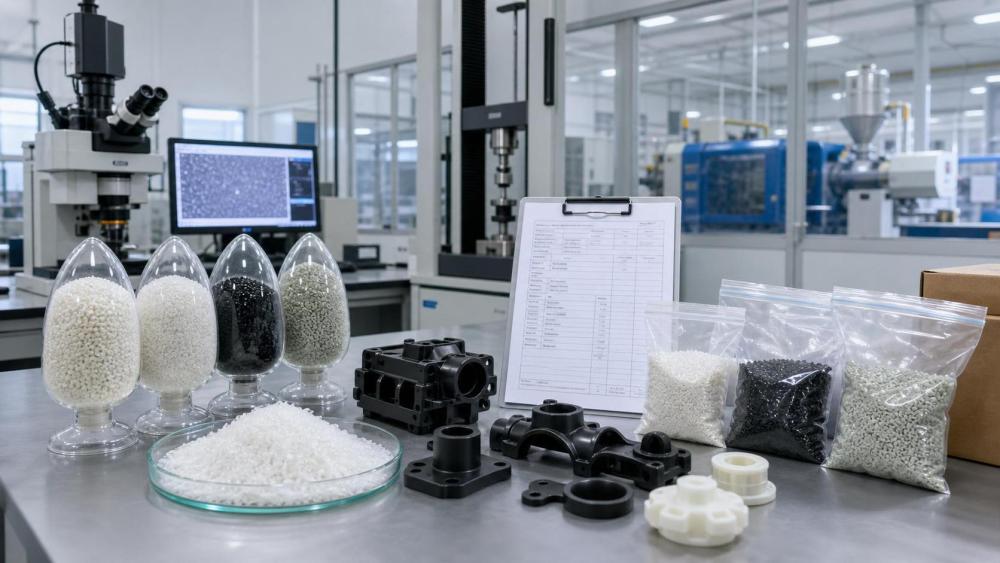
Italy has a strong industrial base in automotive, electrical systems, consumer goods, machinery, and technical components.
That creates steady demand for reinforced engineering materials with better stiffness, dimensional stability, and heat resistance.
In practice, glass fiber reinforced plastics Italy covers many resin families, not one simple product category.
Common options include glass-filled PA, PBT, PP, PC, ABS blends, and specialty compounds for higher thermal or structural demands.
This matters because supply risk often comes from hidden variation between grades that look similar on paper.
A supplier may quote competitive pricing, but the compound may differ in fiber content, coupling treatment, additive package, or batch stability.
Those differences can affect molding behavior, warpage control, surface finish, and final part performance.
From a sourcing perspective, the Italian market offers capable processors and compounders, yet buyer checks still need to be disciplined.
Start With Material Fit, Not Only Price
The first decision point is whether the quoted grade actually matches the application.
For glass fiber reinforced plastics Italy, that means checking resin base, glass loading, and expected service conditions.
A 15% glass-filled polypropylene and a 30% glass-filled polyamide solve very different engineering problems.
Buyers should request a clear material map before comparing offers.
- Base polymer and commercial grade name
- Nominal glass fiber percentage and tolerance
- Mechanical properties at standard conditions
- Heat deflection temperature and long-term thermal rating
- Shrinkage, warpage behavior, and moisture sensitivity
- Color stability and surface quality expectations
This step avoids a common mistake.
Many sourcing decisions focus on cost per kilogram, while the actual business impact sits in yield, cycle time, rejects, and warranty exposure.
If the application includes load-bearing parts, electrical housings, pump components, or under-hood modules, the material-fit check becomes even more important.
Check Supplier Production Capability Behind the Quote
Not every supplier of glass fiber reinforced plastics Italy controls production quality at the same level.
A reliable supplier should explain how the compound is made, tested, and released.
That includes compounding line capability, feeding accuracy, process control, pellet consistency, and lot traceability.
A few practical questions usually reveal the real maturity of the operation.
- Is the material produced in-house or toll compounded by a third party?
- How are glass fibers fed and dispersed during compounding?
- What routine tests are performed on every batch?
- How are off-spec lots handled and documented?
- Can the supplier support repeat color and lot-to-lot consistency?
This is where many low-price offers weaken.
If the supplier cannot explain process discipline, the buyer is effectively absorbing that uncertainty downstream.
For molded technical parts, unstable fiber dispersion can lead to brittle zones, uneven shrinkage, and dimensional drift.
Review Compliance Documents Early
In glass fiber reinforced plastics Italy sourcing, compliance should be checked before price negotiation reaches the final stage.
Waiting too long often creates avoidable delays or qualification resets.
At minimum, buyers should request current REACH and RoHS declarations, SDS documents, and product technical data sheets.
Depending on the end use, additional checks may include food-contact statements, ELV alignment, halogen status, or industry-specific testing reports.
The key is not just having documents.
The key is making sure they are current, product-specific, and signed by a responsible function.
- Verify issue date and revision status
- Check exact product code against the quotation
- Confirm whether declarations cover additives and colorants
- Ask if compliance is backed by supplier data or third-party testing
- Review substance thresholds and stated exemptions carefully
This is especially relevant when sourcing compounds for automotive, electronics, appliance, or export-driven applications.
In those sectors, documentation gaps can become a shipment problem, not only a technical issue.
Traceability and Change Control Need Written Confirmation
For glass fiber reinforced plastics Italy, traceability is often underestimated until a complaint appears.
By then, recovering batch history can be slow and expensive.
A strong supplier should provide lot coding logic, retention practice, and a formal change notification process.
That process should cover resin source changes, additive substitutions, fiber supplier shifts, formulation adjustments, and manufacturing site transfers.
Without written change control, the same product code may not remain technically identical over time.
This also affects PPAP-style approval systems and internal quality sign-off for many industrial buyers.
A practical safeguard is to include notification timing and requalification triggers in the purchase agreement.
Match Test Data to Real Processing Conditions
Another common issue in glass fiber reinforced plastics Italy sourcing is overreliance on generic data sheet values.
Those numbers are useful, but they do not automatically predict production results.
Fiber orientation, mold geometry, gate design, drying control, and wall thickness can change actual performance significantly.
That is why sample validation should mirror the intended process as closely as possible.
Useful validation checks often include:
- Molding trials under normal production settings
- Dimensional measurement after conditioning
- Surface appearance review for visible parts
- Mechanical testing on molded specimens or real parts
- Heat, chemical, or humidity exposure aligned with end use
This is where buyer decisions become more commercially accurate.
A material that costs slightly more may still reduce overall program cost through better process stability and fewer field risks.
Supply Security Matters as Much as Specification
Even when the technical fit is strong, glass fiber reinforced plastics Italy sourcing can fail on logistics and continuity.
That is more visible when projects depend on imported base resins, specialty additives, or tight production windows.
A serious supply review should cover lead time, safety stock policy, backup sourcing, and packaging consistency.
These checks sound operational, but they directly influence total landed cost and supply resilience.
A Practical Decision Framework for Supplier Selection
When comparing suppliers of glass fiber reinforced plastics Italy, a simple weighted review works better than informal preference.
The most effective decisions usually combine technical fit, compliance readiness, process quality, and continuity strength.
- Screen the grade against real application demands.
- Review compliance documents before final commercial talks.
- Validate production capability and batch controls.
- Run trials using actual processing conditions.
- Confirm traceability, change control, and supply backup.
That sequence keeps sourcing decisions grounded in execution, not only quotation speed.
In the current market, the best glass fiber reinforced plastics Italy partner is usually the one that reduces uncertainty across the full purchasing cycle.
A disciplined review of material fit, compliance, traceability, and supply security leads to better approvals and fewer surprises after launch.
For teams making shortlists now, the most useful next step is to convert these checks into a supplier evaluation sheet and apply it consistently across every quote.
Have questions about this sector analysis, or seeking best practices specific to your niche? Drop us a line below and let the senior consultants at APIM assist you.
We respect your privacy. Your information is strictly confidential.
Related News
- 00
0000-00
NAPCOR Report: US PET Bottle Recycling Rate Fell to 29% in 2025 - 00
0000-00
How does washing affect contamination in post-consumer recycled PP resins? - 00
0000-00
How does feedstock affect depolymerization equipment selection? - 00
0000-00
US Sets 213.44% Preliminary Antidumping Deposit on Chinese PTMEG - 00
0000-00
When should epoxy be used as a thermal interface material for semiconductors?