




Choosing Flame Retardant Additives for Wire Compounds Under Compliance Rules
Why is choosing flame retardant additives for wire compounds harder than it used to be?
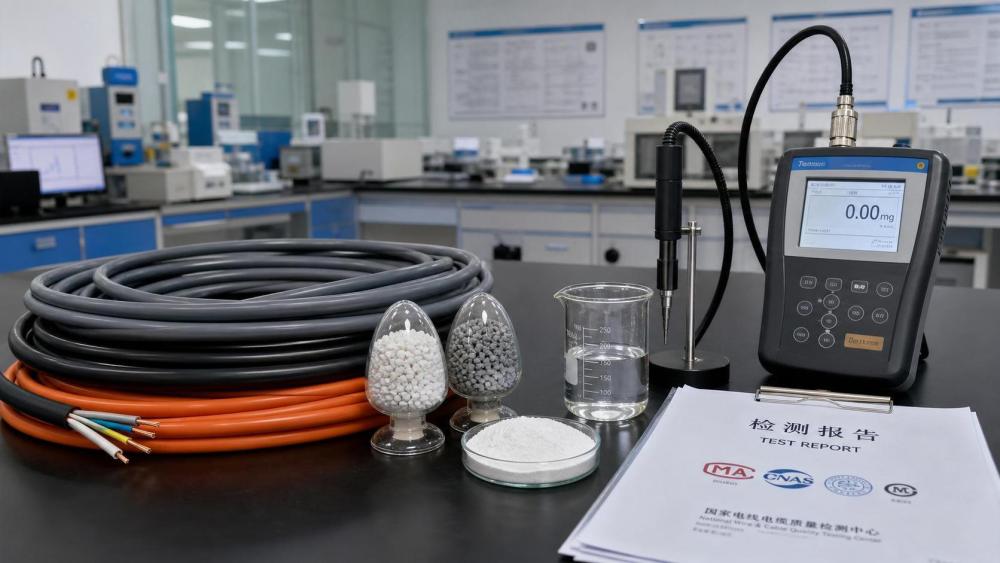
Fire performance alone is no longer enough. Today, flame retardant additives for wire compounds must also satisfy compliance rules, process stability, and electrical reliability.
That shift matters because wire and cable materials sit at the intersection of safety, regulation, and long service life. A passing flame test does not guarantee a robust compound.
In practical terms, the real question is broader. Which flame retardant system can meet fire standards without damaging dielectric performance, flexibility, extrusion behavior, or batch consistency?
This is where many teams run into trouble. A formulation may look acceptable in development, then show unstable torque, plate-out, moisture sensitivity, or uneven dispersion during production.
For wire compounds, those problems quickly turn into compliance and quality risks. Surface defects, brittle insulation, poor elongation, or variable LOI can undermine approval and field confidence.
APIM often frames material selection this way: additive choice is not a single-property decision. It is part of a wider relationship between polymer matrix, compounding process, test method, and final application.
Which compliance rules usually shape the additive decision?
Searches for flame retardant additives for wire compounds often start with one concern: which rules actually drive the formulation? The answer depends on market, end use, and material system.
Common reference points include UL 94, IEC wire and cable tests, CPR-related requirements in Europe, RoHS, REACH, and halogen-related customer specifications.
Some projects also need smoke density, toxicity, or corrosive gas limits. In building cables and public infrastructure, those requirements may become more critical than simple self-extinguishing behavior.
That is why compliance review should happen before additive screening. If the team starts with only V-0 or LOI targets, the shortlist may later fail on restricted substances or smoke performance.
A useful way to organize the decision is to separate mandatory rules from commercial preferences. One is non-negotiable. The other affects competitiveness, but not always legal access.
This kind of screening saves time. It also prevents expensive reformulation after pilot runs or certification testing has already started.
How do halogenated and halogen-free systems compare in real wire compounds?
This comparison appears in almost every technical review. Yet the better question is not which system is universally superior, but which one fits the cable design and compliance path.
Halogenated systems can offer strong flame efficiency at lower loading. That often helps mechanical retention and processability, especially when space, flexibility, or wall thickness are tight.
Halogen-free flame retardant additives for wire compounds usually need higher loading, especially with metal hydrates such as ATH or MDH. That can change density, extrusion pressure, and elongation.
Still, halogen-free systems are widely favored where smoke, corrosive gas reduction, or environmental preference matters. They are common in building cables, transit, data infrastructure, and electronics.
Phosphorus-based systems add another layer. They may improve char formation and reduce total loading in some polymers, but compatibility and hydrolytic stability need close attention.
More advanced formulations often use synergists rather than relying on one additive family. In practice, the best results may come from balancing flame performance with filler geometry, coupling, and resin interaction.
- Use halogenated systems when efficiency and lower loading are decisive, and regulations allow them.
- Use halogen-free systems when smoke, corrosivity, or customer restrictions are central requirements.
- Check whether the resin is EVA, PE, PVC alternative, TPU, or engineered blend, because additive behavior changes sharply across matrices.
What should be checked beyond flame test results?
A common mistake is to approve flame retardant additives for wire compounds after a narrow fire screening. That leaves several high-risk properties untested until too late.
Electrical performance comes first. Insulation resistance, dielectric strength, and volume resistivity must remain stable after aging, humidity exposure, and routine processing variation.
Mechanical retention is just as important. High additive loading can reduce elongation, crack resistance, and low-temperature flexibility. In cable applications, that tradeoff is rarely acceptable if ignored.
Then comes processing behavior. Some additives increase melt viscosity, generate dust, trap moisture, or create poor dispersion. Others trigger die build-up or unstable surface appearance during extrusion.
Long-term aging deserves equal weight. Heat exposure, water contact, and migration risk can shift properties over time. A compound that passes initial tests may still weaken in real service conditions.
APIM’s broader materials coverage is useful here because wire compounds are never isolated from processing realities. Screw design, feeding accuracy, degassing, and cooling conditions influence whether the additive system performs as intended.
A practical verification checklist
- Confirm fire performance with the exact wire construction, not only plaque samples.
- Measure dielectric and insulation properties before and after aging.
- Review torque, pressure, and output stability during compounding and extrusion.
- Check dispersion quality through microscopy or equivalent compound evaluation.
- Verify supplier declarations for restricted substances and batch traceability.
Where do compliance failures usually begin?
Most failures do not begin in the lab flame chamber. They begin earlier, when the additive decision is made from incomplete information or transferred from another application without enough review.
One frequent issue is assuming that a proven additive package will behave the same in a different polymer or line setup. Even small changes in resin grade can alter dispersion and flame response.
Another problem is treating paperwork as an afterthought. A technically good compound can still miss approval if declarations, toxicology support, or change-control records are weak.
There is also a cost trap. Lower-cost flame retardant additives for wire compounds may require higher dosage, slower extrusion, tighter drying control, or more frequent maintenance. The apparent saving may disappear.
The opposite mistake happens too. An expensive additive system may be over-specified for the real risk level, especially when standards are misunderstood or duplicated across markets.
How should the final selection be made when several options look acceptable?
When multiple systems appear to pass, the final decision should come from a weighted comparison, not a single headline result. That is usually the most defensible route.
Start with non-negotiables: applicable standards, restricted substance status, and core electrical properties. Remove any option that creates uncertainty there, even if it offers lower material cost.
Then compare processing fit. Look at output rate, screw torque, die cleanliness, pellet quality, drying burden, and reproducibility across normal operating windows.
Next, assess service-life confidence. Heat aging, flexibility retention, and moisture response often decide whether flame retardant additives for wire compounds remain reliable outside the approval stage.
Documentation should be part of the scorecard. A traceable supplier with stable declarations, technical support, and change notification can reduce hidden compliance risk later.
This is also where structured intelligence helps. APIM’s value is not in pushing a single material, but in clarifying how additive chemistry, compounding practice, and global compliance trends connect.
A reasonable next-step framework
Build a short decision sheet for each candidate system. Include fire test target, regulatory status, loading level, mechanical retention, electrical data, extrusion notes, and supplier documentation status.
That simple discipline often reveals which option is truly robust. In wire compounds, the best flame retardant additive is usually the one that keeps compliance, processing, and long-term performance aligned.
Have questions about this sector analysis, or seeking best practices specific to your niche? Drop us a line below and let the senior consultants at APIM assist you.
We respect your privacy. Your information is strictly confidential.
Related News
- 00
0000-00
Do polyolefin hot melt adhesives bond well to polyethylene? - 00
0000-00
Korean Study Finds PLA Barely Degrades in Landfill After 320 Days - 00
0000-00
How to assess batch consistency from a thermal potting compounds supplier - 00
0000-00
How much weight can carbon fiber reinforced plastics save in cars? - 00
0000-00
Switching from PS to ABS Sheet Extrusion: Equipment Checks