




When bio-based engineering polymers meet automotive heat requirements
Can bio-based engineering polymers handle automotive heat? In some applications, yes. In others, the answer is still conditional. The deciding factor is not the renewable feedstock claim on a data sheet, but whether the complete material formulation can retain strength, stiffness, dimensions, electrical properties, and surface quality after long exposure to the actual thermal and chemical environment of the part.
That distinction matters because automotive heat requirements are rarely limited to a single temperature number. A polymer used near an engine, battery pack, inverter, lighting module, or air-management system may face heat cycling, vibration, humid air, road salt, oils, coolants, electrical loading, and assembly stress at the same time. A material that looks suitable in a short-term laboratory test can still fail through creep, hydrolysis, oxidation, warpage, embrittlement, or loss of retention force in service.
The practical question is therefore not, “Is this bio-based polymer heat-resistant?” It is: “Can this specific grade, in this geometry and process, meet the lifetime requirement of this automotive component?”
Where bio-based engineering polymers fit in automotive heat applications
Bio-based content describes the origin of some or all of a polymer’s carbon, not its performance class. A bio-based polyamide can be engineered for demanding applications, while another bio-based material may be intended for lower-temperature consumer products. Treating all renewable polymers as a single category is one of the fastest ways to make a poor selection decision.
For heat-exposed automotive parts, the most credible candidates are usually engineering-grade polyamides and related compounded systems that combine a bio-derived monomer or feedstock with reinforcement, heat stabilizers, impact modifiers, pigments, and other functional additives. Depending on the formulation, these materials may be considered for air ducts, brackets, housings, covers, clips, cable-management parts, connectors, fluid-system components, and selected under-hood structures.
They are not automatically replacements for every conventional PA, PBT, PPS, or high-temperature polymer. A bio-based compound can be an effective option where the part has a defined thermal envelope and the supplier can show evidence for ageing performance. It becomes a weaker choice when the application demands exceptional continuous-temperature capability, very low creep under load, resistance to aggressive chemicals, or highly stable dimensions across humidity and heat extremes.
That is why the selection discussion should begin with the component, not the sustainability target. Identify the failure mode first. Then determine whether renewable content can be introduced without moving risk into another part of the design.
Heat resistance is more than a melting point
Material data sheets often present melting temperature, glass-transition temperature, heat deflection temperature, tensile strength, and sometimes a relative thermal index. All are useful. None independently proves automotive suitability.
Melting point tells an evaluator very little about how a loaded molded part behaves after thousands of hours below that temperature. Heat deflection temperature is a comparative screening measure, not a service-life guarantee. Tensile data measured at room temperature can conceal a substantial loss of modulus or retention force at elevated temperature.
A better assessment links temperature to time, stress, and environment. Consider a glass-fiber reinforced bio-based polyamide used in a mounting bracket. It may remain visibly intact after thermal ageing, yet slowly relax under sustained load. The functional failure is not a crack; it is a shifted assembly position, reduced clamp force, or interference with a neighboring part. That is a creep problem, and it must be evaluated under representative temperature and load.
The same logic applies to housings and electrical components. Dimensional stability may matter more than ultimate tensile strength. A small increase in shrinkage variation or thermal expansion can change sealing pressure, connector engagement, lamp alignment, or the fit of an inserted metal component.
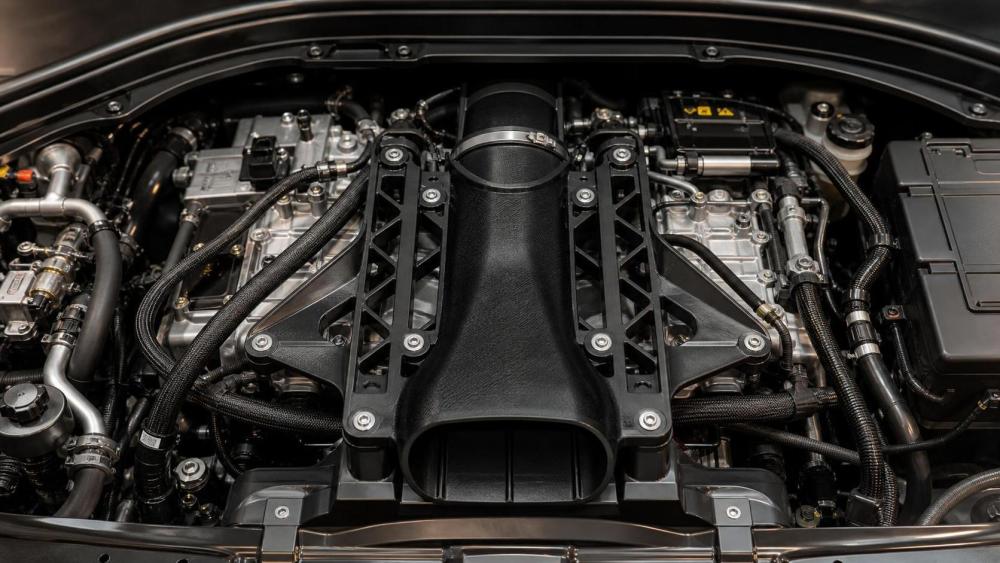
Start with the real exposure profile
Many material comparisons remain too abstract because the request to suppliers simply asks for “high heat resistance.” That phrase does not define an engineering condition. A useful specification describes the part’s actual exposure profile:
- Peak and continuous operating temperatures at the polymer surface, not only nearby air temperature.
- Expected duration at elevated temperature and the required service life.
- Number and severity of thermal cycles, including cold-start conditions.
- Mechanical load, vibration, fastening method, and stress concentration points.
- Contact with engine oil, transmission fluid, coolant, cleaning agents, condensation, or road contaminants.
- Humidity exposure, particularly for moisture-sensitive polyamide systems.
- Electrical, flame-retardancy, color, odor, and appearance requirements where relevant.
This information often changes the candidate list. A protected interior component near a warm electronic module may allow a different material choice than a pressurized fluid connector mounted in a hot, humid, chemically exposed area. Both may be described internally as “high-temperature automotive parts,” but their risk profiles are not comparable.
There is also a common mistake in using the hottest recorded temperature as the only criterion. Peak temperature matters, but so does the time spent near that peak. Repeated short excursions and prolonged thermal ageing can produce very different material responses. Ask the supplier which tests reflect the intended use rather than assuming a single heat-ageing result covers every scenario.
What to compare before approving a grade
When evaluating bio-based engineering polymers, compare like with like. A neat resin should not be benchmarked against a reinforced, heat-stabilized incumbent grade. Fiber level, stabilizer package, color, moisture conditioning, test direction, molding conditions, and sample thickness can all influence reported values.
The first screen should include mechanical-property retention after thermal ageing at temperatures relevant to the part. Look at tensile strength and modulus, but also elongation, impact behavior, and creep where the component carries load. For snap fits, clips, and retention features, force retention after ageing is often more informative than a standard tensile result.
Next, assess dimensional behavior. Reinforced polymers can offer low overall expansion but may show directional shrinkage and anisotropy. A material that performs well in a simple plaque may warp in a long, thin, ribbed housing. Mold-flow direction, gate location, fiber orientation, wall-thickness changes, inserts, and post-molding conditioning all deserve attention before a material is released.
Chemical resistance should be reviewed after ageing, not only at room temperature. Heat can accelerate fluid uptake, extraction of additives, environmental stress cracking, and surface changes. If the part touches a fluid, test the intended fluid or a justified representative medium under conditions that match the design requirement. Generic “oil resistant” wording is not enough for a final decision.
For electrical housings and connectors, thermal endurance must be considered alongside dielectric behavior, comparative tracking performance where specified, flame performance, and dimensional retention around terminals. An apparently minor resin change can alter assembly loads or terminal retention because the polymer and metal expand differently during heat cycling.
The formulation and the process carry much of the risk
A bio-based polymer is not a finished engineering solution until it has been compounded and processed correctly. Reinforcement can improve stiffness and heat-aged strength, but it can also increase warpage, surface roughness, abrasion, and sensitivity to fiber orientation. Heat stabilizers may support long-term performance, but their effectiveness depends on resin chemistry, compound quality, and the actual ageing environment.
Processing deserves equal weight. A grade that survives an ageing test can still create production problems through inconsistent moisture control, narrow molding windows, excessive melt residence time, poor weld-line strength, or color variation. Polyamide-based systems, in particular, require disciplined drying and handling. Hydrolysis during molding can reduce molecular weight before the part ever reaches the vehicle.
Before switching materials, run trials on production-representative tooling. Record moisture condition, melt temperature, mold temperature, injection profile, cycle time, part weight, warp, weld-line behavior, and visual quality. Compare parts from early and late production runs. The goal is not merely to mold acceptable samples; it is to show a stable process that delivers repeatable properties.
Compound consistency should also be part of supplier qualification. For a component with tight dimensional or mechanical requirements, request information on quality controls, lot-to-lot variation, change-notification practice, regional manufacturing availability, and technical support. Renewable feedstock traceability is valuable, but it does not replace evidence of manufacturing consistency.
When the sustainable option is not yet the right option
There are cases where a conventional high-performance polymer remains the more defensible engineering choice. Examples include components exposed to unusually high continuous heat, severe chemical contact, high pressure, very low allowable creep, or demanding electrical safety requirements where the available bio-based option has not been validated at the required level.
That is not a failure of the sustainability objective. It simply means the application is at the edge of the current material window. A sensible program may introduce bio-based content first into lower-risk components, build process knowledge, and expand the scope after performance and supply stability are proven.
Another caution: bio-based does not mean biodegradable, and it does not automatically mean lower total environmental impact for a specific part. The useful questions are how much renewable content is present, how it is allocated or certified, whether the part achieves its required service life, and whether the material reduces mass, scrap, energy demand, or replacement risk. Claims should be supported by supplier documentation and checked against the program’s reporting rules.
A practical approval route
A disciplined evaluation usually moves through four gates. First, define the component’s functional requirements and failure modes. Second, screen candidate grades using comparable technical data and a clear view of formulation differences. Third, mold representative parts and test them after relevant thermal, humidity, chemical, and mechanical exposure. Finally, confirm production capability and supply-chain controls before release.
The order matters. Teams sometimes begin with a material marketed as a direct replacement and then try to justify it after a failed validation test. Starting from the part requirement keeps the discussion grounded and makes trade-offs visible early.
For complex comparisons, structured material intelligence can shorten the initial screening work. APIM tracks engineering plastics, modified compounds, biomaterials, processing considerations, and industrial application requirements, helping teams frame technical questions before they enter supplier qualification. Its most useful role is not to declare a universal winner, but to help evaluators compare material chemistry, reinforcement, processing needs, and end-use risk on the same basis.
FAQ
Can a bio-based polyamide replace a petroleum-based PA66 in under-hood parts?
Sometimes, but not by family name alone. Compare the specific compounded grades after relevant ageing. Heat stability, moisture response, creep, chemical resistance, and molding behavior can differ substantially between grades.
Is high bio-based content always preferable?
No. A higher renewable-content figure does not compensate for inadequate durability or unstable processing. The appropriate balance depends on the component requirement, validation evidence, and the sustainability metric used by the vehicle program.
Which test result is most useful for heat-exposed parts?
There is no single best result. Property retention after thermal ageing, creep under load, dimensional change, and chemical exposure testing are often more decision-relevant than an isolated heat deflection value.
Should automotive teams validate the resin or the finished part?
Both, but the finished part is decisive. Geometry, fiber orientation, weld lines, inserts, molding conditions, and assembly stresses can alter performance from the resin-level result.
Bio-based engineering polymers deserve serious consideration where they offer a credible combination of heat-aged performance, process stability, supply consistency, and documented renewable content. The strongest decisions do not come from treating sustainability as a separate materials exercise. They come from proving that the selected grade protects the part’s function through its full automotive service environment.
Have questions about this sector analysis, or seeking best practices specific to your niche? Drop us a line below and let the senior consultants at APIM assist you.
We respect your privacy. Your information is strictly confidential.
Related News
- 00
0000-00
Do polyolefin hot melt adhesives bond well to polyethylene? - 00
0000-00
Korean Study Finds PLA Barely Degrades in Landfill After 320 Days - 00
0000-00
How to assess batch consistency from a thermal potting compounds supplier - 00
0000-00
How much weight can carbon fiber reinforced plastics save in cars? - 00
0000-00
Switching from PS to ABS Sheet Extrusion: Equipment Checks