




When Heat Resistant Metal Replacement Thermoplastics Outperform Aluminum
When Heat Resistant Metal Replacement Thermoplastics Outperform Aluminum
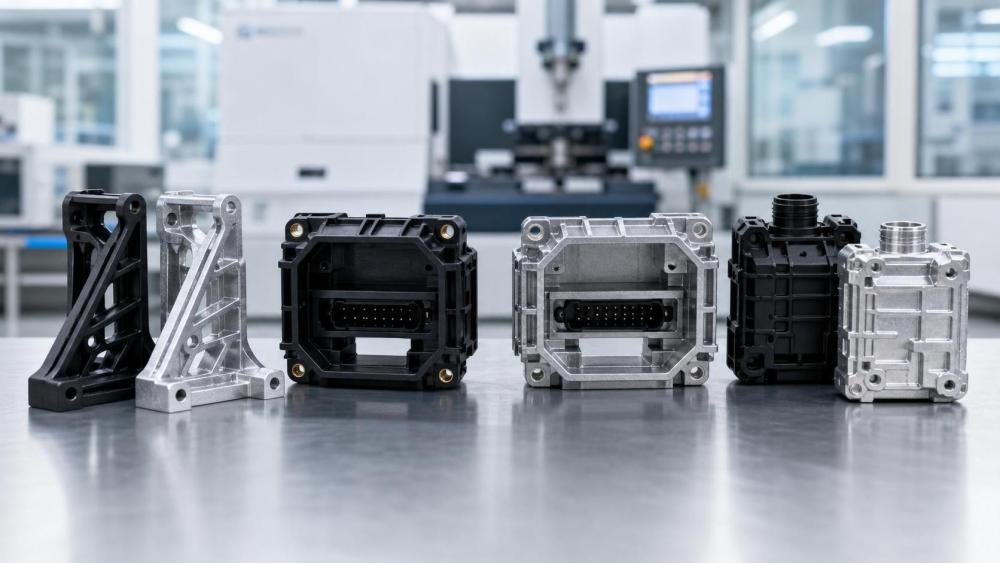
As engineers push for lighter, more efficient designs, heat resistant metal replacement thermoplastics are proving they can outperform aluminum in demanding applications.
For technical evaluation, the choice is rarely about density alone. It is about heat, load, chemicals, tolerances, process stability, and long-term cost.
That is why heat resistant metal replacement thermoplastics now appear in automotive, electronics, medical, industrial, and consumer product programs.
In the right application, they do more than replace aluminum. They simplify assemblies, reduce secondary operations, and improve reliability under real operating conditions.
Still, the advantage is not universal. Material selection must match service temperature, stiffness targets, creep limits, dimensional demands, and compliance requirements.
The key question is practical: when do heat resistant metal replacement thermoplastics deliver a better decision than aluminum?
Why Aluminum Is No Longer the Default
Aluminum remains valuable because it is light, familiar, machinable, and widely available. But it also brings limits that matter in modern product design.
Machining adds cost. Corrosion management adds complexity. Electrical conductivity can create insulation challenges. Multi-part metal assemblies often require fasteners, inserts, or extra sealing steps.
More importantly, many products no longer need metal-level performance everywhere. They need targeted performance in specific zones, with better manufacturing efficiency.
This shift has opened the door for heat resistant metal replacement thermoplastics such as PEEK, PPS, PPA, PA46, and high-performance reinforced compounds.
Where Heat Resistant Metal Replacement Thermoplastics Gain an Edge
The strongest case appears when design teams evaluate total system performance instead of comparing one raw material property at a time.
1. Weight Reduction With Functional Integration
Heat resistant metal replacement thermoplastics can reduce part weight significantly, especially in brackets, housings, covers, connectors, and under-hood components.
The bigger benefit often comes from integration. Ribs, clips, channels, snap-fits, guides, and insulation features can be molded into one part.
That can remove hardware, reduce assembly time, and lower tolerance stack-up risk.
2. Better Chemical and Corrosion Resistance
Aluminum performs well in many environments, but it can still face galvanic corrosion, oxidation concerns, or surface degradation in aggressive media.
Many heat resistant metal replacement thermoplastics handle fuels, oils, coolants, cleaners, and process chemicals more predictably.
That matters in pumps, fluid handling parts, sensor carriers, electrical enclosures, and chemical processing components.
3. Electrical and Thermal System Benefits
Aluminum conducts electricity. In some designs, that is useful. In others, it creates extra insulation work and added risk.
Heat resistant metal replacement thermoplastics are naturally insulating, which is valuable in connectors, battery modules, power electronics, and appliance systems.
Thermally conductive grades also expand design options. They can move heat while keeping electrical isolation where needed.
4. Manufacturing Efficiency
Injection molding changes the economics of complex geometry. Once tooling is stable, repeatability can be high and cycle times can be competitive.
Compared with machined aluminum, heat resistant metal replacement thermoplastics may reduce scrap, secondary machining, and post-processing steps.
For medium to high volumes, that shift can materially improve unit economics.
What Performance Thresholds Really Matter
A fair comparison needs more than tensile strength tables. The better approach is to evaluate performance in the exact service window.
Continuous Use Temperature
Short-term heat spikes and long-term operating temperature are not the same. Many failures happen because those conditions are mixed together.
Heat resistant metal replacement thermoplastics should be screened by continuous use temperature, HDT, and thermal aging behavior.
Creep and Load Retention
Aluminum usually leads in static stiffness. But reinforced thermoplastics can still perform well when load paths are designed correctly.
The key is creep resistance under real temperature and moisture conditions, not just room-temperature modulus.
Dimensional Stability
This is often the decision point. Warpage, moisture absorption, coefficient of thermal expansion, and glass-fiber orientation all affect fit and function.
High-end heat resistant metal replacement thermoplastics can perform very well here, but only with proper part and tool design.
Flame, Wear, and Media Exposure
Some applications need UL ratings, low wear, low friction, or resistance to sterilization chemicals and automotive fluids.
Those requirements often narrow the field quickly and make application-specific grades more important than generic polymer family names.
Common Materials Used in Metal Replacement Decisions
Not every engineering plastic belongs in a high-heat metal replacement program. The shortlist usually includes a few established options.
- PPS: strong chemical resistance, good dimensional control, stable in high-temperature electrical and automotive parts.
- PEEK: premium performance for heat, wear, and chemicals, often used where reliability outweighs material cost.
- PPA: useful balance of heat resistance, strength, and processing for under-hood and industrial components.
- PA46 and specialty PA grades: suitable for elevated-temperature mechanical parts with targeted reinforcement.
- LCP and other specialty polymers: valuable in thin-wall, precise, heat-stable electronics applications.
In many cases, the final answer is not the base polymer alone. It is the right reinforced, flame-retardant, wear-modified, or thermally conductive formulation.
When Aluminum Still Wins
Heat resistant metal replacement thermoplastics are not a blanket substitute. There are clear cases where aluminum remains the better material.
- Very high structural loads with limited design space.
- Applications with extreme continuous temperatures beyond polymer capability.
- Parts requiring very high thermal conductivity without special compound tradeoffs.
- Low-volume programs where tooling investment cannot be justified.
- Geometries where creep or thermal expansion risk cannot be engineered out.
This is why disciplined screening matters. Material substitution should follow application evidence, not trend pressure.
A Practical Evaluation Framework
A structured process helps separate promising candidates from expensive dead ends. The following sequence works well in most industrial reviews.
- Define the real service profile, including temperature cycles, peak exposure, load direction, chemicals, humidity, and expected life.
- List non-negotiable requirements such as flame rating, dielectric behavior, dimensional tolerances, color, and certification needs.
- Compare candidate heat resistant metal replacement thermoplastics by tested application data, not brochure summaries.
- Review part geometry for rib design, wall thickness, knit lines, inserts, fastening, and mold flow behavior.
- Model creep, thermal expansion, and warpage before committing to tooling.
- Validate with prototypes under combined stress, heat, and chemical exposure.
- Estimate total cost, including tooling, scrap, assembly labor, quality risk, and warranty exposure.
This method keeps the decision grounded in performance and business reality at the same time.
The Business Case Behind the Material Choice
The resin price per kilogram can look high. That often causes early resistance in procurement reviews. On its own, that comparison is incomplete.
Heat resistant metal replacement thermoplastics may lower finished part cost through lower mass, fewer components, less machining, and faster assembly.
They may also reduce field issues tied to corrosion, insulation failure, or sealing interfaces between mixed materials.
In sectors with electrification, miniaturization, and lightweight targets, those gains are becoming more visible across the full product lifecycle.
Final Decision Signals
Heat resistant metal replacement thermoplastics outperform aluminum when the design rewards integration, insulation, corrosion resistance, and efficient processing.
They are especially compelling when the required performance sits inside a defined thermal window and the part can be engineered for polymer behavior.
The strongest decisions usually come from early collaboration between design, materials, processing, and sourcing teams.
That is where tradeoffs become clearer, test plans become sharper, and substitution risk becomes manageable.
Before locking the next program, review the service profile, compare validated compound data, and test the most realistic heat resistant metal replacement thermoplastics against actual end-use conditions.
Have questions about this sector analysis, or seeking best practices specific to your niche? Drop us a line below and let the senior consultants at APIM assist you.
We respect your privacy. Your information is strictly confidential.
Related News
- 00
0000-00
Do polyolefin hot melt adhesives bond well to polyethylene? - 00
0000-00
Korean Study Finds PLA Barely Degrades in Landfill After 320 Days - 00
0000-00
How to assess batch consistency from a thermal potting compounds supplier - 00
0000-00
How much weight can carbon fiber reinforced plastics save in cars? - 00
0000-00
Switching from PS to ABS Sheet Extrusion: Equipment Checks