




What Drives PBT Pricing in Connectors and Electrical Components? Supply, Grades, and Specs
Why PBT pricing has become less predictable in connectors and electrical components
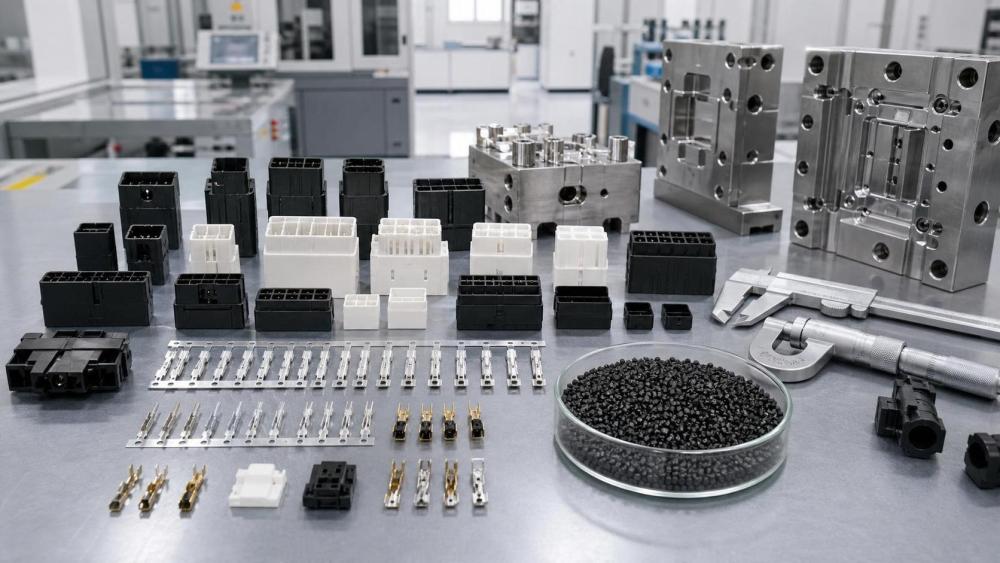
PBT pricing is no longer explained by resin index movement alone.
In connectors and electrical components, the spread between standard and application-ready PBT has widened more noticeably.
That shift matters because the final invoice often reflects qualification risk, formulation complexity, and supply resilience as much as polymer cost.
From a budgeting angle, this means identical part categories may carry very different PBT cost structures.
Recent market behavior shows a clearer separation between commodity-like PBT availability and engineered grades built for tighter electrical and dimensional targets.
That separation is visible across consumer electronics, industrial controls, EV systems, appliance components, and compact power distribution assemblies.
APIM often frames this kind of material change through application logic rather than resin labels alone.
That approach is useful here because PBT value depends on how performance, processing, and certification interact in real manufacturing conditions.
The clearest market signal is the widening gap between base resin and qualified compound
On paper, PBT may look interchangeable across suppliers.
In practice, connector and electrical component programs usually buy a compound, not a simple base polymer.
Glass fiber loading, flame-retardant chemistry, color stability, CTI targets, and warpage control all reshape PBT pricing.
A non-halogen flame-retardant PBT grade can sit in a very different cost band than an unreinforced general-purpose material.
The same is true when OEM approval, UL recognition, or long-term heat aging data are required.
More importantly, those specifications reduce substitution freedom.
Once a mold, process window, and compliance file are aligned to one PBT family, changing source may trigger new testing cost.
What is pushing the price difference
- Feedstock volatility affects terephthalic acid and butanediol economics, but compounding additives now explain more of the premium.
- Electrical specifications demand tighter control over moisture behavior, dielectric performance, and dimensional consistency.
- Automotive electrification increases demand for flame-retardant and high-tracking-resistance PBT in compact, heat-exposed assemblies.
- Regional supply concentration can create abrupt lead-time extensions for specialty grades, even when standard PBT remains available.
- Processor yield matters because difficult-flow or warp-sensitive grades increase scrap, setup time, and hidden conversion cost.
This is why two PBT quotations with similar resin names can imply very different total cost outcomes.
Supply conditions are shaping PBT pricing in more subtle ways
Supply pressure does not always appear as a direct shortage.
It may show up first through longer qualification queues, narrower allocation windows, or reduced flexibility on lot sizes.
For electrical applications, that matters because replacement materials cannot be approved overnight.
Producers of modified PBT also depend on additive chains that have their own volatility.
Flame retardants, reinforcing fibers, impact modifiers, and color packages may each tighten independently.
When that happens, quoted PBT pricing may remain stable briefly, while actual delivery terms become less favorable.
That lag can distort cost planning if attention stays only on headline resin numbers.
The market is rewarding suppliers that can combine consistent compounding with dependable documentation and repeatable delivery.
Specifications are increasingly deciding where PBT pricing lands
A useful way to read PBT pricing is to ask which specification is actually being paid for.
In many electrical components, the answer is not tensile strength alone.
It is the package of flame rating, creep resistance, tracking performance, color retention, reflow tolerance, and dimensional accuracy.
The premium attached to these details has become more visible as designs get smaller and thermal loads rise.
Miniaturized connectors leave less room for warpage or flash.
High-voltage assemblies tolerate less variation in insulation behavior.
Even color can become a cost factor when optical inspection systems require tight visual consistency.
Typical specification issues that raise PBT pricing
- UL 94 performance, especially when thin-wall flame behavior must be maintained.
- CTI and electrical insulation requirements for harsher voltage environments.
- Glass-fiber reinforcement for stiffness, with added warpage management needs.
- Laser marking, color matching, or low-outgassing constraints.
- Long-term thermal aging data that support platform life expectations.
This specification effect is why APIM emphasizes application-fit analysis across engineered plastics.
A cheaper PBT grade may still be the more expensive option after validation, scrap, or field-risk exposure is included.
The impact goes beyond resin purchasing and reaches total program economics
One of the more important changes is that PBT cost decisions increasingly influence several business layers at once.
Tooling teams feel it through shrinkage and warpage behavior.
Operations feel it through drying discipline, cycle stability, and reject rates.
Quality functions feel it through traceability, certification, and deviation handling.
Finance feels it when a low quoted PBT price leads to batch inconsistency or delayed production approval.
That is why material selection in advanced polymers increasingly sits between engineering and commercial control, not inside one silo.
More sophisticated organizations now compare PBT pricing alongside process capability and supply continuity, not after them.
Where hidden PBT cost often appears
- Requalification expense after an unplanned supplier change.
- Higher scrap from moisture sensitivity or unstable molding behavior.
- More maintenance from abrasive reinforced compounds.
- Inventory buffers created to offset uncertain lead times.
- Warranty and compliance exposure from inconsistent electrical performance.
These costs rarely appear inside the first material quote, but they often decide whether PBT pricing was truly competitive.
What deserves closer attention in the next planning cycle
The next phase in PBT pricing will likely be shaped by grade segmentation rather than one broad market direction.
Standard compounds may stay relatively manageable when feedstock conditions stabilize.
Specialty electrical grades can still remain firm if EV, data infrastructure, and compact electronics demand holds up.
Another signal worth watching is how sustainability requirements enter the specification conversation.
Recycled content, lower-halogen systems, and regional compliance updates may create fresh pricing tiers inside the PBT market.
APIM’s broader view of modified resins, compounding technology, and material performance is relevant here.
Changes in formulation strategy often begin upstream in additives, extrusion capability, and quality control discipline.
By the time those changes reach a connector application, they are already commercial realities.
Useful next-step checks
- Separate base PBT cost from compound premium when reviewing quotations.
- Map each approved grade to its exact electrical, mechanical, and compliance requirement.
- Estimate switching cost before assuming an alternate PBT source is lower priced.
- Track lead time and lot consistency together with unit price.
- Review whether the current specification is still necessary for the actual application environment.
A better read on PBT pricing starts with understanding which performance risks are essential, which are inherited, and which can be redesigned out.
That is often the point where cost control becomes more durable than price negotiation alone.
Have questions about this sector analysis, or seeking best practices specific to your niche? Drop us a line below and let the senior consultants at APIM assist you.
We respect your privacy. Your information is strictly confidential.
Related News
- 00
0000-00
Do polyolefin hot melt adhesives bond well to polyethylene? - 00
0000-00
Korean Study Finds PLA Barely Degrades in Landfill After 320 Days - 00
0000-00
How to assess batch consistency from a thermal potting compounds supplier - 00
0000-00
How much weight can carbon fiber reinforced plastics save in cars? - 00
0000-00
Switching from PS to ABS Sheet Extrusion: Equipment Checks