




Sustainable Polymers Cost in 2026: What Drives Price and Payback
Why sustainable polymers cost is moving to the center of 2026 planning
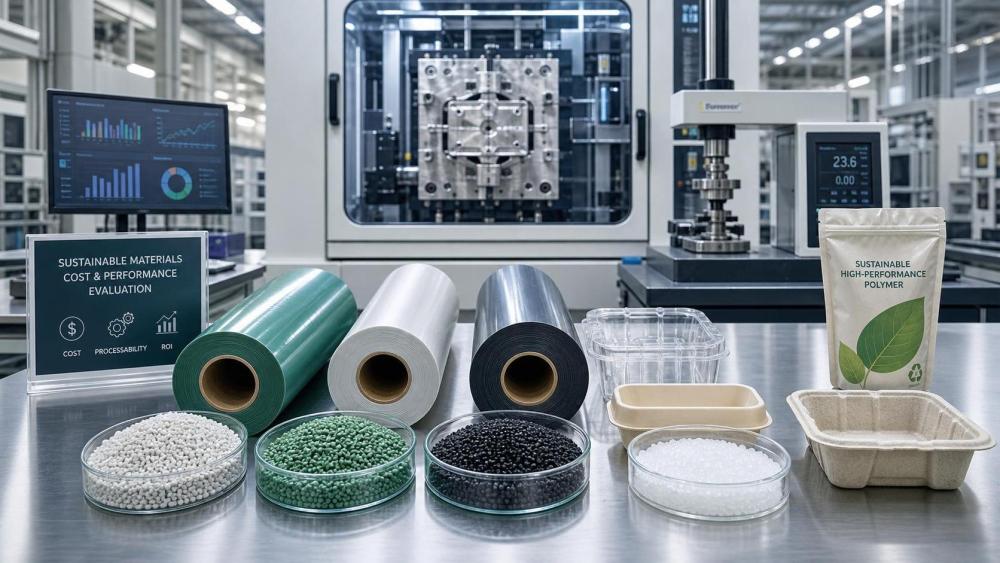
Sustainable polymers cost is no longer a side discussion in material strategy. It is becoming a primary business variable for 2026 budgeting, sourcing, and product roadmap decisions.
The visible issue is still price per kilogram. The more important issue is cost per qualified part, pack, assembly, or service life.
That shift matters across automotive, electronics, packaging, industrial equipment, medical components, and consumer products. In each case, sustainable material choices now affect margin, compliance, and speed to market.
From recent market signals, the conversation has become more disciplined. Premiums are being questioned, but so are assumptions that conventional resin always remains cheaper in practice.
For many applications, sustainable polymers cost includes recycled content stability, compounding quality, process yield, traceability, certification, and end-of-life risk. That makes the real equation broader than resin price alone.
This is also where structured material intelligence becomes useful. Platforms such as APIM have gained relevance because cost decisions now depend on performance, processing behavior, and supply chain maturity together.
The price picture is changing, but not in one direction
The market is not moving toward a simple answer that sustainable materials will either stay expensive or quickly become cost competitive everywhere. Both signals are appearing at the same time.
Bio-based resins, mechanically recycled polymers, chemically recovered feedstocks, and mono-material packaging structures each follow different cost curves. Their economics depend on feedstock quality, scale, and downstream requirements.
More noticeably, sustainable polymers cost is narrowing in applications where design teams can reduce thickness, part count, or secondary operations. It remains wider where purity, aesthetics, or tight tolerance are critical.
In specialty films and engineering compounds, price volatility often reflects supply consistency more than basic polymer chemistry. A formulation that runs cleanly can still outperform a cheaper option that increases scrap.
That is why cost benchmarking in 2026 will likely separate commodity replacement from engineered substitution. The second category usually shows slower adoption, but stronger payback when it works.
Where the main cost pressure is coming from
The table shows why sustainable polymers cost is becoming less about a single quote and more about system behavior across supply, processing, and compliance.
Why the premium exists, and where it starts to pay back
The premium often begins upstream. Collection, sorting, decontamination, compounding, additive balancing, and quality assurance all add cost before the material reaches production.
For bio-based and biodegradable polymers, agricultural input swings, regional policy support, and limited conversion scale still shape price. Those factors make sustainable polymers cost uneven across geographies.
Yet payback shows up faster than many models assume when sustainable materials improve product architecture. A lighter housing, thinner film, or bonded assembly can offset a higher resin number.
In durable applications, the return may come from longer service intervals, lower transport weight, reduced failure rates, or easier compliance with environmental specifications.
In packaging, payback often comes from downgauging, mono-material simplification, or waste reduction. In industrial parts, it may come from stiffness-to-weight performance or process consolidation.
This is why APIM-style technical comparison matters. Material economics improve when formulation design, extrusion settings, bonding compatibility, and final application demands are evaluated together.
Signals that payback is becoming more realistic
- Recycled PET, PP, and PE grades are showing better consistency in selected supply chains.
- Compounds with tailored fillers or reinforcements are reducing performance trade-offs.
- Film and sheet converters are using process optimization to recover premium through yield.
- Adhesive and assembly changes are enabling lighter multi-material designs.
- End customers increasingly value traceable sustainability claims tied to actual product function.
The impact is spreading across more than raw material purchasing
A narrow reading of sustainable polymers cost misses where the pressure really lands. The impact now reaches design rules, tooling assumptions, quality systems, and supplier qualification.
In engineering plastics, a sustainable compound may alter shrinkage, moisture behavior, or dimensional repeatability. That can affect mold settings, inspection frequency, and downstream assembly fit.
In extrusion, cost can rise when melt stability or filtration needs change. It can also fall when better dispersion and feeding accuracy reduce waste and line interruptions.
For specialty films, the issue is often performance balance. Barrier, clarity, haze, sealability, and thickness tolerance may all influence whether a sustainable structure is economically viable.
Adhesives introduce another layer. A recycled or bio-based substrate may need different surface treatment or curing windows, changing the real cost of adoption.
This broader view explains why sustainable polymers cost cannot be judged in isolation. The economics sit inside the manufacturing system, not outside it.
What deserves closer attention before 2026 budgets are fixed
More organizations are moving from headline sustainability targets to line-item validation. That changes what should be measured over the next planning cycle.
The first priority is application fit. Not every grade marketed as sustainable will support the same thermal, mechanical, optical, or chemical requirements as legacy materials.
The second is process evidence. A lower-carbon material that increases scrap or slows output can distort the sustainability case as well as the cost case.
The third is supplier transparency. Traceability, certification scope, batch stability, and technical support increasingly determine whether sustainable polymers cost remains predictable after launch.
The fourth is scenario planning. Regulatory obligations, recycled content mandates, and customer reporting requests can shift total economics faster than spot resin markets.
A practical evaluation frame
- Track cost per finished unit, not only resin price.
- Test processing windows under real production conditions.
- Compare warranty, compliance, and waste exposure.
- Review whether lighter design or simpler structures offset premiums.
- Build material options by performance tier, not by sustainability claim alone.
A reasonable outlook for sustainable polymers cost in 2026
The next phase will likely be selective normalization rather than universal cost parity. Some recycled and bio-based families will become easier to justify. Others will remain premium choices.
The strongest payback cases will come from applications where materials, process settings, and product design are adjusted together. Isolated substitution will keep producing mixed results.
That is the more useful reading of sustainable polymers cost. It is not simply a penalty for choosing greener inputs. It is a measure of how efficiently an organization can convert sustainability into operating value.
A sensible next step is to map high-volume applications, review processing data, and compare material pathways with documented performance and traceability. That approach makes 2026 decisions more defensible and less reactive.
For teams following advanced polymers, compounds, films, adhesives, and extrusion systems, the immediate advantage comes from better questions. The right cost question now is not only what the material costs, but what it changes after adoption.
Have questions about this sector analysis, or seeking best practices specific to your niche? Drop us a line below and let the senior consultants at APIM assist you.
We respect your privacy. Your information is strictly confidential.
Related News
- 00
0000-00
Do polyolefin hot melt adhesives bond well to polyethylene? - 00
0000-00
Korean Study Finds PLA Barely Degrades in Landfill After 320 Days - 00
0000-00
How to assess batch consistency from a thermal potting compounds supplier - 00
0000-00
How much weight can carbon fiber reinforced plastics save in cars? - 00
0000-00
Switching from PS to ABS Sheet Extrusion: Equipment Checks