




Recycled Polymer Compounds: Cost vs Performance in 2026
In 2026, recycled polymer compounds sit at the center of a harder sourcing equation. Cost pressure remains real, yet lower price alone no longer protects margins.
What matters now is whether a compound can hold mechanical performance, process consistently, meet compliance needs, and arrive with reliable supply support.
That shift is visible across automotive parts, electronics housings, industrial packaging, consumer goods, and converted products where recycled content is rising.
For companies comparing recycled polymer compounds, the real question is not cost versus performance in isolation. It is total business fit over time.
Why the 2026 market looks different
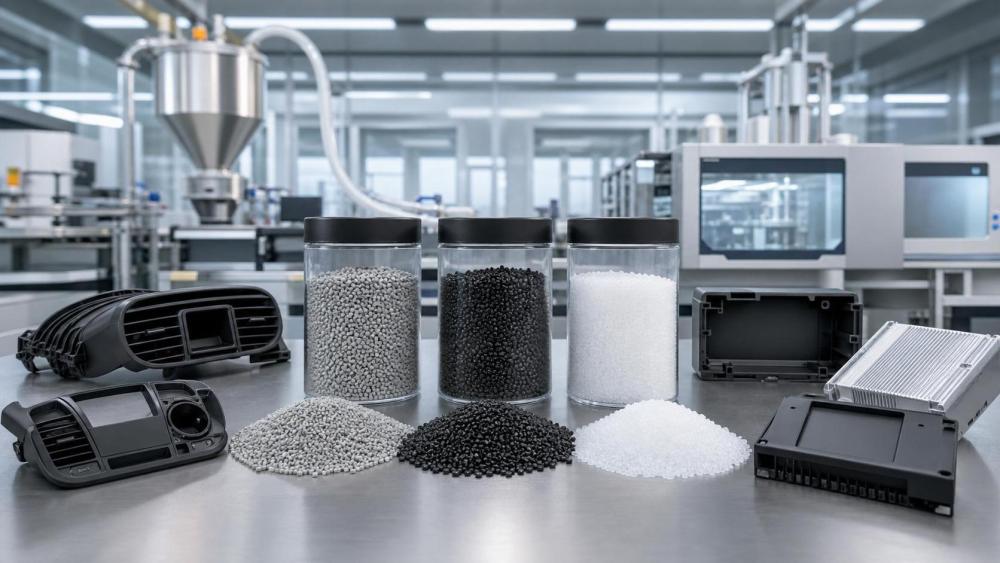
Recycled material demand is no longer driven only by sustainability messaging. It is now tied to customer specifications, regional regulation, and reporting expectations.
At the same time, supply quality varies widely. Feedstock origin, sorting efficiency, contamination control, filtration, and compounding discipline all influence the final pellet.
This is why two recycled polymer compounds with similar pricing can behave very differently in molding, extrusion, assembly, or end-use performance.
APIM tracks this shift through material performance, compounding methods, processing stability, and global supply chain development. That wider view matters because sourcing decisions now cross technical and commercial boundaries.
What recycled polymer compounds really include
The term covers more than basic regrind or recycled resin. In practice, it refers to engineered formulations built from recycled polymers plus additives, fillers, reinforcements, and process modifiers.
They may be based on recycled PP, PE, PET, PA, ABS, PC blends, or other recovered streams. Some are mechanically recycled. Others include chemically recovered content.
Performance depends on formulation design as much as recycled content level. Impact modifiers, compatibilizers, stabilizers, glass fiber, flame retardants, and color packages can all change the value equation.
Simple percentage claims can be misleading. A compound with lower recycled content may deliver better dimensional stability, cleaner processing, and lower scrap than a cheaper high-content alternative.
The key distinction
Recycled polymer compounds should be judged as functional materials, not as sustainability labels. Their job is to meet a defined application requirement with acceptable variation.
Cost is visible, hidden losses are not
Price per kilogram is easy to compare. Production losses are harder to see until qualification or scale-up begins.
A lower-cost material can create extra drying time, unstable melt flow, black specks, odor issues, color drift, warped parts, or poor bonding with downstream coatings and adhesives.
Those problems raise total cost through rejects, machine downtime, slower cycles, added inspection, and customer claims. In some cases, they also delay launches.
The practical comparison is broader than resin cost. It includes conversion efficiency, quality consistency, documentation support, and risk exposure.
Performance has to match the application, not the brochure
A recycled compound that works well for transport trays may fail in an electrical enclosure. Material selection depends on load, heat, impact, appearance, and service environment.
For rigid housings, impact resistance and dimensional control often dominate. For under-hood parts, thermal aging and chemical exposure become more important.
For films, sheets, or extrusion profiles, gel level, dispersion, thickness stability, and surface quality may carry more weight than headline tensile strength.
This is where technical interpretation matters. APIM’s coverage of compounds, extrusion systems, additives, and downstream applications reflects how performance must be linked to process reality.
Questions that narrow the fit
- Is the part structural, decorative, insulating, barrier-focused, or wear-related?
- Will the material face repeated heat, moisture, chemicals, or UV exposure?
- How sensitive is the process to flow variation, moisture, or contamination?
- Does the finished product require flame retardancy, food-contact support, or specific declarations?
Where buyers should look beyond the datasheet
Datasheets remain useful, but recycled polymer compounds need a deeper check. Reported values can hide variation across source streams, production campaigns, or color families.
More useful signals often come from process control and supplier discipline. Twin-screw compounding quality, melt filtration, devolatilization, pellet uniformity, and feeder accuracy all shape batch stability.
These are not abstract production details. They influence odor, dispersion, moisture response, surface defects, and reproducibility in customer lines.
For that reason, supplier discussions should cover manufacturing methods as well as final specifications.
Useful verification points
- Source of recycled feedstock and sorting route
- MFI or viscosity control method and tolerance history
- Filtration level, contamination control, and metal detection
- Drying guidance, recommended processing window, and regrind limits
- Certificates, declarations, and traceability by batch
- Color consistency and change-management policy
Different sectors, different value logic
The appeal of recycled polymer compounds changes by industry. One grade rarely serves every requirement equally well.
In packaging, supply volume and food-contact boundaries may shape selection. In electronics, dimensional stability, flame performance, and appearance control can dominate.
In automotive interiors, odor, VOC behavior, scratch resistance, and color repeatability often matter alongside recycled content goals.
In industrial goods, wear, stiffness, and chemical resistance may decide whether a recycled compound becomes a durable substitute or only a cost-saving trial.
A practical sourcing approach for 2026
A better procurement process starts by ranking requirements instead of collecting broad quotations. Not every specification carries the same business impact.
Usually, the best first screen includes three layers: non-negotiable compliance, must-have performance, and acceptable commercial range.
Then move to controlled trials. Compare recycled polymer compounds under actual machine settings, drying conditions, and cycle times rather than ideal lab assumptions.
Track scrap rate, output stability, visual defects, and test retention after processing. These indicators often reveal more than headline property charts.
A useful short checklist
- Define the performance floor before requesting price
- Ask for recent batch data, not only a master datasheet
- Test with real color, wall thickness, and tool geometry
- Review traceability and supply continuity plans
- Calculate conversion cost, scrap, and approval time together
What to watch next
The next phase of the market will reward clearer material intelligence. Recycled polymer compounds are becoming more engineered, more application-specific, and more documentation-driven.
That favors teams using structured comparison methods rather than broad cost assumptions. It also favors suppliers able to explain processing behavior, quality controls, and long-term consistency.
A sensible next step is to build a comparison matrix around the actual part, process, and compliance target. From there, recycled polymer compounds can be judged on business value, not only on quoted price.
For ongoing evaluation, it helps to follow material data, compounding trends, extrusion developments, and supply updates through sources that connect technical performance with procurement decisions.
Have questions about this sector analysis, or seeking best practices specific to your niche? Drop us a line below and let the senior consultants at APIM assist you.
We respect your privacy. Your information is strictly confidential.
Related News
- 00
0000-00
Do polyolefin hot melt adhesives bond well to polyethylene? - 00
0000-00
Korean Study Finds PLA Barely Degrades in Landfill After 320 Days - 00
0000-00
How to assess batch consistency from a thermal potting compounds supplier - 00
0000-00
How much weight can carbon fiber reinforced plastics save in cars? - 00
0000-00
Switching from PS to ABS Sheet Extrusion: Equipment Checks