




REACH SVHC Update Hits PCR and Bio-Based Resin Exports
On June 25, 2026, a new REACH candidate list update signaled a practical compliance change for exporters of PCR-containing packaging materials, biodegradable films, and compounded pellets entering the EU market. The addition of five SVHC substances, including one compatibilizer used in PLA/PBAT blending and two residual substances linked to recycled plastic decolorization aids, matters not only as a regulatory notice but as an immediate documentation and supply-chain communication issue for importers and upstream suppliers facing a September 30, 2026 SCIP update deadline.
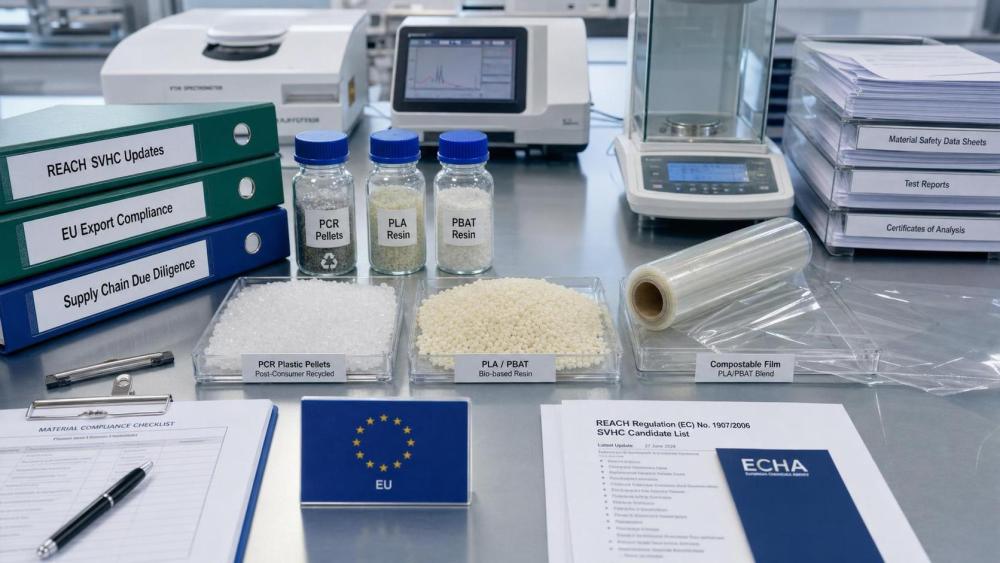
What the June 25 listing changed in practice
According to the event summary, ECHA formally added five substances of very high concern to the REACH candidate list on June 25, 2026. The confirmed scope of the update includes one compatibilizer used for PLA/PBAT blend modification and two residual substances associated with recycled plastic decolorization aids.
The confirmed business effect is that this update directly affects compliance declaration obligations for exports to the EU involving packaging materials with PCR content, biodegradable films, and composite pellets. The summary also states that importers must complete supply-chain information transmission and SCIP database updates by September 30, 2026.
Where the pressure now appears along the value chain
Materials and formulation teams may face immediate document review
For companies buying or formulating PCR plastics and bio-based resins, the main issue is whether existing material files still support EU-facing declarations after the candidate list change. The impact is likely to appear in raw-material verification, formulation checks, and communication with suppliers about whether listed substances or relevant residues need to be addressed in technical and compliance documents.
Export manufacturers may need to reassess shipment-ready files
For processors and exporters shipping packaging materials, biodegradable films, or compounded pellets to the EU, the change matters at the document handoff stage as much as at the production stage. Analysis shows that the priority is not only product composition review, but also whether declarations, traceability records, and customer-facing compliance files remain aligned with the updated REACH candidate list and the stated SCIP-related obligation.
EU importers and supply-chain coordinators carry the near-term filing burden
The summary clearly places a deadline on importers, which means EU-side compliance coordination becomes a near-term operational task. From an industry perspective, this can affect supplier questionnaires, information requests, and delivery preparation, because upstream data must be transmitted in time for the September 30, 2026 SCIP update requirement.
What companies should watch before the deadline
Check whether existing compliance files still match current substance status
What deserves closer attention is whether previously issued declarations for PCR-containing and bio-based plastic products still reflect the candidate list as updated on June 25, 2026. Where product lines involve PLA/PBAT blends or recycled-plastic treatment inputs, companies may need to review how those materials are described in compliance documentation.
Prepare supply-chain information flow, not only test paperwork
Observably, the event is framed around information transmission as well as substance listing. That means companies should pay attention to the readiness of supplier statements, composition disclosures, technical files, and other supporting records needed for importer communication and SCIP-related updating, rather than treating the change as a paperwork issue in isolation.
Watch contract, procurement, and delivery coordination points
For ongoing EU-bound business, the practical risk may arise when procurement cycles, shipment schedules, and customer documentation timelines do not match the September 30, 2026 requirement. Analysis shows that firms involved in export delivery should closely track whether buyers, importers, and suppliers are using consistent compliance language and current document versions.
Follow later execution signals with caution
The input does not provide detailed enforcement language, product-specific thresholds, or official interpretive guidance beyond the listing and the stated SCIP update obligation. It is therefore more appropriate to understand the current stage as a confirmed compliance trigger that still requires close monitoring of later execution language and market-side implementation practice.
Why this looks like an execution signal, not just a list update
From an industry perspective, this development stands out because it combines a formal candidate list change with a defined follow-up action for importers. Analysis shows that the message to the market is not limited to awareness of new SVHC entries; it also points to a near-term expectation that supply-chain information must be updated and passed through in a usable form. That makes the event more than a passive regulatory notice for companies working with PCR plastics, biodegradable films, and bio-based resin systems.
At the same time, it would be premature to present broader commercial outcomes as settled facts. Observably, what happens next will depend on how importers, suppliers, and customers translate the update into documentation requests, file revisions, and procurement controls over the coming months.
How this update is best understood now
The clearest takeaway is that the June 25, 2026 REACH SVHC addition should be read as an already effective compliance development for affected EU-bound plastic materials, especially where PCR content, PLA/PBAT modification, or recycled-plastic processing residues are involved. A cautious reading is still necessary: the confirmed facts establish the listing change and the September 30, 2026 importer deadline, while the wider business impact will depend on how consistently the new requirement is translated into supply-chain documentation, SCIP updating practice, and customer-side execution.
Basis of this article and points still requiring verification
This article is generated from the user-provided news title, event date, and event summary. For events of this type, commonly relevant source categories may include official notices, regulatory authority publications, customs or trade administration updates, industry association communications, standards documents, and reporting by established trade media.
No specific official source link was provided in the input, so the underlying official publication path and any later interpretive materials still need to be verified on an ongoing basis. Further observation should focus on detailed policy wording, certification or compliance interpretation, changes in buyer or tender documentation, industry feedback, and how companies actually implement the required information transfer and SCIP updates.
Have questions about this sector analysis, or seeking best practices specific to your niche? Drop us a line below and let the senior consultants at APIM assist you.
We respect your privacy. Your information is strictly confidential.
Related News
- 00
0000-00
Do polyolefin hot melt adhesives bond well to polyethylene? - 00
0000-00
Korean Study Finds PLA Barely Degrades in Landfill After 320 Days - 00
0000-00
How to assess batch consistency from a thermal potting compounds supplier - 00
0000-00
How much weight can carbon fiber reinforced plastics save in cars? - 00
0000-00
Switching from PS to ABS Sheet Extrusion: Equipment Checks
Tag