




FDA Tightens PLA/PBAT Packaging Degradation Filing Rules
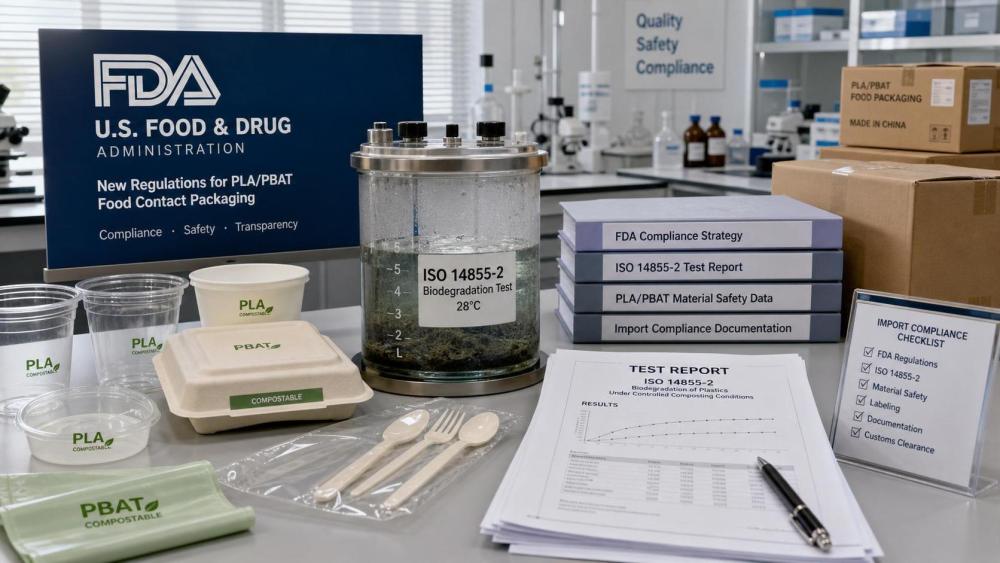
On July 8, 2026, the U.S. Food and Drug Administration updated its guidance on degradation assessment for bio-based food-contact materials, setting a new documentation requirement for imported food packaging that uses PLA/PBAT blend systems. From the third quarter of 2026, importers must submit an ISO 14855-2 end-point degradation report issued by an ISO/IEC 17025-accredited laboratory together with customs documentation. This is worth close attention from packaging importers, manufacturers, sourcing teams, and supply-chain service providers because the change directly affects compliance preparation, documentation readiness, and testing-related cost and timing.
What the FDA changed on July 8
The confirmed update is that the FDA revised its guidance for degradation assessment of bio-based food-contact materials on July 8, 2026. Under the revised requirement, all importers of food packaging containing PLA/PBAT blend systems must, starting in the third quarter of 2026, provide an ISO 14855-2 anaerobic end-point degradation report as part of customs filing documents. The report must be issued by a laboratory accredited to ISO/IEC 17025. Based on the event summary provided, the rule raises the compliance threshold for imports and increases testing costs.
Where the pressure is likely to appear first
Import filing and border compliance
From an industry perspective, direct importers are the most immediate group affected because the new requirement is tied to customs documentation. The practical impact is likely to center on document completeness, filing timing, and the ability to match product materials with the required third-party test report.
Material sourcing and packaging specification decisions
Analysis shows that companies procuring food packaging with PLA/PBAT blend content will need to pay closer attention to material composition at the sourcing stage. The issue is not only whether a package is marketed as bio-based, but whether the blend system triggers the documentation requirement and whether supporting reports are already available from qualified laboratories.
Converters and packaging manufacturers serving export channels
For processing and manufacturing companies that supply packaging into U.S.-bound trade, the main pressure point is likely to move upstream into testing coordination and customer documentation support. What deserves closer attention is whether suppliers can provide report-ready product files in a timeframe that aligns with customer shipment schedules.
Logistics and compliance service providers
Supply-chain and trade service providers may also feel the impact because the rule adds a technical document to import workflows. Observably, any missing or delayed report could become a coordination issue across customs preparation, handoff timing, and client communication.
What companies should track now
Watch for any further official wording or implementation detail
Analysis shows that the current update gives a clear direction on required documentation, but companies should continue monitoring whether the FDA issues additional clarification on scope, filing expectations, or interpretation in practice. The distinction between the published rule text and its operational application will matter.
Check which product lines actually fall within the stated scope
Businesses dealing with food packaging should review which imported items contain PLA/PBAT blend systems and whether those products are already supported by compliant third-party reports. This is a practical screening step for reducing last-minute document gaps.
Confirm laboratory qualifications and report readiness
What deserves closer attention is not only the existence of a degradation report, but whether it is issued by a laboratory accredited to ISO/IEC 17025 and whether it specifically addresses the ISO 14855-2 end-point requirement under anaerobic conditions as described in the update.
Prepare for changes in lead time, cost, and customer communication
Observably, the rule is likely to affect procurement timing, shipment preparation, and compliance communication with downstream customers or import partners. Companies should be prepared for questions around supplier credentials, supporting documents, and whether deliveries remain aligned with filing deadlines from the third quarter of 2026 onward.
Why this looks like more than a routine paperwork change
Analysis shows that this development should not be read only as an isolated documentation adjustment. It points to a more exacting approach to how degradation claims tied to PLA/PBAT food packaging are evidenced in import compliance. At the same time, it is more appropriate to understand this as a concrete near-term compliance change rather than a fully settled long-term market outcome. The rule is specific, but its broader commercial effect still depends on how companies adapt and how implementation unfolds in actual trade practice.
How to interpret the signal at this stage
From an industry perspective, the immediate meaning of this update is clear: for affected food packaging imports, third-party degradation verification is becoming a required part of market access preparation. The broader takeaway is more measured. It is more appropriate to understand this as a short-term operational change with longer-term signaling value, rather than as a final verdict on the wider market for PLA/PBAT packaging. The main issue for companies now is execution readiness.
Basis of this article and points for continued verification
This article is based on the user-provided news title, event date, and event summary. For this type of industry development, commonly relevant source categories may include official agency notices, company disclosures, industry association updates, authoritative media coverage, and standard-related documents. The specific official source link was not provided in the input, so it still requires ongoing verification. Continued attention should focus on any subsequent FDA clarification, any change in implementation wording, and any additional detail affecting document scope or filing practice.
Have questions about this sector analysis, or seeking best practices specific to your niche? Drop us a line below and let the senior consultants at APIM assist you.
We respect your privacy. Your information is strictly confidential.
Related News
- 00
0000-00
How does washing affect contamination in post-consumer recycled PP resins? - 00
0000-00
How does feedstock affect depolymerization equipment selection? - 00
0000-00
US Sets 213.44% Preliminary Antidumping Deposit on Chinese PTMEG - 00
0000-00
When should epoxy be used as a thermal interface material for semiconductors? - 00
0000-00
US Midterm Results Unlikely to Quickly Shift Recycled Plastics Market or Legislation
Tag