




FDA Tightens PLA/PBAT Import Proof Rules
On July 1, 2026, the U.S. FDA updated its Bio-based and Biodegradable Resins Import Compliance Notice, introducing an immediate documentation requirement for imported food-contact products containing PLA/PBAT blends. For importers of packaging, cutlery, trays, and upstream resin materials, the change deserves close attention because it links market access directly to third-party biodegradation verification under a specified testing standard, with no transition period.
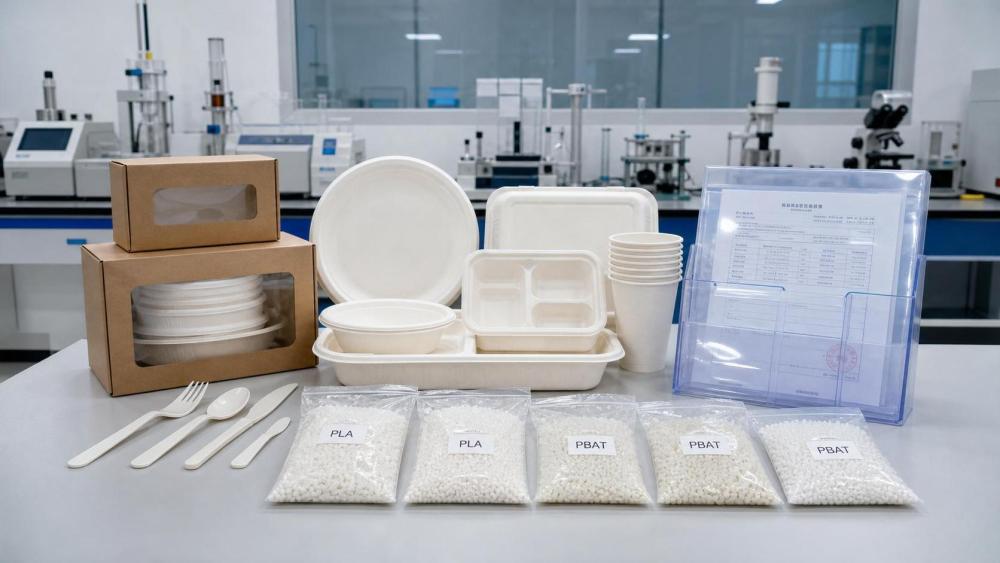
What the updated notice now requires
According to the information provided, the updated FDA notice applies to all imported food-contact products containing PLA/PBAT blended materials. The rule requires a verification report issued by an ISO 14855-2 certified laboratory showing a biodegradation rate of at least 90% under composting conditions over a period of at least 90 days. The requirement took effect on July 1, 2026, with no transition period. Its scope covers end products such as packaging, tableware, and trays, as well as upstream resin importers.
Where the immediate pressure is likely to appear
Import transactions may face a document-first compliance check
From an industry perspective, direct trading companies and importers are likely to feel the impact first because the updated notice centers on whether required verification documents accompany the shipment. The practical pressure point is not only the product itself, but whether the supporting report is available, valid, and aligned with the imported material composition.
Upstream resin suppliers may be pulled into downstream compliance demands
Analysis shows that upstream resin importers and material suppliers may also be affected because the notice explicitly covers resin imports in addition to finished food-contact articles. This means biodegradation claims tied to PLA/PBAT blends are likely to become a documentation issue earlier in the supply chain, rather than only at the finished-goods stage.
Converters and manufacturers may need tighter material-to-product traceability
For processors and manufacturers supplying packaging, cutlery, trays, and related food-contact goods, the likely impact lies in how material formulations are matched to compliance files. What deserves closer attention is whether existing supplier documents, test reports, and product specifications can support import requirements without delay, especially given the lack of a transition window.
Buyers and channel participants may revisit delivery and qualification expectations
Observably, downstream buyers, distributors, and procurement teams may need to review how they qualify biodegradable food-contact products intended for the U.S. market. The issue is less about marketing language and more about whether the product can be accompanied by the exact third-party verification now required by the notice.
What companies should check now
Whether affected SKUs are already within scope
Companies should first identify which imported food-contact items contain PLA/PBAT blends and whether any upstream resin imports fall under the same requirement. Scope confirmation matters because the notice applies both to finished products and to resin importers.
Whether existing reports match the stated testing threshold
The key practical issue is not simply having a biodegradability document, but having one that matches the stated FDA requirement: an ISO 14855-2 certified laboratory report showing at least 90% biodegradation under composting conditions over at least 90 days. Reports based on other frameworks or formats may not address the requirement as stated in the input information.
Whether suppliers can support immediate filing needs
Because the rule took effect immediately, companies may need to confirm how quickly suppliers, laboratories, and logistics teams can provide compliant documentation for active or pending shipments. This is especially relevant for businesses with short delivery cycles or products already moving through procurement and export scheduling.
Whether customer and internal communication is precise
Analysis shows that commercial teams should distinguish between general biodegradable positioning and the specific import documentation now required. Clear communication with customers, sourcing teams, and customs-facing functions can help avoid treating a regulatory document issue as a simple product claim issue.
Why this reads as more than a routine wording change
As an editorial observation, this update is more appropriately understood as an operational compliance signal rather than a broad market conclusion. The immediate effective date and the absence of a transition period suggest that, for affected PLA/PBAT food-contact imports, documentation readiness has become a near-term business issue. At the same time, the information provided does not support broader claims about enforcement scale, trade volume impact, or future policy expansion, so those points still require continued observation.
How to read the development at this stage
At this stage, the update is best understood as a concrete short-term rule change with possible longer-term implications for documentation discipline across biodegradable materials trade. The confirmed fact is narrow but consequential: affected imports now need a specific third-party verification report. The broader industry meaning will depend on how companies adjust procurement, supplier qualification, and shipment preparation in response.
Basis of this article and what still needs verification
This article is based on the user-provided news title, event date, and event summary. For developments of this kind, relevant source categories typically include official regulatory notices, company disclosures, industry association updates, authoritative media reporting, and standard-organization documents. A specific official source link was not provided in the input, so the exact publication path should continue to be verified. Ongoing attention should focus on any later official clarifications, implementation details, or related updates affecting covered food-contact imports and upstream resin shipments.
Have questions about this sector analysis, or seeking best practices specific to your niche? Drop us a line below and let the senior consultants at APIM assist you.
We respect your privacy. Your information is strictly confidential.
Related News
- 00
0000-00
Do polyolefin hot melt adhesives bond well to polyethylene? - 00
0000-00
Korean Study Finds PLA Barely Degrades in Landfill After 320 Days - 00
0000-00
How to assess batch consistency from a thermal potting compounds supplier - 00
0000-00
How much weight can carbon fiber reinforced plastics save in cars? - 00
0000-00
Switching from PS to ABS Sheet Extrusion: Equipment Checks