




FDA Tightens Import Proof for PLA/PBAT Resin Blends
On June 29, 2026, the U.S. Food and Drug Administration updated its Bio-based Food Contact Substances Import Guidance, adding a new import requirement for PLA/PBAT-based biodegradable resin blends used in direct contact with frozen or refrigerated food. For importers of products such as food trays and cup lids, the change matters because compliance is now tied to a specific third-party verification document rather than a general biodegradability claim, which may affect import documentation, supplier qualification, testing arrangements, and delivery planning.
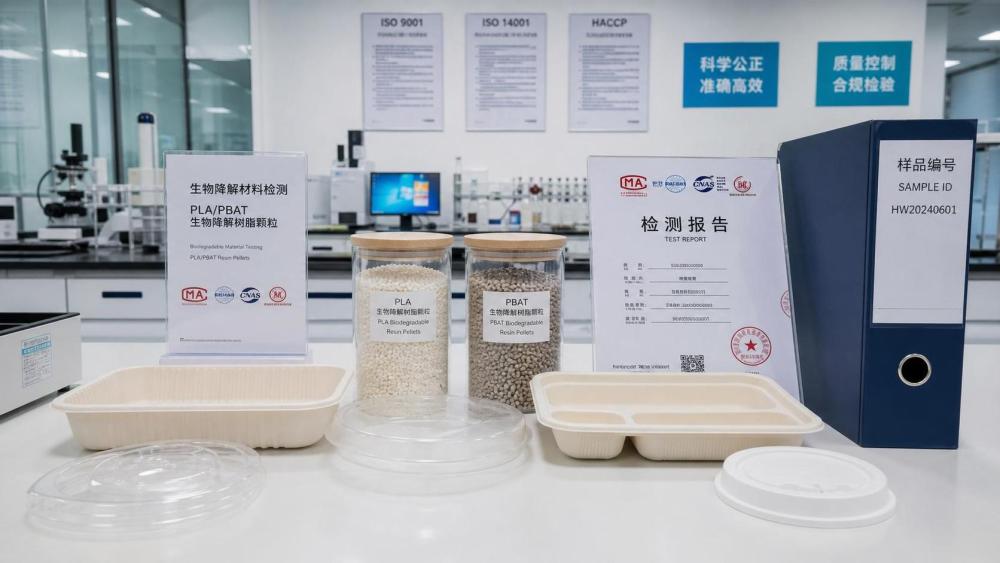
A Documentation Requirement Now Sits at the Border
According to the provided information, FDA updated its import guidance on June 29, 2026. The revised guidance, for the first time, requires all importers of biodegradable resin blends based on PLA/PBAT to submit a third-party test report verifying aerobic compostability performance under ISO 14855-2.
The required report must show a biodegradation rate of at least 90% within 180 days. The new requirement applies to applications involving direct contact with frozen or refrigerated food, including products such as food trays and cup lids. The change took effect immediately.
Where the Immediate Pressure May Appear
Import transactions may face a higher document threshold
From an industry perspective, importers are the first group likely to feel the operational impact because the updated guidance makes third-party biodegradation verification a required accompanying document for covered PLA/PBAT blends. The main issue is no longer only product description, but whether the shipment file includes a qualifying ISO 14855-2 report that matches the material being imported.
Material sourcing and supplier approval may need adjustment
For procurement teams and companies buying PLA/PBAT blend materials for food-contact applications, the rule change may shift attention toward supplier readiness. Analysis shows that sourcing decisions may now depend not only on material performance and price, but also on whether suppliers can provide compliant third-party degradation reports for the relevant blend formulation and application scope.
Converters and finished-goods manufacturers may need closer file control
Manufacturers producing food trays, cup lids, and similar cold-chain food-contact items may be affected through their upstream resin choices and downstream shipment preparation. What deserves closer attention is whether technical files, product specifications, and shipment documents consistently support the resin composition and the required degradation evidence, especially where imported materials are tied directly to finished product delivery schedules.
Testing and certification-related service providers may see demand shift
Observably, the rule change may also affect laboratories and compliance support providers because the guidance points to a specific standard and a measurable threshold. The practical impact may appear in report review, document timing, and the need for clearer alignment between test evidence and import declarations, although the provided information does not specify further execution details.
What Companies Should Review First
Check whether covered products fall within the direct-contact scope
Companies handling food trays, cup lids, or similar products for frozen or refrigerated food should first verify whether their materials and applications fall within the scope described in the update. This is a basic screening step before making assumptions about documentation sufficiency.
Review report availability against the stated ISO threshold
Analysis shows that one of the most immediate compliance questions is whether an existing third-party report actually demonstrates ISO 14855-2 aerobic compostability at or above 90% within 180 days. If such evidence is missing, outdated, or not clearly tied to the imported PLA/PBAT blend, the issue may move from a technical matter into an import execution risk.
Reconcile shipment files, technical documents, and supplier records
What deserves closer attention is document consistency. Importers, buyers, and manufacturers may need to compare test reports, material specifications, procurement records, and shipment paperwork to reduce the risk of mismatched descriptions or incomplete files during customs and regulatory review.
Watch for further clarification in enforcement language
The provided information confirms immediate effectiveness, but it does not provide detailed enforcement interpretation, filing practice, or transition handling. For that reason, companies should treat follow-up wording, compliance interpretations, and customer or tender document changes as items requiring continued monitoring rather than as settled operating rules.
Why This Looks More Like an Execution Signal
Observably, this update is more than a general policy statement because it introduces a specific documentary condition tied to a named standard, a quantified threshold, a defined time frame, and a stated application scenario. Analysis shows that the practical importance lies in execution: the guidance appears to move biodegradability claims for covered PLA/PBAT imports closer to verifiable proof at the point of import.
At the same time, it would be premature to treat every downstream market effect as already fixed. The input does not provide detailed information on review procedures, market response, or implementation practice beyond immediate effect. It is more appropriate to understand this as a rule change that has already landed, while its operating interpretation still deserves observation.
How This Update Is Best Read for Now
For the industry, the clearest takeaway is that covered PLA/PBAT resin blends for direct contact with frozen or refrigerated food now face a more explicit import compliance expectation under FDA guidance. The change is not merely about environmental positioning; it introduces a concrete documentation requirement that may influence supplier selection, testing preparation, import filing, and delivery coordination.
At this stage, it is more appropriate to understand the update as an effective compliance signal with immediate documentary consequences, while the finer points of implementation and market adaptation remain matters to watch rather than conclusions to assume.
Basis of This Article and What Still Needs Verification
This article is based on the user-provided news title, event date, and event summary. For events of this type, relevant source categories typically include official regulatory announcements, releases from supervisory authorities, customs or trade administration notices, industry association updates, standard-setting organization documents, and reporting by authoritative media.
No specific official source link was provided in the input, so the precise official publication path still needs to be verified on an ongoing basis. Further observation is also needed regarding detailed policy wording, certification enforcement interpretation, changes in tender or procurement documents, industry feedback, and how companies implement the requirement in actual import and delivery workflows.
Have questions about this sector analysis, or seeking best practices specific to your niche? Drop us a line below and let the senior consultants at APIM assist you.
We respect your privacy. Your information is strictly confidential.
Related News
- 00
0000-00
How does washing affect contamination in post-consumer recycled PP resins? - 00
0000-00
How does feedstock affect depolymerization equipment selection? - 00
0000-00
US Sets 213.44% Preliminary Antidumping Deposit on Chinese PTMEG - 00
0000-00
When should epoxy be used as a thermal interface material for semiconductors? - 00
0000-00
US Midterm Results Unlikely to Quickly Shift Recycled Plastics Market or Legislation
Tag